• العربية
  • فارسی
Brand
  • Iran Insight
  • Politics
  • Economy
  • Analysis
  • Special Report
  • Opinion
  • Podcast
  • Iran Insight
  • Politics
  • Economy
  • Analysis
  • Special Report
  • Opinion
  • Podcast
  • Theme
  • Language
    • العربية
    • فارسی
  • Iran Insight
  • Politics
  • Economy
  • Analysis
  • Special Report
  • Opinion
  • Podcast
All rights reserved for Volant Media UK Limited
volant media logo

The Role Of 'Players In The Middle' In Iran's Political Landscape
Majid Mohammadi

Contributor

Jan 28, 2024, 14:03 GMT+0Updated: 11:08 GMT+0
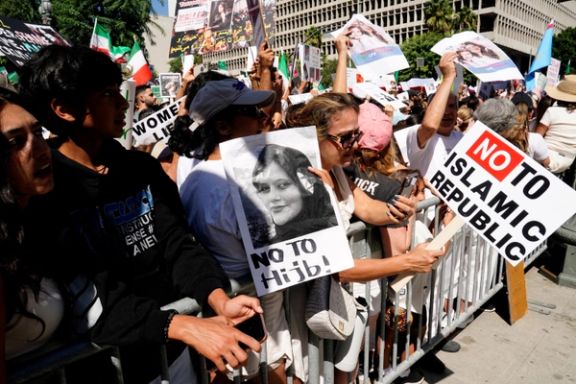
Demonstrators display images of Mahsa (Zhina) Amini, a 22-year-old Iranian Kurdish woman who died in police custody, during a rally outside City Hall in Los Angeles, California, US, October 1, 2022.

A new term was coined during the 2022-2023 Iranian protests to describe crtain individuals as “players in the middle,” who tried not to oppose the Islamic regime.

Player in the middle" (PITM) was coined to describe individuals who positioned themselves between the protesters and the regime, offering mild criticism of both sides. As useful elements for the regime, PITMs were occasionally invited to state TV programs, but they are generally disliked, not only among the protesters but also within the ruling class.

The protesters were so angry at the PITMs that they rejected figures like Mahnaz Afshar (actress) who wanted to join a protest abroad but was expelled from the rally. Other celebrities were insulted by anti-regime activists, and some disappeared from the scene. This was not just an intolerance issue, but anger at minimal cooperation with a brutal regime that was busy killing children and young people in the streets, arresting tens of thousands of people, and shooting at people’s eyes and genitals with shotgun ‘birdshots.’

A downward curve

The people who do not benefit from the status quo (more than 80 percent of the population) and are living in poverty and misery have made up their minds regarding the regime, and if they do not come to the streets, it is because of fear and not because they are satisfied. They have made their position very clear: by throwing garbage into the government’s charity boxes, attacking emergency vehicles transporting police special forces, burning the banners of Soleimani, Khomeini, Khamenei, and Hamas, turning classic car shows into a disco, chanting anti-regime slogans in sports stadiums, such as insulting the Palestinian flag, and attacking clergymen, Basijis, and hijab enforcers.

Some insiders - such as Mahmoud Karimi, a religious eulogist, and Parviz Parstouei, an actor - have recently began playing in the middle to fill the slots of absent PITMs to reduce anger towards the regime. The regime’s die-hard fans also express their wishes clearly, such as no PITMs should be seen on state TV and that the country belongs to Hezbollahis, or those who are not loyalists should leave the country.

Mahnaz Afshar and Parviz Parstouei in a scene of ‘Los Angeles Tehran’ (undated)
100%
Mahnaz Afshar and Parviz Parstouei in a scene of ‘Los Angeles Tehran’

The dominant tactic of the PITMs

PITMs aim to offer mild and "non-destructive" criticism of the government while avoiding any negative consequences for themselves. As a result, in their speeches, they often target opponents abroad and emphasize their loyalty to the security forces, exemplified by figures such as Sadeq Zibakalam and Abbas Abdi, two commentators allowed to express opinions in the government-controlled media. They acknowledge some regime shortcomings, as in the case of Ahmad Zeidabadi, another pundit who is often allowed to express critical views. Like loyalists, they tend to steer clear of engaging in conversations with opponents and staunch critics of the system.

The government’s benefits from the PITMs

Debates between PITMs and staunch defenders of the regime are sometimes held on state TV to show that the regime allows a conversation with the opposition. Nevertheless, PITMs often do not engage with those who believe the regime should be toppled. They sanctify Qasem Soleimani (Parastou’i and Zibakalam) and also warn the government to reduce discontent (Abdi and Zibakalam). They consider a revolution against the regime useless or harmful (Abdulkarimi) and sympathize with the regime (Zaidabadi and Shari`ati).

The Islamist regime has consistently embraced PITMs because, on one hand, they align with its strategy of incentivizing compliance, potentially persuading staunch opponents to acquiesce or reconcile with the status quo. On the other hand, it serves as a means to demotivate and dishearten the opposition while fostering division and conflict, especially in universities where the majority of students oppose the tyrannical regime. PITMs can also manipulate public opinion and attempt to pacify dissatisfied segments of society. They promote the system's norms using various forms of discourse while subtly communicating with opponents and critics. Mehran Modiri excelled in this role.

Pundits Sadeq Zibakalam (left) and Ahmad Zeidabadi (undated)
100%
Pundits Sadeq Zibakalam (left) and Ahmad Zeidabadi

A sense of danger from the PITMs

However, the weakening of the regime after the Mahsa Revolution reached the point where the rulers felt that the PITMs could be a danger to them by voicing mild criticism. The PITMs are no longer perceived as the layer to shelter or cover government officials seen as corrupt and repressive, as they have lost credibility among the majority in society - even those who do not come to the streets to protest.

Sending the PITMs to the sidelines

In the current situation, purification of public platforms such as universities or the state TV from any kind of opposition and disloyalties is at the top of the government agenda.

Right after the Mahsa Revolution, Ali Shamkhani (the secretary of the National Security Council at the time) tried to hold meetings with the reformists to prevent them from joining the movement. These meetings quickly reached a dead end because the regime did not need mediators and wanted to end the protests only with guns, torture, and aggression.

According to a Gamaan opinion survey, 81 percent of the population say no to the Islamist regime with only 15 percent endorsing it. The reports provided by the Basij and other agents engaged in repression of street protests show that they have realized how much they are hated by the people. In one of these reports, it is stated that when agents were pursuing the protesters in the streets, people were throwing heavy objects from apartment buildings at them. Knowing how much they are hated, rulers feel that PITMs cannot be useful any longer.

Now, the regime needs "hardliners" who will be with it in difficult times and if they are given orders, they will carry them out, specially during popular protests.

The opinions expressed by the author do not necessarily reflect the views of Iran International

Most Viewed

Ghalibaf defends Iran-US talks amid hardline backlash
1
INSIGHT

Ghalibaf defends Iran-US talks amid hardline backlash

2
INSIGHT

100 days after carnage: Iran economy reels from war, inflation, unemployment

3
INSIGHT

A nation in limbo: 100 days after the massacre, has the world moved on?

4
ANALYSIS

From instability to influence: Pakistan’s pivotal role in US-Iran diplomacy

5
ANALYSIS

100 days on: why Iran’s January protests spread across social classes

Banner
Banner

Spotlight

  • War-hit homeowners feel abandoned as Iran’s reconstruction aid fades

    War-hit homeowners feel abandoned as Iran’s reconstruction aid fades

  • 100 days on: the anatomy of Iran’s January crackdown
    INSIGHT

    100 days on: the anatomy of Iran’s January crackdown

  • Ghalibaf defends Iran-US talks amid hardline backlash
    INSIGHT

    Ghalibaf defends Iran-US talks amid hardline backlash

  • 100 days on: why Iran’s January protests spread across social classes
    ANALYSIS

    100 days on: why Iran’s January protests spread across social classes

  • From instability to influence: Pakistan’s pivotal role in US-Iran diplomacy
    ANALYSIS

    From instability to influence: Pakistan’s pivotal role in US-Iran diplomacy

  • A nation in limbo: 100 days after the massacre, has the world moved on?
    INSIGHT

    A nation in limbo: 100 days after the massacre, has the world moved on?

•
•
•

More Stories

Fate Of Iran's Hijab Bill Hangs On Government Financing

Jan 28, 2024, 12:20 GMT+0

The completion of Iran's controversial Hijab bill depends on its financial endorsement by the government, a step that has yet to materialize, speaker of the Iranian parliament said Sunday.

Parliament Speaker Mohammad Bagher Ghalibaf announced that the parliament insists on the prompt approval of the bill's financing.

“We have sent a letter to the government regarding Article 75 (acceptance of financial liability) more than 25 days ago, and they have not yet responded,” he added.

In September, the Iranian parliament passed a bill titled "Protection of Family Through Promotion of Hijab and Chastity Culture." The legislation included penalties, notably hefty fines, for violations by women.

But the bill's enforcement needs hijab agents in streets and public venues, as well as other expenses, which might prove a challenge for the cash-strapped government.

The bill faced an unexpected setback when the constitutionally mandated Guardian Council, comprising 12 members with ultimate legislative authority, rejected twice. The Council cited ambiguities within the text, prompting a call for revisions by the parliament.

While some speculate the rejection stems from procedural issues, others suggest that the Guardian Council may be exercising caution amidst concerns of potential public unrest leading up to the parliamentary elections in March.

The enforcement of hijab regulations has intensified following widespread protests in Iran since the death of Iranian-Kurdish Mahsa Amini in 2022. Amini's arrest in Tehran, reportedly for defying the mandatory hijab law, ignited one of the most significant uprisings in recent Iranian history.

Women across the nation have been actively challenging the compulsory hijab, resulting in a heightened presence of hijab enforcement personnel in public areas such as subway stations.


Pakistan Says Killing Of Its Citizens In Iran Aimed At Disrupting Ties

Jan 28, 2024, 10:39 GMT+0

Pakistan's foreign minister has called on the authorities of the Islamic Republic to address the armed attack on Saturday morning in Saravan, Sistan-Baluchestan province.

Nine Pakistani workers were killed by unidentified gunmen in a restive southeastern border region of Iran on Saturday. The incident occurred just over a week after a deadly exchange of cross-border missile fire between the neighboring countries, resulting in the deaths of nearly a dozen individuals, including at least two children.

Jalil Abbas Jilani, urged the authorities of the Islamic Republic to address the issue, saying, " This heinous attack is an attempt to spoil relations between Pakistan and Iran by our common enemies."

So far, no group has claimed responsibility.

The Sistan and Baluchestan deputy governor, Alireza Marhamati, told state news agency IRNA that according to survivors of the incident, "Three-armed people shot at the foreigners (Pakistanis) after entering their residence and fled the scene."

Pakistan's new ambassador to Iran also said he was "deeply shocked by horrifying killing of nine Pakistanis in Saravan” and asked Tehran to extend its cooperation for investigating the armed attack.

Naser Kanaani, the spokesman for Iran’s Ministry of Foreign Affairs, also condemned the attack, saying,“Iran and Pakistan will not allow enemies to damage the brotherly ties between the two countries.”

Sistan-Baluchistan, among the predominantly Sunni Muslim regions in Shiite-majority Iran, is a scene of ongoing turmoil involving drug trafficking networks crossing borders, insurgents from the Baluchi ethnic groups, and armed factions.

US Security Screening Keeps Hundreds Of Iranian Students In Limbo

Jan 28, 2024, 10:37 GMT+0
•
Iran International Newsroom

Iranian graduates seeking higher education in the US are facing significant delays in obtaining visas, even with letters of admission from top universities.

Iran International has spoken to some students who have been waiting for much longer than the 6-month limit, after which a prospective student can pursue legal action under current advice of the State Department.

The delays are attributed to increased security scrutiny for visa applications from citizens of nations categorized as supporters of terrorism, including Iran.

Immigration attorney David Gluckman, who is familiar with such cases, says the long delays in student visa decisions almost “exclusively” affects Iranians.

“There are some other nationalities that I deal with in these types of cases. But in terms of student visa cases, it’s almost all Iranians,” Gluckman says, noting how things have gotten worse in recent years, under both Presidents Donald Trump and Joe Biden.

“Agencies are required to pass on or to make decisions on matters that are before them within a reasonable time,” Gluckman explains, “so if… it's taking an unreasonable length of time, you can sue them under the Administrative Procedure Act. In the past, it had been a little bit more manageable… but it’s just gotten worse and worse and I've had to file more and more lawsuits. And just within the last several months... even lawsuits haven't been as effective as they used to be.”

Number of Iranian Students in US Universities (file)
100%

The State Department denies that Iranian students are treated differently because they are from Iran.

“Every Visa Decision is a national security decision, and every prospective traveler to the United States undergoes extensive security screening,” a spokesperson for the State Department wrote to Iran International. “Students from Iran are one of the top 25 places of origin for international students studying in the United States, and we welcome Iranian students.”

Currently, around 11,000 Iranian students study in American universities, according to the Institute of International Education, which tracks international students in the United States.

There’s no data on the success rate of applications for student visas among Iranians, but one Telegram group created by and for students sharing their ‘visa experience’ has almost 700 members, most of whom are still waiting for a decision.

The overarching feeling among prospective students is that an entry clearance (a visa) is the tallest hurdle, much taller than shining grades that would get them admitted to a respectable university in America.

Students affected by the delay speak of a sense of despair, especially since –to them at least– it all looks so random, impossible to plan for, unlike the application, even the admission, for which they plan and endeavor for many years.

“Outside the embassy, everyone was talking about an officer who rejected everyone, but I ended up with another officer who was nice,” says one prospective student, who despite his apparent luck has been waiting for three months for an answer.

Another student says, “I asked the officer how long I’d have to wait for the visa? They told me, don't worry, you will have it, just wait for our email. I never received any emails after that.”

The impact of these delays is felt not only by the students but also by the institutions that seek international talent to advance their research.

“We basically hire students to come and work on our research projects,” says Prof. Amir Aghakouchk from the civil engineering department at UC Irvine. “The Number of PhD applicants has gone down… because there are a lot of job opportunities. That's why bringing talent from outside the US is sometimes absolutely necessary.”

Some institutions and many scholars in the US–especially those of Iranian origin– are voicing their concern about the delays. They maintain that academic environments are best kept free from political tensions.

But not everyone agrees with that statement.

Kaveh Madani, an academic and director of the UN think tank on water, believes universities are “political” across the world. “Every country has the right to ensure that the people they allow in are not a security risk,” he says, “but the existing procedures are not effective. Individuals associated with the regime… go through the filter and innocent people who have nothing to do with politics face such problems.”

This is a sentiment echoed by many of those waiting to be ‘cleared’ to pursue their dream in American universities.

“We are not political, and we are not trying to escape the situation in our country,” says one female student who has had PhD offers from three universities in the US, still waiting for a response from the embassy. “I hope we get the answer and don't get mixed up with everything else.”


Families Of Four Political Prisoners Called In For Farewell Meeting

Jan 28, 2024, 09:18 GMT+0

The families of four Kurdish political prisoners who face death sentences have been summoned to Evin Prison for a meeting, a sign of imminent execution.

The Hengaw Human Rights Organization reported that Pejman Fatehi, Mohsen Mazloum, Mohammad (Hazhir) Faramarzi, and Vafa Azarbar are scheduled to meet their families at Evin, where they face imminent execution after receiving death sentences from Branch 26 of the Tehran Revolutionary Court.

Amnesty International earlier condemned their arbitrary detention since July 2022. The organization reported that the men were arrested by Iran's Ministry of Intelligence near Urmia, West Azarbaijan province, on July 20, 2022. State media later announced their arrest, accusing them of “espionage for Israel and plotting terrorist activities within the country.”

Footage aired on state television in October and December 2022 purportedly depicted the four men confessing to planning a bomb attack near the central city of Esfahan, allegedly under Israeli intelligence guidance.

The Islamic Republic, which has the highest rate of executions in the world after China, has executed 90 people just from December 22 to January 21.

In a recent revelation, UN experts disclosed that at least 834 people were executed in Iran in 2023, with eight of them linked to nationwide protests. The experts urgently called on the Iranian government to halt the surge of executions and undertake a comprehensive review of the use of the death penalty.

Iran Conducts Second Controversial Satellite Launch In One Week

Jan 28, 2024, 07:54 GMT+0

Iran simultaneously launched three satellites for the first time on Sunday using the domestically developed Simorgh (Phoenix) rocket, state media reported.

One satellite weighing 32 kg (70 pounds) and two nano-satellites of less than 10 kg each were sent to a minimum orbit of 450 km (280 miles), with the two smaller devices aimed at testing narrowband communication and geo-positioning technology, the reports said.

Iran’s satellite launches are viewed by the United States and its European allies as a possible cover to develop long-range ballistic missiles capable of carrying nuclear warheads.

A recent US intelligence assessment suggested that launching satellites “shortens the timeline” for Iran to develop an intercontinental ballistic missile. It is all the more worrying, experts say, since Iran is on the verge of nuclear capability, according to most intelligence estimates and recent International Atomic Energy Agency reports.

This was Tehran’s second satellite launch in one week. On January 21, the government announced the launch of the Soraya satellite, which it claimed was put into an orbit 750 kilometers above the earth.

The larger satellite, named "Mahda" and built by Iran's Space Agency, is meant to test the accuracy of the Simorgh rocket in delivering multiple cargoes to space.

European powers raised concerns about the launch of Soraya, saying that the space launch vehicle's technology could be used for the development of long-range ballistic missile systems.

Iran on Saturday dismissed European countries’ condemnation of its launch of the Sorayya satellite, saying peaceful technological advancement in the aerospace field was the country’s legitimate right.