• العربية
  • فارسی
Brand
  • Iran Insight
  • Politics
  • Economy
  • Analysis
  • Special Report
  • Opinion
  • Podcast
  • Iran Insight
  • Politics
  • Economy
  • Analysis
  • Special Report
  • Opinion
  • Podcast
  • Theme
  • Language
    • العربية
    • فارسی
  • Iran Insight
  • Politics
  • Economy
  • Analysis
  • Special Report
  • Opinion
  • Podcast
All rights reserved for Volant Media UK Limited
volant media logo

Canadian Ex-Intel Officer Guilty Of Leaks To Elements Linked To Iran
Iran International Newsroom
Nov 25, 2023, 21:21 GMT+0Updated: 11:27 GMT+0
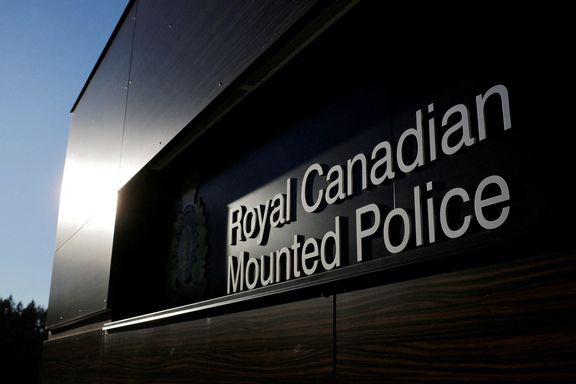
The British Columbia Royal Canadian Mounted Police (RCMP) headquarters, also known as "E" Division, in Surrey, British Columbia, Canada December 5, 2017.

A jury has found Cameron Jay Ortis, a former intelligence official of RCMP, the Canadian equivalent of FBI, guilty of breaching Canada's secrets law.

The trial, described as “unprecedented” by Canadian outlet Global News, followed Ortis’ arrest in 2019 which “sent a shockwave through the Canadian security and intelligence community”.

Jurors declared Ortis guilty of three counts of violating the Security of Information Act and one count of attempting to do so.

Prosecutors argued that not only had Ortis passed information to international criminals and money launderers connected to Iran but was also in possession of classified files which could have only been of interest to foreign states and that he was on cusp of sharing them just before his arrest in 2019.

According to court documents, from at least 2014, the RCMP and multiple intelligence agencies of Canada's close allies were investigating money laundering activities conducted by various entities associated with Altaf Khanani, a Dubai-based money service businesses owner.

These included Salim Henareh and his companies Persepolis International and Rosco Trading, Muhammad Ashraf and his company Finmark Financial, and Farzam Mehdizadeh and his firm Aria Exchange who were all subjects of the investigation in Canada.

Mehdizadeh, who reportedly once owned the biggest Iranian exchange bureau in Canada, was arrested in 2016 and fled to Iran after being released on bail.

Ortis, 51, had pleaded not guilty to all charges and testified that he offered secret material to targets in a bid to get them to use an online encryption service set up by an allied intelligence agency to spy on adversaries.

The prosecuting team argued Ortis lacked authority to disclose classified material and that he was not doing so as part of a sanctioned undercover operation.

Prosecutor Judy Kliewer suggested the Crown would seek a prison sentence of 20 or more years.

Ortis was arrested in September 2019. A civilian with a PhD in international relations, he was at the time the director of the RCMP’s national intelligence co-ordination centre in Ottawa, with access to Canada’s Top-Secret Network (CTSN), a computer network used by the federal government to share classified information. CTSN held intelligence from Canada’s allies in the Five Eyes, an intelligence-sharing network that includes the US, Australia, New Zealand and the United Kingdom.

The trail to his arrest began the previous year when the RCMP analyzed the contents of a laptop owned by Vincent Ramos, CEO of Phantom Secure Communications, who had been apprehended in the United States. His company provided criminal organizations with encrypted mobile phones.

The jury was told that RCMP investigators found emails to Ramos from Ortis offering classified information to in exchange for $20,000.

Moreover, federal prosecutor Judy Kliewer alleged Ortis was in the final stages of a plan to pass state secrets to a “foreign entity” as well.

CBC reports that before his arrest, Otis’ home had been raided secretly, and just on one laptop, investigators found 488 secret files. Some had their headers removed and turned into PDF documents, hence untraceable, and ready to be shared. They also found searches for Chinese and other diplomats and embassies.

"Given the nature of the documents … these are no longer organized crime directed documents. These are all documents that related to national security and would only be of interest to a foreign entity,” the prosecution argued.

Reacting to the conviction, Canadian daily Globe and Mail declared that the outcome of the trial suggests that the Canadian judicial system passed an “extraordinary test”.

According to Wesley Wark, “for Canada’s intelligence and law enforcement partners, who share national security concerns about transnational organized crime, money laundering and possible terrorism linkages (Iran lurked in the background of this case), the Ortis trial had Canada on trial”.

“Even with the successful outcome of the trial, that trust will remain fragile, while the RCMP works to improve its internal security,” writes Wark.

As for the Iranian media, the news does not seem to have been covered inside the country, with headlines still dominated by the war in Gaza. State run news agencies such as IRNA and Fars did report on Otis’ arrest in 2019, albeit without mentioning any links to Iran in the investigation.


Most Viewed

100 days after carnage: Iran economy reels from war, inflation, unemployment
1
INSIGHT

100 days after carnage: Iran economy reels from war, inflation, unemployment

2
INSIGHT

Ghalibaf defends Iran-US talks amid hardline backlash

3
INSIGHT

A nation in limbo: 100 days after the massacre, has the world moved on?

4
ANALYSIS

From instability to influence: Pakistan’s pivotal role in US-Iran diplomacy

5
ANALYSIS

100 days on: why Iran’s January protests spread across social classes

Banner
Banner

Spotlight

  • War-hit homeowners feel abandoned as Iran’s reconstruction aid fades

    War-hit homeowners feel abandoned as Iran’s reconstruction aid fades

  • 100 days on: the anatomy of Iran’s January crackdown
    INSIGHT

    100 days on: the anatomy of Iran’s January crackdown

  • Ghalibaf defends Iran-US talks amid hardline backlash
    INSIGHT

    Ghalibaf defends Iran-US talks amid hardline backlash

  • 100 days on: why Iran’s January protests spread across social classes
    ANALYSIS

    100 days on: why Iran’s January protests spread across social classes

  • From instability to influence: Pakistan’s pivotal role in US-Iran diplomacy
    ANALYSIS

    From instability to influence: Pakistan’s pivotal role in US-Iran diplomacy

  • A nation in limbo: 100 days after the massacre, has the world moved on?
    INSIGHT

    A nation in limbo: 100 days after the massacre, has the world moved on?

•
•
•

More Stories

Russia Launches Dozens Of Iranian Drones At Kyiv, Injuring Five

Nov 25, 2023, 19:53 GMT+0

Russia launched its most extensive kamikaze drone attack against Ukraine's capital, Kyiv, on Saturday using dozens of Iranian Shahed Unmanned Aerial Vehicles.

The attack injured five people, disturbing the early morning tranquility with the sounds of air defenses and explosions.

The assault began in the early hours, targeting various districts of Kyiv and persisting in waves as daylight emerged, with the air raid alarm lasting for a prolonged six hours.

Iran has supplied hundreds of kamikaze drones to Russia since mid-2022. The drones have been extensively utilized to target civilian infrastructure and cities, integrated into large-scale missile attacks to overwhelm Ukrainian air defenses.

Despite Iran's denial of involvement in supplying drones and other weaponry to Russia, the United States and NATO allies have imposed sanctions on individuals and entities associated with these drone shipments.

Initially, Ukraine's air force reported successfully intercepting 71 out of 75 drones, later revising the number to 74. A spokesperson clarified that 66 of the drones were brought down over Kyiv and its surroundings. Air force chief Mykola Oleschuk credited the effectiveness of 'mobile fire' units—fast pickup trucks equipped with machine guns or flak cannons—for downing nearly 40% of the drones.

Kyiv Mayor Vitali Klitschko, communicating via the Telegram app, confirmed five injuries, including an 11-year-old girl, and widespread building damage across various city districts. A fire in a children's nursery was sparked by a fragment from a downed drone.

President Volodymyr Zelenskiy condemned the attack as "willful terror," accusing the Russian leadership of taking pride in causing harm.

While the exact target of Saturday's attack remains unclear, Ukraine had previously warned of a potential Russian aerial campaign targeting Ukraine's energy system, similar to attempts last winter.

Iran's Pistachio Exports Decline Sharply

Nov 25, 2023, 16:35 GMT+0

Reports highlight a significant reduction in Iran's pistachio exports to European Union countries and China from January to September.

According to Eurostat data, Iran's pistachio exports to EU member states have decreased by 29%, amounting to a reduction of 67 million euros compared to the same period last year.

Iran had exported 95 million euros worth of pistachios to Europe by the end of September 2022. The breakdown included 49 million euros for shelled pistachios and 18 million euros for pistachios with shells.

Iran, after the United States, stands as the second-largest pistachio exporter to Europe from January to September 2023, with the US exporting 439 million euros worth of pistachios during the same period.

Germany remains the primary buyer of Iranian pistachios in Europe for the first nine months of 2023.

Simultaneously, based on Chinese customs data, Iran's pistachio exports to China have reached 20 million dollars during the period, indicating a 59% decline compared to the same period last year.

Iranian media attribute the decline to drought conditions and stringent regulations demanding that exporters repatriate their foreign currency earnings and exchange with Iranian currency at lower government rates.

Beyond pistachios, Iran has faced a downturn in other export products in recent years. In November, a member of Iran's Chamber of Commerce, warned that the country's carpet exports had reached a four-decade low, amounting to only half of the total production.

Despite initial promises by the President Ebrahim Raisi's government to boost non-oil exports, the commitment has not materialized as anticipated.

Swedish Lawmakers Call On EU To Sanction Sale Of Spy Tech To Iran

Nov 25, 2023, 16:34 GMT+0
•
Benjamin Baird

On November 8th, five Swedish lawmakers called on the European Union and global governments to prohibit the sale of surveillance equipment and software to Iran.

Led by Nima Gholam Ali Pour, an Iranian-born member of Sweden’s parliament (Riksdag), the lawmakers issued a statement condemning the Iranian government’s use of “intrusive mass surveillance technologies” to “disrupt peaceful assemblies and enforce oppressive modesty laws.” 

The open letter comes as international attention to Iranian protests has diminished in response to Israel’s war with Hamas – even as news reports detail how Iran’s regime funds, arms, and trains Hamas fighters. However, protecting and empowering Iran’s opposition may offer the clearest pathway to regime change, and by extension, disrupting Tehran’s ability to export terrorism abroad.

“Regime change in Iran is the most effective way to neutralize the mullahs and their covert and overt campaigns in the region,” Mr. Gholam Ali Pour said when asked how demonstrations in Iran impact the Middle East, adding that Iranians view “the mullah’s expansionism in the region” as “a waste of resources.”

Beginning in September 2022, Iran was gripped with nationwide, women-led protests following the death in police custody of Mahsa Amini, a 22-year-old student who was forcibly detained for improperly wearing her hijab. Iran’s regime reacted to the months-long demonstrations by orchestrating a brutal crackdown, arresting thousands and subjecting peaceful protestors to torture and execution.

Led by Nima Gholam Ali Pour, an Iranian-born member of Sweden’s parliament
100%
Led by Nima Gholam Ali Pour, an Iranian-born member of Sweden’s parliament

Mr. Gholam Ali Pour and his colleagues, who each hail from the right-wing Sweden Democrats party, referenced an Aug. 6 investigative report from the German broadcaster ARD. The report, which included interviews with Iranian activists, detailed how Iranian security forces used advanced “surveillance technologies purchased from European companies” to crush demonstrations and persecute Iranian women.

“These technologies form a crucial component of Tehran’s extensive surveillance network, which the theocratic regime uses to track political dissidents and suppress public criticism,” the MPs wrote.

According to ARD, the German manufacturing giant Bosch sold 8,000 closed-circuit television cameras to Iran’s regime between 2016 and 2018. Iranian activists showed ARD images of Bosch cameras and software used to monitor public spaces.

ARD claimed that Bosch cameras can be outfitted with “intelligent tracking,” an AI-based technology that allows for monitoring of vehicle and foot traffic. The parliamentary letter includes the account of an Iranian activist who described how the regime deploys cameras that issue an alarm whenever more than five to ten people gather in public, prompting security forces to arrive “‘within minutes’” to break up demonstrations.

The letter also points to an Amnesty International report, which “documented evidence of Iranian women driving through high traffic areas who received text messages from state security warning them about fines for improper wear of headscarves.” The women were identified through “facial recognition” software, according to Amnesty, a biometrics technology that maps facial features and compares unique identifiers to images in a massive database.

“The authorities are always watching so your behavior is in accordance with their idea of Islam,” Gholam Ali Pour said in an interview. “The regime in Tehran will use surveillance technology in the worst possible ways,” he added.

Germany isn’t the only country to host businesses that profit off the sale of surveillance equipment to Iran. Reporting for Iran International, Benjamin Weinthal described in August how Iran’s government purchased video cameras from companies in Sweden and the Netherlands, while the Danish security company Milestone Systems reportedly delivered video management software to Iran that is capable of facial recognition.

Both intergovernmental and non-governmental organizations have raised alarms concerning the use of surveillance technologies as an instrument of state oppression. In August 2022, the United Nations released a study warning about the “human rights” concerns associated with the systematic monitoring of public places using biometrics data. The study called for “data privacy legislation” and “robust well-tailored export control regimes applicable to surveillance technologies.”

In August, Mr. Gholam Ali Pour sent a formal Parliamentary Question to Tobias Billström, Sweden’s foreign minister, asking if he planned “to take action in the European Union and other forums” to ban the sale of surveillance technology to Iran, in light of the news reports concerning Bosch and other European companies.

Billström answered by stating that “Swedish trade with Iran is currently very limited.” As to the EU, the foreign minister pointed to the “sanctions regime against human rights abuses in Iran, established in 2011,” which he claimed, “includes a ban on selling or transferring certain equipment that could be used for repression or surveillance to Iran.”

However, EU sanctions against Iran, including the 2011 ban on “equipment which might be used for internal repression,” deal predominantly with military hardware, as well as devices and software used in the “monitoring or interception of internet or telephone communications.” The sale of surveillance cameras and facial recognition technologies are not explicitly forbidden.

For now, the law appears to be lagging advancements in technology, which offer abusive and tyrannical governments Orwellian control of their societies. With rising tensions in the Middle East, the EU should immediately adopt the Swedish MPs recommendations and proscribe European businesses from selling surveillance equipment to Iran. Otherwise, profit-seeking corporations stand to damage and impede the greatest natural bulwark against Iran’s military adventurism: the Iranian people.

The opinions expressed by the author do not necessarily reflect the views of Iran International

Iran's Deputy Parliament Speaker Threatens To Close Strait Of Hormuz

Nov 25, 2023, 13:48 GMT+0

Mojtaba Zonnour, the Deputy Speaker of the Iranian Parliament, has said that Iran can block the Strait of Hormuz if national security is jeopardized.

Amid the Middle East conflict, Zonnour emphasized the Islamic Republic's right to stop and inspect ships in the international waters of the strait, citing national interests as a determining factor.

Known for his hardline stance, he claimed, "Generally, stopping and inspecting ships in the Strait of Hormuz is the right of the Islamic Republic. It is true that international laws govern global waters, and no country can act arbitrarily. However, the passage through global waters is free for everyone unless it threatens national interests." He did not elaborate on the international legal justification for such an act.

Zonnour, a hardliner, previously served as the Supreme Leader's Deputy Representative to the Islamic Revolutionary Guard Corps (IRGC) and chaired the Nuclear Subcommittee of the National Security and Foreign Policy Committee in the Islamic Consultative Assembly until 2019.

His comments come amid escalating tensions in the region, with earlier threats from Iranian officials suggesting the possibility of closing the Strait of Hormuz in response to the Hamas-Israel conflict.

Last month, Hassan Norouzi, another lawmaker said, “So far, resistance forces in Palestine, Syria and Iraq are sufficient, but if the situation becomes critical and we are asked [for assistance], it is possible that we would go to war against Israel to support the resistance.”

Despite supporting Hamas financially and militarily for two decades, Tehran has so far refrained from any direct military involvement in the Gaza war.

Iranian Lawyer Opposes Idea Of 'Absolute Obedience' To Khamenei

Nov 25, 2023, 13:03 GMT+0
•
Iran International Newsroom

A prominent Iranian lawyer has argued that the dominating role of the hardliner Paydari Party is likely to hinder the legislative system and the Constitution.

In a recent commentary, Iranian lawyer Kambiz Nowrouzi referred to a statement made by hardline cleric Morteza Aqa-Tehrani, the chairman of the central council of Paydari Party. Aqa-Tehrani recently quoted the party's founding father, Ayatollah Mohammad Taqi Mesbah-Yazdi as having called for the nation's absolute obedience to Supreme Leader Ali Khamenei.

Aqa-Tehrani had quoted Mesbah as saying, "The absolute rule of the jurisconsult (Velayat-e Faqih) is not enough as the theory of government under the Islamic Republic. The system also needs absolute obedience of the people to the supreme leader."

The statement effectively renders the legislative system in Iran meaningless. According to the ultraconservative party, Khamenei can make any decision, and the people will have no choice other than obeying what he decrees.

Practically, during the past decade, Khamenei has been running the country in the same way, without elaborating on the underlying principle of the system. He effectively made the parliament obsolete by handing over key decisions on issues such as the annual budget to the heads of the legislative, executive and judiciary powers.

Iranian attorney Kambiz Nowruzi. Undated
100%
Iranian attorney Kambiz Nowruzi

In 2019, when a fuel price rise led to a nationwide uprising, the parliament said that it was not consulted, and Khamenei had handed over decision-making on the matter to the heads of the three powers of the government. However, at least one of the trio, former President Hassan Rouhani said he was not involved in the price rise decision either and that he learned about it like everyone else, in the morning after the decision was implemented.

The idea of absolute obedience is based on another verdict by late Ayatollah Mesbah, a Muslim fundamentalist, which maintains that the Supreme Leader, currently Khamenei, is not elected by the people. He is appointed by God almighty!

Elsewhere, Mesbah said, "If there have been elections in Iran so far, that is because that is because the leader has so decided. However, the leader can announce another form of government that does not need people's input." He added that "The people's vote has no impact on the legitimacy of the government." He even said: "Who are the people to decide on the affairs of the state?" Nonetheless, his followers later tried in vain to interpret his words differently.

In his commentary, Nowrouzi pointed out that the Iranian Constitutional Law has stressed on the importance of the people's vote in several instances, including in Article 56 which stipulates that "The absolute ruler of the world and man is God, however, God has decided that man should be in charge of determining his own fate." The article adds that "No one can deprive man of this divine right or take advantage of that right in the interest of a certain group or individual."

Nowruzi further pointed out that "This article makes man unconditionally in charge of determining his own fate," adding that "This article is the foundation of national sovereignty.”

The lawyer also pointed out that Article 6 of the Iranian Constitution also says very clearly that "In the Islamic Republic the affairs of the state should be run based on public votes by electing the President, members of the parliament, members of city councils and so on, or based on referendum in other cases."

He further pointed out that this means the people are free to run the affairs of the state based on their free will and votes, and this is in sharp contrast to the idea of absolute obedience. The lawyer also claimed that both Khamenei and his predecessor Ruhollah Khomeini publicly opposed the idea of absolute obedience to the leader.

Nowruzi argued that the Islamic Republic is based on the two pillars of Islamism and Republicanism. If you do away with one of the two pillars, the system will collapse.