• العربية
  • فارسی
Brand
  • Iran Insight
  • Politics
  • Economy
  • Analysis
  • Special Report
  • Opinion
  • Podcast
  • Iran Insight
  • Politics
  • Economy
  • Analysis
  • Special Report
  • Opinion
  • Podcast
  • Theme
  • Language
    • العربية
    • فارسی
  • Iran Insight
  • Politics
  • Economy
  • Analysis
  • Special Report
  • Opinion
  • Podcast
All rights reserved for Volant Media UK Limited
volant media logo

Israel-Hezbollah Fire Flaring Up At Lebanon Border
Iran International Newsroom
Nov 7, 2023, 18:44 GMT+0Updated: 11:39 GMT+0
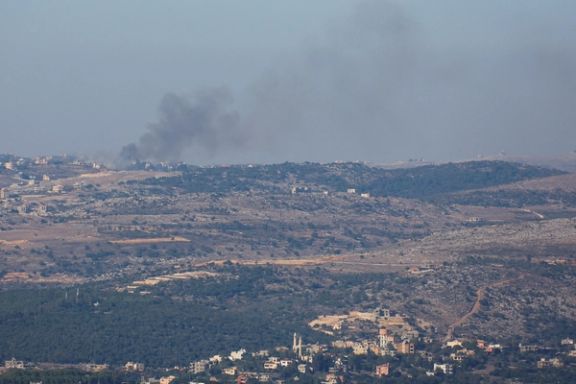
Smoke rises over a part of Lebanon, as seen from Israel's border with the country, in northern Israel, November 5, 2023.

Since the leader of Iran-backed Hezbollah talked of multiple fronts of Middle East conflict, ignited by Hamas' October 7 attack on Israel, tensions are growing fast between Israel and Lebanon. 

Hezbollah has been exchanging fire with Israeli forces across the border since October 7, when Hamas -- another Iran-funded militia – declared war on Israel in a multi-thronged terror attack codenamed al-Aqsa Flood (Storm in Persian) and killed over 1,400 mostly civilians and took at least 241 more hostages into the Gaza Strip. Since Friday, when Hassan Nasrallah broke his month-long silence on its Palestinian ally’s war with Israel, the conflict has become deadlier with more frequent bouts of fire. 

On Saturday, Israeli warplanes conducted airstrikes along the border with Lebanon as the militant Hezbollah group attacked several Israeli army posts, including one that was struck with two large rockets. On Sunday, an Israeli civilian was killed when an anti-tank missile from Lebanon hit a vehicle near Kibbutz Yiftah in the Upper Galilee. Also on Sunday, a barrage of rockets launched from Lebanon landed in Kiryat Shmona, causing damage. Kiryat Shmona has been evacuated, along with dozens of other communities along the Lebanon border, due to repeated Hezbollah rocket and missile attacks. Earlier in the day, an Israeli airstrike reportedly killed four civilians in southern Lebanon. 

On Monday night, Hamas militants in southern Lebanon fired some 30 rockets at Israel, triggering air-raid sirens in cities including Haifa, Nahariya and Acre. Several of the rockets were intercepted, while most fell in the Mediterranean Sea. Hamas claimed responsibility for the attacks, saying it “struck the occupied city of Nahariya and southern Haifa in northern occupied Palestine [Israel] with 16 missiles.”

The Israeli army on Tuesday said it hit two targets inside the Lebanese territory, including a military post of the Hezbollah group. An IDF tank targeted a terror cell preparing to launch an anti-tank missile towards Moshav Shtula. A “suspicious aerial target” was also prevented from entering Israel from Lebanon on Tuesday afternoon. The death toll of the Hezbollah fighters killed by the Israeli forces since October 8 has risen to 63, according to a statement by the group.

Israeli military vehicles ride in northern town of Shlomi near the border with Lebanon, November 7, 2023.
100%
Israeli military vehicles ride in northern town of Shlomi near the border with Lebanon, November 7, 2023.

Although Nasrallah denied any involvement in the Hamas October 7 attack, he thanked all other Iranian proxy forces across the region for joining hands at the war against Israel. The al-Aqsa Flood battle has extended to more than one front, he said, adding, “We thank the Iraqi, Yemeni hands that joined this battle."

Iran's Revolutionary Guards founded Hezbollah in 1982, in the middle of Lebanon's 1975-90 civil war. It was part of Iran's effort to export its 1979 Islamic Revolution around the region and fight Israeli forces after their 1982 invasion of Lebanon.

Alongside continued calls for action against Israel from the top echelons of Iran's regime, Hezbollah has been escalating day by day, forcing Israel to keep its forces near the Lebanese border instead of the Gaza Strip and the West Bank. Nasrallah said in the televised address. "What's happening on the border might seem modest but is very important."

Iran and Hezbollah have been accused of full involvement in the planning of the October attack, with several public and secret joint meetings having been held since April in Beirut and Damascus. Interrogation of Hamas militants has revealed even the timing of the attack was coordinated with Tehran. Iran, along with Hezbollah has repeatedly threatened that the war will escalate to other fronts unless Israel halts its retaliatory offensive against Hamas in Gaza.

Lebanese pundit Bechara Khairallah told Iran International there is a kind of chaos in Hezbollah's leadership, especially because Nasrallah had promised to connect the battlefields but did not act on that promise. He underlined that Nasrallah’s halfhearted involvement in the war sparked by the October 7 attack showed that Hezbollah's primary allegiance is to the Islamic Republic, and Tehran's interests take precedence over the interests of Arab countries and the so-called Palestinian cause.

He also stressed that Hezbollah would not expand the conflicts in southern Lebanon since it is concerned about the severity of Israel's reaction. Despite the Lebanese people showing solidarity with Gazans, no one advocates for entering a war, and no political figure encourages Nasrallah to expand the war in Gaza, Khairallah noted. 

Last week, Samir Geagea, the leader of Lebanon's biggest Christian party, the Lebanese Forces, called on Hezbollah to withdraw its forces from the south of the country, stating that “dragging us into the war would be a crime," the country already economically on its knees. 

US Special Envoy Amos Hochstein and US Ambassador to Lebanon Dorothy Shea meet with Lebanon's caretaker Prime Minister Najib Mikati in Beirut, Lebanon November 7, 2023.
100%
US Special Envoy Amos Hochstein and US Ambassador to Lebanon Dorothy Shea meet with Lebanon's caretaker Prime Minister Najib Mikati in Beirut, Lebanon November 7, 2023.

As the conflict between Israel and Hamas reverberates across the Middle East, the risk of war between Hezbollah and Israel remains higher than at any point since their last big conflict in 2006. In addition to sporadic clashes in the West Bank and multiple rocket and drone attacks against bases hosting US forces in Iraq and Syria, Hezbollah’s active engagement in the war can significantly change the landscape of the conflict. 

However, Hezbollah has not yet unleashed its large missile arsenal against Israel or tried any incursions. According to the latest public estimates, Hezbollah has around 150,000 rockets and missiles, most with a reported range of a few dozen to hundreds of kilometers. On Thursday, The Wall Street Journal reported that Russia's Wagner mercenary group plans to provide Hezbollah with an air defense system, foreshadowing planning for a looming war.

Most Viewed

Ideology may be fading in Iran, but not in Kashmir's ‘Mini Iran'
1
INSIGHT

Ideology may be fading in Iran, but not in Kashmir's ‘Mini Iran'

2
INSIGHT

Hardliners push Hormuz ‘red line’ as US blockade tests Iran’s leverage

3
VOICES FROM IRAN

Hope and anger in Iran as fragile ceasefire persists

4

US sanctions oil network tied to Iranian tycoon Shamkhani

5

Iran halts petrochemical exports to supply domestic market

Banner
Banner

Spotlight

  • Hardliners push Hormuz ‘red line’ as US blockade tests Iran’s leverage
    INSIGHT

    Hardliners push Hormuz ‘red line’ as US blockade tests Iran’s leverage

  • Ideology may be fading in Iran, but not in Kashmir's ‘Mini Iran'
    INSIGHT

    Ideology may be fading in Iran, but not in Kashmir's ‘Mini Iran'

  • War damage amounts to $3,000 per Iranian, with blockade set to add to losses
    INSIGHT

    War damage amounts to $3,000 per Iranian, with blockade set to add to losses

  • Why the $100 billion Hormuz toll revenue is a myth
    ANALYSIS

    Why the $100 billion Hormuz toll revenue is a myth

  • US blockade targets Iran oil boom amid regional disruption
    ANALYSIS

    US blockade targets Iran oil boom amid regional disruption

  • Iran's digital economy battered by prolonged blackout
    INSIGHT

    Iran's digital economy battered by prolonged blackout

•
•
•

More Stories

Water Tensions Remain Between Iran And Taliban

Nov 7, 2023, 15:41 GMT+0

Iran's interior minister has appealed to the Taliban to take more measures to ensure Iran's water rights from the Helmand River, known as Hirmand in Iran.

The river plays a vital role in sustaining both Afghanistan and Iran, serving as a critical source for agriculture and drinking water. However, it has been a persistent source of tension between the two neighboring countries.

Iran has long accused Afghanistan of obstructing the river's water flow through the construction of dams, a claim vehemently denied by Afghan authorities.

During a Monday meeting with Abdul Ghani Baradar, the Deputy Prime Minister for Economic Affairs in the Taliban government, Ahmad Vahidi also engaged in discussions with a Taliban official on matters related to border security, counterterrorism, and creating conditions for the return of Afghan refugees, as reported by the IRNA state news agency.

Baradar, along with a 30-member delegation of Taliban officials, arrived in Tehran on November 4 and is expected to travel to other provinces in Iran, according.

Vahidi said during the meeting, "The issue of water casts a shadow on the medium-term and long-term plans of the two countries, and efforts must be made to resolve the problem."

Tensions regarding the Helmand River have persisted since the spring, and in early June, a clash between Iranian border forces and the Taliban resulted in the death of at least one Iranian soldier.

In the Taliban’s statement, it is said that Baradar requested that Iran release Afghan prisoners accused of minor crimes from prisons and transfer other Afghan prisoners to the Taliban government.

Iranian officials estimate that there are five million Afghans in Iran, with only 780,000 having refugee status, while the majority are undocumented. Some estimates even reach as high as eight million.


Iranian MP Challenges Practicality Of Closing Supply Routes To Israel

Nov 7, 2023, 14:02 GMT+0

An Iranian member of parliament has voiced doubts regarding Supreme Leader Ali Khamenei's call to close off supply routes for oil and resources to Israel.

Mahmoud Abbaszadeh said that achieving the goal from “areas controlled by the Axis of Resistance may be unfeasible, and some regional reactionary countries might resist efforts to cut off oil and resources to Israel.”

Axis of Resistance is a term coined by the Islamic Republic to refer to its proxy forces in the region including, Palestinian militant groups, the Syrian regime, the Lebanese militant group Hezbollah and other factions.

Khamenei on Wednesday made an appeal to Muslim countries, urging them to halt oil and food exports to Israel, while demanding an immediate end to the bombings in the Gaza Strip.

"The bombings on Gaza must stop immediately ... the path of oil and food exports to the Zionist regime should be stopped," Khamenei told a group of students in Tehran, according to Iranian state media.

Israel, in retaliation for an attack on October 7 that claimed many lives and resulted in hostage situations, has vowed to take action against Hamas, which is backed by Tehran.

Iran is one of Hamas' biggest backers, supporting the group, proscribed by countries including the US and UK, financially and militarily.


Iranian Military Introduces Salary And Service Reforms

Nov 7, 2023, 12:41 GMT+0

Iran has introduced a new salary structure for its soldiers, taking into account various factors such as the place of service, marital status, and the number of children.

Soldiers will now receive variable monthly salaries ranging from $60 to a maximum of $180, according to Hossein Zahedi, the Deputy of Public Military Service. The current minimum wage in Iran is around $150 a month with the average income between $150-250.

The change follows the legal requirement that soldiers should receive a minimum of 60% of the minimum official employee salary and a maximum of 90%. Zahedi explained that the aim is to ensure fair and targeted compensation for the country's military personnel.

In addition to the new salary structure, Zahedi announced that the service duration for soldiers has been revamped, meaning soldiers serving in hostile border areas may now have their service periods reduced to as little as 14 months.

Unofficial data suggests that Iran has approximately 400,000 to 500,000 conscripts, with the majority serving in the traditional Army. Some individuals with connections have the opportunity to serve in the Revolutionary Guard, which offers better conditions. There are also conscripts assigned to national police units, often engaged in suppressing protests.

Under Iran's constitution, all men over 18 years of age are required to complete approximately two years of military service. Failure to do so restricts their ability to apply for passports or engage in legal business activities. Leaving before end of service is also punishable under law as charges of 'desertion'.

This year's latest budget showed an ongoing priority given to the military while the rest of Iranian society fell to the worst in decades. Research showed 21 percent of the budget allocated to military and armament goals, while the IRGC got a huge 31 percent of the budget with the army gaining just 11.5 percent of the total budget. However, veiled in secrecy, the budget figures are not transparent under the regime's watch. 


Netanyahu Says Israel Open To Gaza Fighting Pauses

Nov 7, 2023, 10:04 GMT+0
•
Iran International Newsroom

Prime Minister Benjamin Netanyahu said Israel would consider "tactical little pauses" in Gaza fighting, but again rejected a ceasefire despite international pressure.

Netanyahu said a general ceasefire would hamper his country's war effort, but pausing fighting for humanitarian reasons, an idea supported by Israel's top ally the United States, would continue to be considered based on circumstances.

"As far as tactical little pauses - an hour here, an hour there - we've had them before. I suppose we'll check the circumstances in order to enable goods, humanitarian goods to come in, or our hostages, individual hostages, to leave," Netanyahu told ABC News on Monday.

Iran’s foreign minister Hossein Amir-Abdollahian in a social media post on his personal account said that the United States has been suggesting humanitarian pauses in the fighting but accused Washington of duplicity. Tehran has been focusing its rhetoric against the United States in recent days, but so far has chosen not to get directly involved in the conflict.

However, Iran’s proxy forces in Iraq and Syria continue to target US military bases, with injuries among servicemen increasing. So far, the Biden administration has responded in kind only once, despite repeated warnings to Tehran and its militant allies.

Having encircled densely populated Gaza City in the north of the enclave, where the Hamas Islamist group is based, Israel's military said it had taken a militant compound and was set to attack fighters hiding in a warren of underground tunnels.

Israel has bombarded the enclave since the Hamas raid on southern Israel one month ago, when its fighters killed 1,400 people and seized 240 hostages.

Israeli Prime Minister Benjamin Netanyahu on October 28, 2023
100%
Israeli Prime Minister Benjamin Netanyahu on October 28, 2023

Gaza health officials say the Israeli assault has killed more than 10,000 Palestinians, including some 4,100 children, but these figures cannot be independently verified.

Both Israel and Hamas have rebuffed mounting calls for a halt in fighting. Israel says hostages should be released first. Hamas says it will not free them nor stop fighting while Gaza is under attack.

"But I don't think there's going to be a general ceasefire."

US President Joe Biden discussed such pauses and possible hostage releases in a phone call with Netanyahu on Monday, reiterating his support for Israel while emphasizing that it must protect civilians, the White House said.

Like Israel, the US fears Hamas would take advantage of a full ceasefire to regroup.

International organizations have said hospitals cannot cope with the wounded and food and clean water are running out with aid deliveries nowhere near enough.

"We need an immediate humanitarian ceasefire. It's been 30 days. Enough is enough. This must stop now," said a statement from the heads of several United Nations' bodies on Monday.

The Israeli military said on Tuesday it took control of a Hamas military stronghold in the northern Gaza Strip, where it said the forces located anti-tank missiles and launchers, weapons and various intelligence materials.

Israeli aircraft struck several Hamas militants who had barricaded themselves in a building near the al-Quds Hospital and planned to launch an attack on Israeli forces, it said.

The Israeli military on Monday released video of tanks moving through bombed-out streets and groups of troops moving on foot. It says it has surrounded Gaza City, cutting off northern parts of the narrow coastal strip from the south.

In a press briefing, chief military spokesperson Rear Admiral Daniel Hagari said troops were hunting Hamas field level commanders to weaken the militants' ability "to carry out counter attacks."

The UN Security Council met behind closed doors on Monday. The 15-member body is still trying to agree a resolution after failing four times in two weeks to act. Diplomats said a key obstacle is whether to call for a ceasefire, cessation of hostilities or humanitarian pauses to allow aid access in Gaza.

At a meeting of foreign ministers from the G7 leading democracies in Tokyo, Japan's Foreign Minister Yoko Kamikawa said the group plans to call for a pause in fighting and allowing humanitarian access to Gaza.

With reporting by Reuters

Iran Proxies Testing US Patience As Number Of Injured Troops Rise

Nov 7, 2023, 07:25 GMT+0
•
Iran International Newsroom

The Pentagon says at least 46 American troops have been injured in Iraq and Syria in attacks by Iranian-backed militia during the past one month.

This number is significantly higher than the last official figure (around 20), announced a fortnight ago.

Since the Hamas terror attack on Israel and the ensuing conflict a month ago, the US government has repeatedly warned Iran and its proxies against attacking American forces in the region. The figures released Monday seem to show, however, that the attackers remain unfazed.

If anything, the war seems to have widened in the last week or two.

Shiite militias in Iraq and Syria, armed groups backed, and often guided by the Islamic Republic are targeting US troops stationed in those countries almost daily.

On Monday, one of the Iraqi armed groups used the Iranian-designed Fateh-110 ballistic missile for the first time against a US base. Hezbollah is believed to have this missile too.

A month has passed since Hamas forces attacked border regions of Israel, killing at least 1,400, mostly civilians, and taking at least 200 hostage. In response, Israel has been bombarding Hamas targets in Gaza and has sent in its army into the enclave to find and destroy Hamas fighters. Hamas officials in Gaza say ten thousand have been killed, but there is no independently verified figure on casualties. At least 1.5 million people have also been displaced, according to the United Nations.

UN Secretary-General Antonio Guterres on Monday repeated his call for an “immediate humanitarian cease-fire” and a halt to the “spiral of escalation” across the region.

Speaking to reporters on the sidelines of a Security Council meeting, Guterres said international humanitarian law is clearly being violated in Gaza. “No party to an armed conflict” is above international law, he said, also demanding the unconditional release of hostages taken by Hamas on 7 October.

Israel insists it is conducting military operation based on the internationally recognized principle of self defense and is doing its utmost to only hit military targets.

The UN Security Council once more failed to agree on a resolution in its Monday meeting, with the US insisting on a ‘pause’ instead of a ‘ceasefire.’

The Biden administration has so far supported Israel unconditionally while the latter tries to “erase” Hamas from Gaza and retake control of the strip. Still, many in Washington blame the administration for having allowed the current crisis, even if inadvertently.

“For nearly 3 years they’ve flooded Iran with close to $100B,” Senator Ted Cruz posted on X. “Iran has used that money to fund terrorist groups such as Hamas and Hezbollah.”

“The Biden Administration's approach was to put Iran first,” former Secretary of State Mike Pompeo said in an interview with Fox News. “We negotiated with the Iranians on the nuclear deal; we stopped enforcing sanctions; we paid a ransom of $6 billion to get back half a dozen hostages – now the Iranians hold even more.”

Pompeo seems to be referring to hostages in Gaza, whose fate is widely believed to be in the hands of the regime in Iran, which holds considerable sway over Hamas.

The Islamic Republic is evidently reluctant to engage in direct war with Israel or the US, despite non-stop rhetoric.

“This is their entire strategy,” Jonathan Schanzer of Foundation for Defense of Democracies said on CNN referring to the regime in Iran. “They are fighting Israel to the last Palestinian, to the last Lebanese, to the last Syrian and to the last Iraqi. They use proxy groups to their advantage so that they can sit safely back in Tehran and watch with delight. "

Reports emerged Monday that the Biden administration has sent strong messages to Iran and Hezbollah via Turkey that the US will intervene immediately if they attack Israel.

Nonetheless, Iranian officials are maintaining their belligerent and threatening tone.

"What has the US done to the region that its Secretary of State, Blinken, arrived in Baghdad with a bulletproof vest,” asked Iran’s Foreign Ministry spokesman Monday.

Secretary of State Antony Blinken, on a tour of the Middle last, visited Iraq briefly, perhaps to try and push the Iraqi government to rein in armed militias who target American bases in the country.

The ones with meaningful influence over Iraqi militias, however, sit not in Baghdad but in Tehran, who seem to remain unperturbed.