• العربية
  • فارسی
Brand
  • Iran Insight
  • Politics
  • Economy
  • Analysis
  • Special Report
  • Opinion
  • Podcast
  • Iran Insight
  • Politics
  • Economy
  • Analysis
  • Special Report
  • Opinion
  • Podcast
  • Theme
  • Language
    • العربية
    • فارسی
  • Iran Insight
  • Politics
  • Economy
  • Analysis
  • Special Report
  • Opinion
  • Podcast
All rights reserved for Volant Media UK Limited
volant media logo

US, UK Impose New Iran Sanctions On Mahsa Amini’s Death Anniversary
Sep 15, 2023, 18:06 GMT+1Updated: 20:17 GMT+1
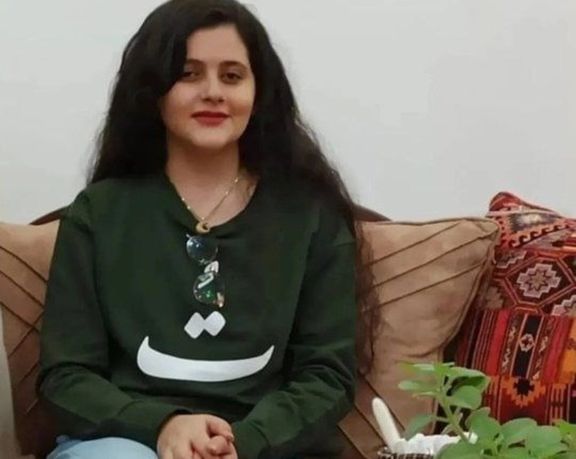
Amini’s death on September 16 last year at the hands of the morality police sparked months of anti-government protests that marked the biggest show of opposition to the Islamic regime since 1979.

The US and Britain on Friday imposed sanctions on Iran ahead of the one-year anniversary of Mahsa Amini’s death, which sparked months of protests that faced a violent crackdown.

Amini’s death on September 16 last year at the hands of the morality police sparked months of anti-government protests that marked the biggest show of opposition to the Islamic regime since 1979. Iranian security forces have been deployed in her hometown and elsewhere in anticipation of unrest this weekend.

The United States and Britain, along with the European Union, have imposed multiple rounds of sanctions against Iran, for widespread and often violent crackdown on protests.

The US Treasury Department in a statement Friday said it imposed sanctions on more than two dozen people and entities it said were connected to Iran's "violent suppression" of protests and crackdown on dissenting voices and restrictions to internet.

The action targets 29 people and groups, including 18 key members of the Islamic Revolutionary Guard Corps (IRGC) and Iran's Law Enforcement Forces (LEF), as well as the head of Iran's Prisons Organizations, the department said. They also target officials linked to Iran's internet filtering and several media outlets.

The sanctions target LEF spokesperson Saeed Montazerolmehdi, multiple LEF and IRGC commanders, and Iran’s Prisons Organization chief Gholamali Mohammadi.

Douran Software Technologies CEO Alireza Abedinejad as well as state-controlled media organizations Press TV, Tasnim News Agency and Fars News were also among those sanctioned.

Britain separately announced its sanctions targeting senior Iranian decision makers enforcing Tehran's mandatory hijab law, including Iran's minister for culture and Islamic guidance, his deputy, the mayor of Tehran and an Iranian police spokesman.


Most Viewed

Ideology may be fading in Iran, but not in Kashmir's ‘Mini Iran'
1
INSIGHT

Ideology may be fading in Iran, but not in Kashmir's ‘Mini Iran'

2
INSIGHT

Hardliners push Hormuz ‘red line’ as US blockade tests Iran’s leverage

3
VOICES FROM IRAN

Hope and anger in Iran as fragile ceasefire persists

4

US sanctions oil network tied to Iranian tycoon Shamkhani

5

Iran halts petrochemical exports to supply domestic market

Banner
Banner

Spotlight

  • Hardliners push Hormuz ‘red line’ as US blockade tests Iran’s leverage
    INSIGHT

    Hardliners push Hormuz ‘red line’ as US blockade tests Iran’s leverage

  • Ideology may be fading in Iran, but not in Kashmir's ‘Mini Iran'
    INSIGHT

    Ideology may be fading in Iran, but not in Kashmir's ‘Mini Iran'

  • War damage amounts to $3,000 per Iranian, with blockade set to add to losses
    INSIGHT

    War damage amounts to $3,000 per Iranian, with blockade set to add to losses

  • Why the $100 billion Hormuz toll revenue is a myth
    ANALYSIS

    Why the $100 billion Hormuz toll revenue is a myth

  • US blockade targets Iran oil boom amid regional disruption
    ANALYSIS

    US blockade targets Iran oil boom amid regional disruption

  • Iran's digital economy battered by prolonged blackout
    INSIGHT

    Iran's digital economy battered by prolonged blackout

•
•
•

More Stories

Iranian Lawmaker Says Part Of Freed Funds Will Go To Central Bank

Sep 15, 2023, 16:39 GMT+1

A senior Iranian lawmaker said Friday that part of Iran’s $6 billion released by the United States must go to the central bank to cover money already spent.

Mohammad-Reza Pourebrahimi, the chairman of the Iranian parliament's economic committee was quoted by local media as saying that part of Iran's freed assets needs to be directly deposited to the Central Bank of Iran, as the previous government of President Hassan Rouhani has spent the amount to cover government's expenditure.

The United States allowed South Korea in August to release the funds blocked due to US sanctions in exchange for five US citizens held hostage by Iran. However, the Biden administration has been insisting that the funds can only be used by Iran to import food, medicine, and other humanitarian needs.

"The Treasury Department has strict oversight over the use of those funds. We have visibility into how they are used, and we have the ability to police their use," State Department spokesperson Matthew Miller told reporters on September 12.

However, earlier this week, Iran’s President Ebrahim Raisi told NBC News that the money will be spent o whatever the Iranian people need. "This money will be budgeted for those needs and the needs of the Iranian people will be decided and determined by the Iranian government,” Raisi insisted.

There has been strong criticism of the Biden administration’s move in Congress. Many Republicans have accused the White House of caving into Iran and by offering a large ransom endangering the lives of other Americans.

UANI Launches Starlink Internet Project To Bypass Iran's State Blockage

Sep 15, 2023, 14:30 GMT+1

US NGO United Against Iranian Nuclear (UANI) has unveiled an initiative to provide internet services to Iranians in the face of state's access denial to citizens.

The group has managed to secure the initiative, Project Constellation, through the issuance of General License D-2, which authorizes an exemption to US sanctions for "discrete internet services".

The Starlink satellite project website says "the US government has taken action to support the free flow of information to and from the Iranian people". 

It explained: "This license is crucial as it helps keep Iranians online amid pervasive efforts of the Islamic Republic to censor and shut down the internet early and often when there is even a hint of protests being planned."

Mass shutdowns have left millions cut off from the internet across Iran as the government continues its blanket censorship in a bid to prevent more protests, leaving many without access to work and vital services.

Starlink receivers began to be smuggled into Iran last September, in case of the regime enforcing a total blackout. Starlink, operated by Elon Musk’s SpaceX, is a global network of low-orbit satellites that bypasses the terrestrial internet, and helped restore connectivity in Ukraine after the Russian invasion.

Project Constellation will also offer a fundraising platform, where supporters of the Iranian people can donate funds to send Starlink satellite internet terminals to keep Iranians online. "Based upon the best efforts of our confidential partners, UANI expects to achieve a high rate of Starlink systems successfully smuggled into Iran," the website said.


US Expresses Concerns Over Regime Oppression

Sep 15, 2023, 11:27 GMT+1

The US Department of State raised concerns about the Iranian regime's ongoing intimidation of the families of slain protesters and journalists.

Spokesman Matthew Miller noted on Thursday that this marks the fourth time in the last two weeks that Mahsa Amini's father has been summoned for questioning by the Iranian authorities.

He stated, "The world is watching its treatment of these families and the ongoing intimidation of journalists and abuse of peaceful protesters, and we will continue to watch it closely and take whatever steps are appropriate to respond to it."

The comments come in the wake of the recent release of approximately $6 billion in Iranian assets frozen abroad by the US government. This release is part of a larger deal that includes the exchange of five US prisoners held in Iran for five Iranians detained by the United States. However, the move has sparked controversy, with many Iranians condemning it as a “ransom payment”.

Notably, the hostage exchange deal left unresolved three other US cases – Jamshid Sharmahd, Afshin Vatani, and Shahab Dalili.

During a hearing before the Foreign Affairs Committee in Congress on Thursday, concerns were raised that the deal does not effectively deter further hostage-taking and allows the Iranian regime to divert resources meant for humanitarian purposes toward security forces, missile programs, and proxy groups. It also threatens to undermine the international sanctions regime.

However, Miller reiterated that the released funds would only be accessible to Iran for humanitarian purposes, such as acquiring food, medicine, and other necessities that directly benefit the Iranian people rather than the regime.


Criminal Complaint Filed In France Against Senior Iranian Officials

Sep 15, 2023, 09:28 GMT+1

A rare criminal complaint was filed with Paris prosecutors on Thursday, targeting three senior Iranian officials from the regime's security apparatus.

The accusation against IRGC commander Hossein Salami, Intelligence Minister Esmail Khatib, and Quds force commander Esmail Qaani includes "death threats and justifying terrorism."

The six plaintiffs in the case are all exiled Iranians who have been living in France since the 1980s, and include a filmmaker, a journalist, a writer, and an LGBTQ+ rights activist. They have all taken public stances against Tehran, and their complaint, while largely symbolic, coincides with the first anniversary of Mahsa Amini's death last September, which sparked the Woman Life Freedom movement in Iran.

The threats were made in response to support for nationwide protests in Iran following the death of Mahsa Amini in custody of the morality police. One such threat came from Khatib on December 13, where he warned that "anyone playing a role in the riots will be punished, wherever they are in the world."

Additionally, on January 10, Salami himself made a statement regarding "the French people and the managers of [satirical anti-clerical magazine] Charlie Hebdo," suggesting they shouldn't concern themselves with Salman Rushdie's fate. This statement related to the fatwa against Rushdie issued by Iran's late leader Ayatollah Ruhollah Khomeini. The Charlie Hebdo staff had previously been targeted by jihadist gunmen in 2015 for publishing cartoons of the Prophet Mohammed.

Chirinne Ardakani, a French-Iranian lawyer from the Iran Justice Collective, characterized these threats as "disguised fatwas" against Iranian opposition activists worldwide.

European Powers To Retain Ballistic, Nuclear Sanctions On Iran

Sep 15, 2023, 08:12 GMT+1
•
Iran International Newsroom

Britain, France and Germany will retain ballistic missile and nuclear proliferation-related UN sanctions on Iran, set to expire in October under the 2015 Iran nuclear deal.

Reuters reported in June that European diplomats had told Iran they planned to keep the measures.

"In direct response to Iran’s consistent and severe non-compliance with its JCPoA commitments since 2019, the governments of France, Germany, and the United Kingdom intend to maintain nuclear proliferation-related measures on Iran, as well as arms and missile embargoes, after Joint Comprehensive Plan of Action (JCPoA) Transition Day on 18 October 2023," a spokesperson for the three countries, known as the E3, said in a statement.

European sources had cited three reasons for keeping the sanctions: Russia's use of Iranian drones against Ukraine; the possibility Iran might transfer ballistic missiles to Russia; and depriving Iran of the nuclear deal's benefits given Tehran has violated the accord, albeit only after the United States did so first.

The US withdrew from the accord in May 2018, demanding a tighter nuclear deal and a change in Iran’s regional behavior and ballistic missile program.

Once the US imposed tough sanctions on Iran’s oil exports, Tehran began breaching JCPOA limits on its uranium enrichment. It intensified the violation in early 2021, after the Biden administration announced its readiness to negotiate and return to the JCPOA.

The result of a Russian attack on Kyiv using Iranian drones. May 28, 2023
100%
The result of a Russian attack on Kyiv using Iranian drones. May 28, 2023

Iran rejected the European decision as "illegal and provocative".

"Undoubtedly, Iran will respond appropriately to this .... action which clearly violates the obligations of the EU, France, Germany and Britain under the JCPOA and the Resolution 2231," Iran's foreign ministry said in a statement, referring to the UN resolution that endorsed the 2015 nuclear pact.

The deal's coordinator, EU foreign policy chief Josep Borrell said he had received a letter from the E3 informing him of their decision and transferred it to Iran, China and Russia, the other participants to the deal.

"As Coordinator, I will consult with all JCPoA participants on the way ahead," he said.

Keeping the sanctions would reflect Western efforts to prevent Iran from developing nuclear weapons and the means to deliver them despite the collapse of the 2015 deal.

It also reflects fears of missile proliferation, with Iran already having supplied hundreds of kamikaze drones to Russia that have targeted infrastructure and cities.

The JCPoA agreed with Iran in 2015 envisaged a "Transition Day" eight years later, when remaining ballistic missile and nuclear-related sanctions on Iran would be lifted.

But Britain, France and Germany will now transfer UN sanctions on Iran that are due to be lifted next month into domestic law, while Britain and the EU will retain existing sanctions, Britain's Foreign office said in a statement.

The crux of the JCPOA pact, which Iran made with Britain, China, France, Germany, Russia and the U.S., limited Tehran’s nuclear program making it harder for it to get fissile material for a bomb in return for relief from economic sanctions.

As a result of Trump’s withdrawal from the deal and US President Joe Biden’s failure to revive it, Iran could make the fissile material for one bomb in 12 days or so, according to US estimates, down from a year when the accord was in force.

"Our commitment to finding a diplomatic solution remains. This decision does not amount to imposing additional sanctions nor to triggering the snapback mechanism. We stand ready to reverse our decision, should Iran fully implement its JCPoA commitments," the E3 said, referring to a mechanism that would immediately restore all UN sanctions against Iran.