Prosecutor In Iran Summons 54 Lawyers Who Supported Hijab Victim
Death in custody of Mahsa Amini sparked the boldest uprising against the regime since its establishment in 1979.
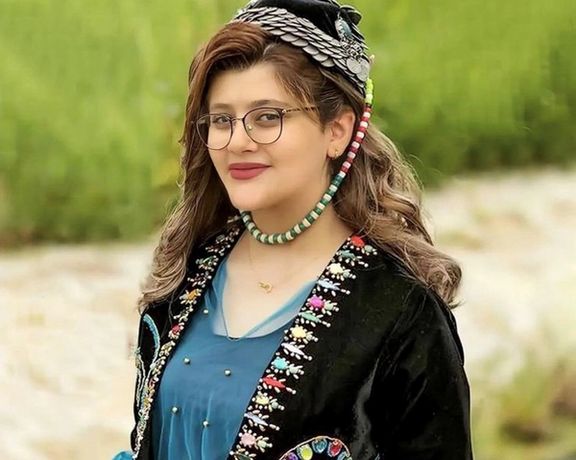
Prosecutors in western Iran have summoned 54 attorneys to receive a warning because they supported the family of Mahsa Amini who was killed last year in the custody of hijab police.
Prosecutors in Bukan, a city in West Azarbaijan province have said in their summons that the attorneys published social media posts, including texts and photos “violating public chastity principles.” It is not clear how that accusation related to attorneys who last September voiced support for Amini’s family.
Hengaw human rights group said in a report that the attorneys have been under pressure by the prosecutor’s office since last year when they issued their statement.
As the anniversary of Mahsa Amini's killing approaches, Iranian regime officials are concerned that fresh popular protests can break out and have launched measures to intimidate those who have influence in society.
Mahsa Amini was received fatal head injuries immediately after being detained for her “improper hijab” in September 2022. A young Kurdish-Iranian woman who traveled to Tehran with her family members was in coma for three days in the hospital and died on September 16. Immediately protests broke out in the capital and tens of other cities and towns.
The “Mahsa revolution” as it came to be known represented the most serious challenge to the clerical regime and its legitimacy. During nearly five months of street protests the regime killed more than 500 civilians and jailed well over 20,000 people.
A protest sign reads "Jailed teacher must be freed"
Iranian teachers have launched a campaign to collect 100,000 signatures calling for the release of detained educators and end to their harassment.
Esmail Abdi, a teachers’ union leader who has been in prison since 2015backed the initiative by sending a message from jail. He said that the extent of repression against teachers has expanded in recent years.
Abdi who was the leader of Tehran Teachers’ Association was sentenced to a six-year term in 2016 but is still in prison.
A current campaign has already collected 10,000 signatures, but teachers’ union members, some in exile, have called for collecting one hundred thousand.
Last week, 1,200 teachers sent a letter to the heads of the three branches of government asking them to release detained union activists and end harassment by security forces and the Judiciary that continues to fabricate legal cases against union members. However, the president and the head of the judiciary refused to accept the letter.
Teachers say that in most likelihood, top state officials think 10,000 signatures represents just one percent of the one million teachers in the country. This is the reason the activists have embarked on collecting 100,000 signatures.
Teachers maintain that they have pursued their demands through peaceful and legal means for two decades, but the Islamic Republic has always dealt with them through force and intimidation.
Teachers have been demanding higher wages and pensions for years, as one of the lowest paid class of government employees. In 2010s, government appointed officials embezzled hundreds of millions of dollars from their pension fund, without any serious consequences.
Iranian media reported that two other men were publicly hanged in Fouladshahr, Esfahan province, on charges of moharebeh (enmity against God) and corruption on earth on Wednesday.
According to the Judiciary's Mizan website, the two men identified as Mohammad Ghaedi Nasab, 35, and Sadegh Mahmoudi Baram, 25, were publicly hanged after a criminal court sentenced them to death for participation in murder.
It is alleged that the two defendants fought and disarmed officers, killing one and causing another to lose a finger on November 18, 2021.
The executions bring this week's total of public hangings to four.
On Saturday, Iran hanged two Afghan men in public on charges of playing a role in an attack on a shrine in October 2022 where 15 people died and 20 were wounded.
Mohammad Ramez Rashidi and Naeem Hashem Ghetali were hanged in a street near the Shahcheragh Shiite shrine and mausoleum in the southern city of Shiraz early in the morning. Iran's official news agency IRNA said they were hanged before dawn with “hundreds of the families of the martyrs” and other citizens of Shiraz witnessing the executions.
The attack on Shahcheragh shrine took place October 26 last year when anti-regime protests were raging on in Iran. This led to speculations and accusations that the attack was staged by the government to divert attention from the protests and also justify a crackdown.
Meanwhile, death sentences of at least three other citizens with charges like drug trafficking and murder were in Jiroft, Kerman province.
Earlier, the US-based Human Rights Activists News Agency (HRANA) mentioned in its annual report that in the previous Iranian year ending on March 20, at least 617 citizens were executed, two of them in public.
Siamand Shaboi, a member of the Kurdistan Democratic Party of Iran killed by the regime in July, 2023
The Kurdistan Democratic Party of Iran says with the assassination of another of its members the number of people killed by the Iranian regime reached three since last week.
"Siamand Shaboi, a member of the Kurdistan Democratic Party of Iran and a resident of Shanu city, was assassinated by the terrorists of the Islamic Republic in Baherka district near the city of Erbil, the capital of [Iraq's] Kurdistan Regional Government,” read a statement released on Wednesday.
"The Democratic Party expresses its condolences to his family and condemns this terrorist act of the regime of the Islamic Republic of Iran."
According to Hengaw Organization for Human Rights, the body of Shaboi, was found in an unfinished building 10 kilometers from Erbil, around noon on Wednesday.
The political activist who had found refuge in Iraq was found dead with several bullets in his back, according to Hengaw's sources.
A close relative of Shaboi told Hengaw that "he had disappeared since yesterday [Tuesday] evening. He disappeared in a completely unprecedented manner. We hold the terror teams of the Islamic Republic of Iran responsible for this assassination."
The Iranian government had threatened Shaboi many times over the past few years, and recently his two brothers and his 14-year-old son were arrested.
A week ago, the Kurdistan Democratic Party of Iran said two of its forces were killed by the Islamic republic agents in the Kurdistan Region of Iraq.
Last year, the party was the target of IRGC artillery attacks during the nationwide uprising against the Islamic Republic.
A protest by students at Iran University of Science and Technology in Tehran
Security forces in Iran have unleashed a fresh wave of crackdowns at universities employing both verbal and physical assault to suppress the student movement.
Iran International’s interviews with around 15 students showed an increase in harassment at public and private universities in various cities, raising concerns about the safety of students and freedom of expression within educational institutions in Iran.
The student movement played a significant role in the formation and continuation of last year's popular protests, sparked by the death of a 22-year-old woman, Mahsa Amini in hijab police custody.
With the September anniversary of the protests looming, students and student activists are concerned about a surge in violence from security forces to suppress any fresh protests in the universities before they gain momentum.
“Security personnel patrol the campus on motorcycles, and their warnings regarding hijab are highly insulting, using very offensive language,” a student from Beheshti University in Tehran told Iran International.
A screen grab from a video showing a student being beaten by a security personnel at Tehran’s Allameh Tabataba'i University
Iranian students have increasingly chosen not to wear the compulsory hijab, viewing it as a symbol of a patriarchal society that contradicts their pursuit of gender equality. Their refusal to comply with the government-imposed dress code also serves as a demonstration of their discontent with the prevailing Islamic state, and its policies.
On June 15, several students at Tehran’s College of Arts protesting stricter hijab rules were seriously injured by the head of campus security. Similar assaults have occurred in other instances.
While there is no precise statistic available on the number of students suspended or banned from universities for not wearing the compulsory hijab, students said dozens have been denied the opportunity to pursue their education due to this reason.
A student from Al-Zahra University mentioned on Twitter that security guards at the university contact the fathers of female students and by making baseless accusations, put pressure on both the students and their families.
“My family reluctantly agreed for me to come to Tehran. The security office [of the university] cancelled my accommodation due to the hijab issue last month,” said a student in Tehran.
Several students of Al-Zahra university without mandatory hijab in the capital Tehran
“The behavior of the security personnel was so annoying and ugly that I prefer not to talk about it. I practically have nowhere to stay, and it is not possible for me to afford rent and expenses for food in Tehran. I am forced to drop out and return to my hometown,” she said.
Students said activities of the Hijab and Dress Code Committee that oversees student compliance have expanded during the exam period in early summer. Security personnel were present in the exam halls and issued warnings to students. If they refused to comply, they were subsequently banned from entering the university without any prior notice.
University officials and teachers have tried to intervene and allow banned students to enter the university for exams, students said, but security forces have not allowed it.
The recent surge in suppression following last year's uprising signifies a systematic endeavor by the government, which perceives filing cases and expelling students from universities as the sole means of addressing the situation.
Student protesters outside Allameh Tabataba'i University in Tehran
Student protests also existed during the monarchy in 1960s and 70’s but for political reasons, not hijab, and many were punished, including arrests, but systematic or random violence on campuses did not exist. There were no vigilante or plainclothes agents to harass the students. Police showed up and used force to disperse campus protests.
At least a thousand protesting students have been suspended or academically banned from various universities in Iran since last September.
A student activist said university security, along with security forces, are attempting to suppress the spirit of freedom and student life after the Women, Life, Freedom uprising.
“Their assumption was that by mass arrest and suspension, they could break the spirit of the movement,” a student said, “but they fail to realize that 'the university is a smoldering fire beneath the ashes.”
Iran’s president Ebrahim Raisi (left) and Ugandan President Yoweri Museveni in Kampala on July 12, 2023
Iran’s president Ebrahim Raisi, who is a Shiite cleric, says homosexuality is one of the "dirtiest" phenomena in human history.
Raisi, who is on a tour to three African countries, made the remarks in a joint press conference with his Ugandan counterpart on Wednesday.
“I believe that this issue, and these strong attacks by the West against the institution of families and against the culture of the nations, is another area of cooperation for Iran and Uganda,” Raisi said after a private meeting with Ugandan President Yoweri Museveni.
“Western countries try to identify homosexuality as an index of civilization, while this is one of the dirtiest things which have been done in human history,” Raisi added.
In late May, Uganda approved one of the world's toughest anti-LGBTQ laws, including the death penalty for "aggravated homosexuality", drawing Western condemnation and risking sanctions from aid donors.
As well as capital punishment for "serial offenders", the law also stipulates a 20-year sentence for "promoting" homosexuality.
Museveni urged lawmakers to resist "imperialist" pressure and called homosexuality a "deviation from normal."
More than 30 African countries already prohibited same-sex relations, but Uganda's new law went even further.
Homosexuality in Iran is punishable by death for men and by 100 lashes for women. On repeated offenses, women can be also executed.
When Mahmoud Ahmadinejad visited Columbia University in New York in 2007, he triggered laughter and boos from the audience and widespread criticism in the West by saying, "In Iran, we don't have homosexuals like in your country."