• العربية
  • فارسی
Brand
  • Iran Insight
  • Politics
  • Economy
  • Analysis
  • Special Report
  • Opinion
  • Podcast
  • Iran Insight
  • Politics
  • Economy
  • Analysis
  • Special Report
  • Opinion
  • Podcast
  • Theme
  • Language
    • العربية
    • فارسی
  • Iran Insight
  • Politics
  • Economy
  • Analysis
  • Special Report
  • Opinion
  • Podcast
All rights reserved for Volant Media UK Limited
volant media logo

A US Hostage In Iran Reportedly Says He Will Be Freed Soon
Jun 1, 2023, 14:33 GMT+1Updated: 22:53 GMT+1
Siamak Namazi
Siamak Namazi

Disclaimer: The following report was published based on reports in the Iranian media on Thursday that they later changed and admitted their news was wrong.

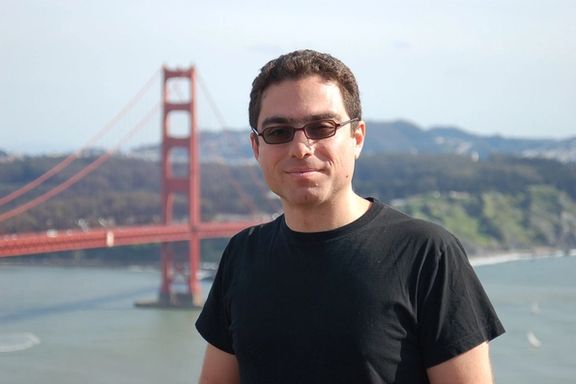
An American hostage in Iran, Siamak Namazi, has informed his family that Iranian authorities have told him he will be freed soon, media in Iran reported Thursday.

UPDATE - Later on Thursday Shargh newspaper in Tehran quoted Namazi's lawyer as saying that he did not tell his family about his possible release and the news was totally false.

The news was brief and there were no details. It has not been confirmed by the US government or directly by the family, but the development comes after multiple reports of talks between Tehran and Washington to release Americans held by the Islamic Republic in exchange for Iran’s frozen funds abroad.
Iran International reported last week that talks were taking place to release Iranian funds held in South Korea in exchange for possibly three Americans who were arrested over the past eight years and convicted on unsubstantiated charges in sham trials, without due process of law.
A source with direct knowledge of the talks had told Iran International that talks had made progress and focused on Iranian funds held in Iraq and South Korea.
Around $7 billion is held by two South Korean banks, due to US financial sanctions on Iran. The funds represent Seoul’s debts to Tehran for importing oil before US sanctions fully kicked in in May 2019.
Those funds would be released in exchange for the hostages while more than $10 billion held by Iraq due to US sanctions could be released in exchange for Tehran to show more “flexibility” in nuclear talks, the source said.
US sanctions have driven Iran’s economy into a serious crisis, with the country unable to generate much oil export revenues. It has spent almost all of its foreign currency reserves, with inflation nearing 70 percent and the national currency having lost half its value in less than a year.
Nour News in Tehran affiliated with the National Security Council posted a cryptic tweet Thursday saying that Iran has tried for a long time to arrange a “prisoner exchange” out of its “humanitarian concerns” but the United States unnecessarily delayed an agreement. The tone used seems to indicate an agreement has now been reached.
Currently there are three dual nationals with American citizenship and two individuals with US permanent residency held by Iran on trumped-up charges of espionage.

Siamak Namazi, Morad Tahbaz and Emad Shargi  (undated)
100%
Siamak Namazi, Morad Tahbaz and Emad Shargi


The three citizens are Siamak Namazi, Emad Sharghi and Morad Tahbaz, while Jamshid Sharmahd and Shahab Dalili are US permanent residents.
In a White House briefing on Wednesday, national security coordinator John Kirby was asked about the recent trip of Oman’s Sultan to Tehran as a sign of indirect talks. Kirby responded that “We have — we have multiple ways of communicating with the Iranians. I’m not really sure I understand what you’re getting at.”
However, it is widely believed in Tehran that the Omani ruler, Sultan Haitham bin Tariq al-Said’s visit was primarily a mediating mission. Oman has played the role of a go-between with Tehran on several occasions.
Axios recently reported that Brett McGurk, President Joe Biden’s senior Middle East adviser, took a low-profile trip to Oman earlier this month for talks on possible diplomatic outreach to Iran.
This was an indirect confirmation of Iran International’s earlier report about ongoing talks on release of Iran’s blocked funds.


Most Viewed

Iran International says it won’t be silenced after London arson attack
1

Iran International says it won’t be silenced after London arson attack

2
VOICES FROM IRAN

Hope and anger in Iran as fragile ceasefire persists

3

US sanctions oil network tied to Iranian tycoon Shamkhani

4

Iran halts petrochemical exports to supply domestic market

5
INSIGHT

How Tehran bends its own red lines to boost state rallies

Banner
Banner

Spotlight

  • Hardliners push Hormuz ‘red line’ as US blockade tests Iran’s leverage
    INSIGHT

    Hardliners push Hormuz ‘red line’ as US blockade tests Iran’s leverage

  • Ideology may be fading in Iran, but not in Kashmir's ‘Mini Iran'
    INSIGHT

    Ideology may be fading in Iran, but not in Kashmir's ‘Mini Iran'

  • War damage amounts to $3,000 per Iranian, with blockade set to add to losses
    INSIGHT

    War damage amounts to $3,000 per Iranian, with blockade set to add to losses

  • Why the $100 billion Hormuz toll revenue is a myth
    ANALYSIS

    Why the $100 billion Hormuz toll revenue is a myth

  • US blockade targets Iran oil boom amid regional disruption
    ANALYSIS

    US blockade targets Iran oil boom amid regional disruption

  • Iran's digital economy battered by prolonged blackout
    INSIGHT

    Iran's digital economy battered by prolonged blackout

•
•
•

More Stories

Iranians Ask Why Oil Exports Do Not Help The Beleaguered Economy

Jun 1, 2023, 11:10 GMT+1
•
Iran International Newsroom

Two online media outlets in Iran have asked the question that is on everyone’s mind: Where is the oil export money the government claims to be earning since 2021.

There is little doubt the Iranian regime succeeded in boosting its oil exports despite US sanctions since late 2020, coinciding with Joe Biden’s victory in the presidential elections and his policy of negotiating a return to the 2015 JCPOA nuclear deal.

Former President Trump’s sanctions had reduced Iran’s crude exports to around 200,000 barrels per day, but since 2021 Iran has been shipping at least 600,000 barrels.

Industry monitoring firms, such as TankerTrackers, Vortexa, Kpler, and other sources estimate Iran exported anywhere from 810,000 to 1.2 million barrels of crude oil per day in the second half of 2022. Tehran keeps the export volume secret, but top officials constantly claim revenues are increasing, without providing details, apparently to protect buyers who are violating US sanctions.

Nevertheless, in the past two years the country’s economic crisis has worsened and many ask where the oil money is and why the revenues do not help the situation. The Iranian currency has more than halved in value in one year and recent reports say annual inflation is approaching 70 percent.

Farazdaily, a website in Tehran posed the question to two members of parliament last week and they did not deny that more oil is being shipped – primarily to China – but they had no answer about why the revenues do not have a positive impact on the economy.

MP Yaghoub Rezazadeh (undated)
100%
MP Yaghoub Rezazadeh

One of the lawmakers who spoke to FarazDaily, Yaghoub Rezazadeh, first secretary of parliament’s National Security and Foreign Policy Committee claimed that Iran’s current economic problems are partly caused by sanctions in general, that makes trade with other countries hard and exports non-profitable.

If Iran exported an average of 800,000 bpd even at discounted price of around $75 per barrel in 2022, its revenues just from shipping crude oil would have been $22 billion. In addition, there is the export of oil products, such as gasoil, gasoline, and other products, which officials have said generate revenues almost equal to crude exports. Therefore, Iran should have had at least around $35 billion income, a sum that would have financed most of its annual budget.

According to the official budget bill, 55-percent of the government’s operational budget this year is supposed to be generated by oil exports.

In this scenario, the government would not need to print money, which is the reason why inflation is approaching 70 percent and the national currency is dropping.

The puzzle about Tehran’s oil revenues is that its main buyer China might not be paying for the oil in US dollars or other hard currencies, but instead bartering the oil with goods or in yuan. Iran might also be offering much larger discounts that what observers estimate. The third factor may be the cost of the illicit exports in additional shipping fees and payment to middlemen to repatriate the cash amid stringent US banking sanctions on Iran.

In the worst-case scenario, Iran might be collecting far less than $20 billion in all its energy exports.

Rezazadeh actually admitted that Iran has a hard time repatriating the oil export revenues and other debts from China, Iraq, Turkey, Syria, Afghanistan and some neighboring countries in the Persian Gulf region.

Referring to sanctions he said, “Naturally, with all these impediments we are not able to bring back proceeds form oil exports. Many countries owe us money that we cannot repatriate. We have sold oil, natural gas and food to other countries without collecting the revenues.”

Lawyer Says Trial Of Mohammadi, Hamedi Not In Jurisdiction Of Revolutionary Court

Jun 1, 2023, 10:21 GMT+1

An Iranian lawyer says the Iranian Revolutionary Court is not qualified to investigate the charges of two imprisoned journalists who covered the death of Mahsa Amini.

“According to the constitution, the branches of the Revolutionary Court do not have the jurisdiction to deal with political and journalistic cases,” said Arash Keikhosravi.

He said that according to law, Elahe Mohammadi and Niloufar Hamedi should have been released by now and their case should have been referred to one of the branches of the Criminal Court.

Their case has to be investigated in the presence of a jury in an open court, so that justice can be served, he added after the first hearing was held Monday in Tehran behind closed doors.

The two journalists have been charged with propaganda against the regime and conspiracy to commit acts against national security, which could bear death sentences.

Hamedi managed to visit Mahsa Amini in Tehran’s Kasra hospital and broke the news of her grave condition after being taken into the custody of the morality police three days earlier for wearing her hijab “improperly”. Amini was in a coma at the time.

Mohammadi, likewise, managed to travel to Amini’s hometown of Saqqez in western Iran to report on her funeral on September 17, which thousands attended.

The US State Department has called the "sham" trial a "mockery of justice" and shows the Islamic Republic's fear of journalists.

Two Female Iranian Journalists Face ‘Sham Trial’, Watchdog Says

Jun 1, 2023, 07:30 GMT+1
•
Maryam Sinaiee

Reporters Without Borders (RSF) condemned the trials of Niloofar Hamedi and Elahe Mohammadi who first reported the death in custody of Mahsa Amini in September. 

Calling the trials “sham” in a statement Tuesday, RSF said the two journalists who have been in detention since a few days after Amini’s death should be freed at once instead of facing possible death sentences. 

The two journalists have been charged with propaganda against the regime and conspiracy to commit acts against national security, which could bear death sentences. 

“The fact that Niloofar Hamedi and Elaheh Mohammadi were unable to see their lawyers, even a few days before their trials, confirms that this is travesty of justice whose sole aim is to legitimise the persecution of these two journalists. We demand their immediate release,” Jonathan Dagher, head of RSF’s Middle East desk, said. 

In a tweet Tuesday, RSF also said banning the lawyers of the two journalists from speaking at their hearings was “further proof of the judicial farce against the two journalists.”

Hamedi, managed to visit Mahsa Amini in Tehran’s Kasra hospital and broke the news of her grave condition after being taken into the custody of the morality police three days earlier for wearing her hijab “improperly”. Amini was in a coma at the time.

Mohammadi, likewise, managed to travel to Amini’s hometown of Saqqez in western Iran to report on her funeral, September 17, which thousands attended. 

The lawyers for Niloofar Hamedi, a reporter of the reformist Shargh daily, and Elahe Mohammadi, of the reformist Ham-Mihan newspaper, were banned from speaking at the 1st hearings.,” RSF tweeted Tuesday.

Imprisoned journalists Niloofar Hamedi and Elaheh Mohammadi pictured on the front page of the newspaper «Ham-Mihan» on October 30, 2022
100%
Imprisoned journalists Niloofar Hamedi and Elaheh Mohammadi pictured on the front page of the newspaper «Ham-Mihan» on October 30, 2022

The first session of Mohammadi’s trial presided by the notorious judge Abolghasem Salavati was held behind closed doors at Branch 15 of the Revolutionary Court of Tehran on Monday. Hamedi’s hearing was held on Tuesday by the same judge and in the same manner. Lawyers of the two journalists were not allowed to speak. 

Hamedi’s husband, Mohammad-Hossein Ajorlou who is a sports journalist himself, in a series of tweets Tuesday confirmed that Hamedi’s lawyer had not been given an opportunity to speak and said family members, including himself, were not allowed in the courtroom. According to Ajorlou’s tweet the date for the next hearing has not been set. 

The Telegram channel of the ultrahardliner Raja News claimed that “anti-Iranian media” are trying to “reduce” the arrest of the two journalists to their coverage of Mahsa Amini’s death. 

“But reliable information indicates that Niloofar Hamedi and Elaheh Mohammadi had participated in training courses of institutions that seek the overthrow [of the Islamic Republic] and had connections with foreign intelligence services,” Raja News which is affiliated to the ultraconservative Paydari Front wrote. 

In October, Iran's intelligence ministry and SAS, the intelligence organization of the Revolutionary Guards (IRGC) accused Mohammadi and Hamedi of being CIA agents. “Using the cover of a journalist, she was one of the first people who arrived at the hospital and provoked the relatives of the deceased and published targeted news,” they said in a joint statement. 

Reformist politician Abbas Abdi  (undated)
100%
Reformist politician Abbas Abdi

Abbas Abdi, a reform bloke politician said in a May 23 tweet that the government twists charges against dissidents to avoid open trials and demanded that the two journalists be tried publicly according to article 165 of the Iranian Constitution.

The Iranian Constitution stipulates that trials of political prisoners and journalists should be public and with the presence of a jury. 

Iran Makes Partial Concessions To UN Nuclear Watchdog

May 31, 2023, 21:16 GMT+1
•
Iran International Newsroom

The UN nuclear watchdog has re-installed only some monitoring equipment that Iran ordered removed last year, the watchdog said in two reports on Wednesday.

The reports indicate partial Iranian cooperation, first in years, with the International Atomic Energy Agency (IAEA) as the watchdog’s board of governors is scheduled to meet this month. In the past, Tehran has been censured by the board for lack of cooperation. 

The re-installed equipment is a fraction of what the International Atomic Energy Agency (IAEA) had planned to set up to improve its surveillance of Iran's nuclear activities, as the IAEA said it had agreed with Iran in March in a bid to defuse a standoff between both sides over Iran's cooperation.

The limited progress described in the reports did, however, include the installation of real-time enrichment monitoring equipment on the only lines of centrifuges enriching uranium to up to 60% purity, near weapons grade, at Natanz and Fordow, a senior diplomat said.

At the same time, Iran's stock of uranium enriched to up to 60% has continued to grow and is now roughly enough for two nuclear bombs, one of the two confidential quarterly reports to member states showed.

Iran has been pressing ahead with its enrichment program, which it has been progressively expanding and accelerating, including at its underground Fordow site that was developed in secret and which may have been built inside a mountain to protect it from potential air attack.

The 2015 Iran nuclear deal imposed strict limits on the types of centrifuges Iran could use and where as well as the purity it could enrich to and the amount of enriched uranium it could hoard, in exchange for the lifting of international sanctions against Iran.

After then-President Donald Trump pulled the United States out of that deal in 2018 and re-imposed sanctions, Iran breached and moved beyond the deal's enrichment level of 3.65 percent purity. By early 2021, as the new Biden administration signalled its readiness to re-enter the agreement, Tehran adopted a tough position and began enriching up to 20 and then 60-percent, to the point IAEA chief Rafael Grossi has called the deal an "empty shell" and diplomats say there are scant chances of reviving it.

One IAEA report on Wednesday said Iran now had 114.1 kg of uranium enriched to up to 60% and in the form of uranium hexafluoride (UF6), which can easily be enriched further - an increase of 26.6 kg from the previous quarter.

About 42 kg of uranium enriched to 60% is what the IAEA calls a "significant quantity", defined as "the approximate amount of nuclear material for which the possibility of manufacturing a nuclear explosive device cannot be excluded".

A surveillance camera is displayed during a news conference about developments related to the IAEA's monitoring and verification work in Iran, in Vienna, Austria June 9, 2022.
100%
A surveillance camera is displayed during a news conference about developments related to the IAEA's monitoring and verification work in Iran, in Vienna, Austria June 9, 2022.

INVESTIGATION GETS AN EXPLANATION

Although the United States says there is no evidence that Iran has decided to proceed and build a weapon, in testimony to Congress in March, Gen. Marky Milley, chairman of the Joint Chiefs of staff, warned that Tehran could “field” a bomb in several weeks, if it made the crucial decision.

A senior diplomat has cautioned, however, that in practice it would take more than 55 kg of uranium enriched to 60% to make one bomb because some material is wasted during enrichment.

In addition, Iran's total stockpile of enriched uranium continues to grow and is now 23 times the 202.8-kg limit imposed by the 2015 deal, at 4.7 tonnes, the report said.

The IAEA also reported that after years of investigation and lack of progress with Iran on explaining uranium particles found at three sites, Iran had given a satisfactory answer on one of them to explain the presence of uranium particles there. The IAEA has also accepted Iran’s explanation about why particles of 83-percent enriched uranium were found earlier this year at one of its installations.

The Wall Street Journal reporter Laurence Norman, who has seen the report, tweeted that the IAEA had no choice but accept some explanations that seem plausible. If the Agency in the future comes across new information, it can re-open closed cases.

“Iran will conclude from this that by offering very little and quite possibly providing answers that aren't entirely accurate, they've whittled 4 safeguards files down to 2 and can keep grinding away until the agency gives up,” Norman wrote.

While the particles could be explained by the presence of a Soviet-operated mine and lab there and the IAEA had no further questions, a senior diplomat said, the IAEA's assessment remained that Iran carried out explosives testing there decades ago that was relevant to nuclear weapons.

The added monitoring equipment included surveillance cameras at a site in Esfahan (Isfahan) where centrifuge parts are made, one report said. The other added that the IAEA "awaits Iran's engagement to address" issues including the installation of more monitoring equipment and the two remaining sites where uranium particles were found.

With reporting by Reuters

UN Watch Moves To Overturn Iran’s Appointment As Chair Of UNHRC Social Forum

May 31, 2023, 19:09 GMT+1

An independent human rights organization submitted a resolution to the UN to overturn Iran's appointment as the chair of the Social Forum of the UN Human Rights Council.

Hillel Neuer, international human rights lawyer and director of the UN Watch said in a tweet that the text was contained in a UN Watch submission to the 53rd Session of the UN Human Rights Council.

“There was no procedure to expel Iran from the UN Women’s Rights Commission, but we got that done,” said Hillel Neuer, referring to the group's recent campaign work which saw Iran thrown out of the UNWRC.

“We thank the more than 75,000 people worldwide who have signed our petition to stop Iran’s regime from heading the UN Human Rights Council Social Forum in November. Our goal is to reach 100,000 before approaching world leaders for their support,” said Neuer.

Since September the Islamic Republic has continuously undermined and increasingly suppressed the human rights of women and girls, including the right to freedom of expression and opinion, often with the use of excessive force and undercover surveillance.

Tens of thousands have been arrested arbitrarily, including women and girls.





