• العربية
  • فارسی
Brand
  • Iran Insight
  • Politics
  • Economy
  • Analysis
  • Special Report
  • Opinion
  • Podcast
  • Iran Insight
  • Politics
  • Economy
  • Analysis
  • Special Report
  • Opinion
  • Podcast
  • Theme
  • Language
    • العربية
    • فارسی
  • Iran Insight
  • Politics
  • Economy
  • Analysis
  • Special Report
  • Opinion
  • Podcast
All rights reserved for Volant Media UK Limited
volant media logo

Politician Criticizes Iran's Stance Re Taliban, Calls For Realism
Iran International Newsroom
May 27, 2023, 22:19 GMT+1Updated: 17:46 GMT+1
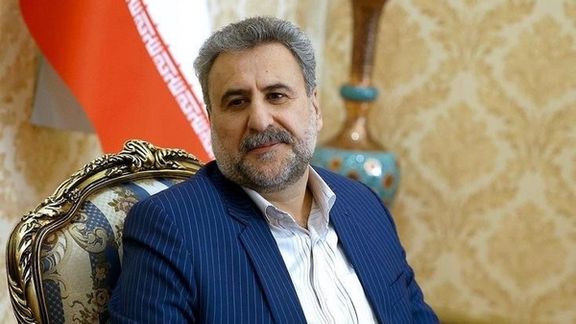
Heshmatollah Falahatpisheh, former head of Iranian parliament's National Security and Foreign Relations Committee

A prominent Iranian politician has blamed the inexperience of Iranian diplomats for tensions with the Taliban in Afghanistan and clashes at the border.

Heshmatollah Falahatpisheh, former head of Iranian parliament's National Security and Foreign Relations Committee said in an interview with Rouydad24 website on May 27 that "the most intimidated individuals in Iran's Foreign Ministry are in charge of ties with Afghanistan." He was probably referring, among others, to Hassan Kazemi Qomi, Iran's ambassador to Kabul.

The politician’s remarks were published on the same day when a serious border skirmish took place killing at least three people from both sides.

On May 25, Iran's Foreign Minister Hossein Amir Abdollahian was quoted as saying, "We are concerned about sporadic clashes at the border between Iran and Afghanistan during the past months."

Falahatpisheh told Rouydad24 that "Afghanistan has the upper hand in relations with Iran as Kabul uses a major part of Iran's share of water in the river Hirmand (Hilmand in Afghanistan) for poppy cultivation, a plant from which Afghans extract opium." Falahatpisheh said that the Taliban's annual income from selling narcotics is more than what Iran spends on developmental projects during the year.

The Helmand River Dam, where Afghanistan stores the water shared with Iran. Undated
100%
The Helmand River Dam, where Afghanistan stores the water shared with Iran

Meanwhile, he criticized Iran's "intimated" diplomats who have handed over Afghanistan's embassy in Tehran to the Taliban although Iran officially does not recognize their regime in Afghanistan as the country's government. Amir-Abdollahian said two days before the latest clash at the border that Iran does not recognize the current Taleban ruling council in Afghanistan, adding that Iran calls for forming a broad-based government in Afghanistan, and that "the Taliban are only a part and not all of the political reality of Afghanistan. We are unhappy about Afghan girls being deprived of education and see this as a behavior which is against the teachings of the prophet of Islam."

Falahatpisheh also blamed Iran's problematic regional diplomacy during the past seven years as another indication of the Foreign Ministry's inefficiency. He was referring to the attacks on the Saudi embassy in Iran in January 2016, which adversely affected not only ties between Tehran and Riyadh, but also Iran's relations with many other regional countries. He said that the development weakened Iran's bargaining power in the region.

He expressed regret that those who ruined Iran's regional relations seven years ago have still maintained their influence on the country's foreign policy as “infiltrators” in the Iranian government. He warned that a new crisis may occur at any moment because of those infiltrators. He did not explain what he meant by ‘infiltrators’.

Falahatpisheh said that no review of that period in Iran's foreign relations have been done, so no lessons have been learned. He warned that the excesses by some Iranian officials is manifested in the new episode in Iran's ties with Afghanistan. "The same individuals who called the Taliban "our Mojahed brothers" are now taking radical stances against Afghanistan.

Some Iranian media and clerics, most prominently Masih Mohajeri, the editor in chief of Jomhouri Eslami newspaper warned officials about their premature friendliness toward the Taliban immediately after their takeover of Afghanistan.

Falahatpisheh pointed out that during the past two years, only 4 million cubic meters of water was released from Afghanistan into the Hirmand rather than Iran's 8.5 million cubic meter share based on a 1973 agreement between the two countries. He said even most of that water arrived in Iran because of floods without the Taliban having any control over the flow.

The politician suggested that Iran should take a realistic stance against Afghanistan and cut off the Taliban's profit from the smuggling of narcotics into Iran, adding that Iran's anti-narcotics campaign has never been effective.

Meanwhile, he pointed out that Tehran's weakened position on the international scene has turned even small regional players such as the Taliban into major threats for Iran.


Most Viewed

Iran negotiators ordered to return after internal rift over Islamabad talks
1
EXCLUSIVE

Iran negotiators ordered to return after internal rift over Islamabad talks

2
ANALYSIS

US blockade enters murky phase as tankers spoof signals and buyers hesitate

3
ANALYSIS

Why the $100 billion Hormuz toll revenue is a myth

4

US tightens financial squeeze on Iran, warns banks over oil money flows

5
ANALYSIS

US blockade targets Iran oil boom amid regional disruption

Banner
Banner

Spotlight

  • Hardliners push Hormuz ‘red line’ as US blockade tests Iran’s leverage
    INSIGHT

    Hardliners push Hormuz ‘red line’ as US blockade tests Iran’s leverage

  • Ideology may be fading in Iran, but not in Kashmir's ‘Mini Iran'
    INSIGHT

    Ideology may be fading in Iran, but not in Kashmir's ‘Mini Iran'

  • War damage amounts to $3,000 per Iranian, with blockade set to add to losses
    INSIGHT

    War damage amounts to $3,000 per Iranian, with blockade set to add to losses

  • Why the $100 billion Hormuz toll revenue is a myth
    ANALYSIS

    Why the $100 billion Hormuz toll revenue is a myth

  • US blockade targets Iran oil boom amid regional disruption
    ANALYSIS

    US blockade targets Iran oil boom amid regional disruption

  • Iran's digital economy battered by prolonged blackout
    INSIGHT

    Iran's digital economy battered by prolonged blackout

•
•
•

More Stories

At Least Three Killed In Clash Between Iran and The Taliban

May 27, 2023, 21:04 GMT+1

Two Iranian border guards and one Taliban fighter were killed after shooting broke out near a border post on Saturday.

It was not immediately clear what had provoked the incident, in which several people were also injured, but it came amid tensions over water rights.

Iran has accused Afghanistan's Taliban of violating a 1973 treaty by restricting the flow of water from the Helmand River to Iran's parched eastern regions, an accusation denied by the Taliban.

"Today, in Nimroz province, Iranian border forces fired toward Afghanistan, which was met with a counter-reaction," spokesman for the Taliban-run interior ministry, Abdul Nafi Takor, said in a statement.

"The situation is under control now. The Islamic Emirate does not want to fight with its neighbors," the spokesman said, without identifying the victims.

He said one person had been killed on each side and several injured, though Iran's official IRNA news agency later said two Iranian border guards had been killed and two Iranian civilians injured.

Following the clash, Iranian authorities closed the Milak – Zaranj border post, a major commercial crossing - and not the site of the clash - until further notice, IRNA said.

Iran's deputy police chief, Qasem Rezaei, said earlier: "Taliban forces started shooting at the Sasoli checkpoint ... drawing a decisive response.”

Iran's border guards said in a statement they had "used their superior heavy fire to inflict casualties and serious damage", without giving details.

A Taliban defense ministry spokesman said the Taliban "considers dialogue and negotiation to be a reasonable way for any problem. Making excuses for war and negative actions is not in the interest of any of the parties.”

Earlier in May, Iranian President Ebrahim Raisi warned the Taliban over disregarding Iran's water rights under the 1973 treaty. The Taliban rejected Raisi's perceived threat, with a former Taliban official mocking Raisi in a video that went viral.

Report by Reuters

Exclusive - US And Iran Can Reach A Deal 'Soon' On Release Of Frozen Funds

May 27, 2023, 17:44 GMT+1
•
Iran International Newsroom

Talks between Iran and the US on the release of Tehran's frozen assets could result in a deal soon, a source with direct knowledge of the talks told Iran International.

Apparently, the talks that have made progress focused on Iranian funds held in Iraq and South Korea. The money in Iraqi banks could be as much as $10 billion or more by most recent estimates mentioned by Iranian officials. Iraq imports natural gas and electricity from Iran but is barred by US sanctions to make dollar transfers to Tehran.

South Korea holds $7 billion, which it owes for importing Iranian oil prior to full US sanctions imposed in May 2019.

The implementation of the deal, however, will take time, the source told Iran International.

Iran is expected to show more flexibility on issues related to its nuclear program in exchange for the release of its funds in Iraq, and free hostages with dual nationality in exchange for its assets in South Korea. Currently there are three dual nationals with American citizenship and two individuals with US permanent residency held by Iran on trumped-up charges of espionage.

The three citizens are Siamak Namazi, Emad Sharghi and Morad Tahbaz, while Jamshid Sharmahd and Shahab Dalili are US permanent residents.

US citizens held hostage in Iran (L-R) - Emad Sharghi, Siamak Namazi and Morad Tahbaz
100%
US citizens held hostage in Iran (L-R) - Emad Sharghi, Siamak Namazi and Morad Tahbaz

Iran International asked specific questions from the US State Department regarding the information obtained from our source. The press office relayed the following general response:

"We remain committed to securing the freedom of all US nationals who continue to be wrongfully detained overseas, and we are working relentlessly to bring them home, including Siamak Namazi, Emad Shargi, and Morad Tahbaz. We will not stop until they are reunited with their loved ones, but we have nothing to announce.
We do not discus diplomatic efforts, and would caution any reporting that purports to do so, which is often false and misleading."

Whether this can be interpreted as a clear denial or a careful response trying to thread on the edges, is up to debate.

Iran International had received unconfirmed information earlier this year that a deal had been worked out by the State Department to secure the release of the American prisoners in exchange for the $7 billion held by Seoul, but that the White House had not given its green light.

It is not clear if release of hostages pertains only to US nationals or also to other Western prisoners held by Iran. On Friday, however, Iran and Belgium exchanged two prisoners - an Iranian diplomat and intelligence agent Asadollah Assadi held in Belgium on a terrorism conviction and a Belgian aid worker Olivier Vandecasteele.
Axios had reported in early April that the Biden administration had been entertaining the idea of a “partial nuclear deal” with Iran and had discussed it with allies. Axios referred to ten Israeli and Western sources in establishing the information.

In exchange for freezing Iran’s uranium enrichment at 60 percent the US would ease some sanctions. If true, Iran would have gained the advantage of being a few months away from producing 90-percent enriched uranium needed for a nuclear weapon and enjoy the benefits of sanctions relief.

Advanced Iranian centrifuges enriching uranium to near weapons-grade putiy
100%
Advanced Iranian centrifuges enriching uranium to near weapons-grade putiy

The report said Israeli officials told the Biden team that Iran would be treading on dangerous ground that could lead to an Israeli military strike if it enriches above the 60-percent level.

Iranian pundits, allowed to speak by the regime, and government-controlled media have also been discussing the possibility of a partial deal in recent months.

However, the US State Department at the time dismissed reports about considering a partial agreement.

Deputy Spokesperson Vedant Patel in response to a question by Iran International said that the talk of an interim nuclear deal was “rumors” that “tend to seldom be accurate.”

He added that President Joe Biden “has long said that he's committed to ensuring Iran never get to nuclear weapon, and we still believe diplomacy is the best way to achieve that goal. At the same time, we're preparing for all possible options and contingencies in coordination with our allies and partners.”

This was basically the same response given to Axios before it published its report, which did not categorically deny the information but tried to categorize it as a rumor that could be inaccurate.

Iran has accumulated enough uranium enriched to 20 and 60 percent purity that it could produce at least two nuclear bombs within months, most Western and Israeli officials and experts agree.

The Biden administration announced last October that pursuing talks for reviving the 2015 JCPOA nuclear deal abandoned by the Trump administration was not its priority anymore. Iranian delivery of drones to Russia and its deadly crackdown on anti-government protesters in the second half of 2022 were reasons to discourage the administration that had already spent 18 months in indirect talks with Iran.

Iran, Taliban Exchange Heavy Fire Amid Water Dispute

May 27, 2023, 14:19 GMT+1

An exchange of gunfire took place Saturday on the border between Iran and Afghanistan, as tensions over water rights between the two nations escalate.

According to Iran's state-run news agency, IRNA, the Iranian forces inflicted "heavy casualties and serious damage" along the border of Sistan and Baluchestan province in the southeast and Afghanistan’s Nimroz province.

While IRNA stopped short of identifying those the Iranian border guards fired at, the IRGC-affiliated Tasnim News agency quoted Sistan-Baluchistan Border Guard Information Center as saying that the conflict was between the border guards and “unknown armed forces who intended to cross the border illegally.”

According to the AP, Afghanistan's Taliban-controlled media did not acknowledge the fighting, but Tasnim quoted some Afghan local media as saying that the conflict took place in Kang district of Nimroz province between Taliban regime forces and the Iranian border guards.

Tasnim also quoted its field correspondent as reporting that there was also a clash between the Iranian border guards at Nimroz and Taliban forces stationed on the Afghan side.

“With the cessation of the conflict, the border guards of Iran and the Taliban have already convened a meeting to investigate the causes of the tension,” added Tasnim. However, it is not clear if the fighting stopped later on Saturday.

“Small and semi-small weapons and artillery have been used in this conflict, however, the reports that Iranian forces have used missiles is completely false,” claimed Tasnim.

The were also some reports that Zaranj airport in Nimroz was targeted by Iranian forces, however Tasnim rejected it.

Disputes between Tehran and Kabul have risen over the Taliban’s obstruction of Iran's access to Helmand River water in violation of a 1973 treaty.

Iranian Teenager Shot In Head During Protests Succumbs To Injuries

May 27, 2023, 13:54 GMT+1

A 16-year-old Iranian boy, who was shot deliberately by regime forces during protests, succumbed to his injuries after eight months.

Abolfazl Amir-Ataei died Saturday after enduring great suffering from a severe head injury amid protests in Shahr-e Ray south of Tehran during Iran’s “Woman Life Freedom” movement.

Informed sources told the Hegaw Human Rights Organization that Amir-Ataei was shot in close range by government forces, with a tear gas projectile striking him from a meter away, causing a critical injury and shattering his skull.

He underwent several major surgeries, and finally, on May 21, his mother published a video showing that he could move his fingers and react to his mother's words; however, in less than a week he passed away.

Abolfazl was taken to the hospital the same day after being hit, but some relatives of the teenager said government agents forced his family not to complain to any institution.

The young man’s mother, who endured the excruciating pain caused by Abolfazl’s injuries, posted an image of her son on Instagram, saying "my moon vanished, I wish demise of yours too".

During the protests following the death in custody of Mahsa Amini in September, hundreds of children and teenagers were killed, injured, and thousands imprisoned by the regime.

Human rights organizations identified at least 70 children and teenagers killed during the protests.

The underage protesters were killed by direct shots to their heart and head or being beaten by the regime forces.

As the number of children killed in the protests increased, "Death to the Child-killing Regime" turned into one of the main slogans in street rallies or chanted over rooftops.

Iran Officials Express Concern Over Economic Crisis, Hyperinflation

May 27, 2023, 13:04 GMT+1
•
Iran International Newsroom

While some Iranian officials are concerned about economic hardship and fear a looming hyperinflation, others claim there are plans under way to fix the situation.

The differences in opinion among officials about the economic crisis has surfaced in the media while the current government is halfway through its four-year term of office.

Expediency Council chief Sadeq Amoli-Larijani warned in an interview with Etemad Online that Iranians are finding it increasingly difficult to cope with their financial hardships and the government needs to take urgent measures. Amoli-Larijani said that he has informed officials of the alarming state of the economy.

He said the situation is so urgent that officials must come up with immediate, short-term solutions to tackle the country’s economic problems. 

Supreme Leader Ali Khamenei (left) and Expediency Council chief Sadeq Amoli-Larijani  (undated)
100%
Supreme Leader Ali Khamenei (left) and Expediency Council chief Sadeq Amoli-Larijani

Iran’s currency has lost half its value in less than a year and millions of people have sunk into poverty. Iran has refused to reach a nuclear deal with the United States, which could lift crippling economic sanctions.

Meanwhile, former lawmaker Ezzatollah Yousefian-Molla told Nasmeh News that Iran's economy will face hyperinflation starting in June. He said the rise in prices between May 2022 and May 2023 is unbelievable. According to the Iranian Central Bank, the point-to-point inflation between those two dates has been over 55.5 percent. Others have offered higher estimates approaching 70 percent.

Yousefian-Molla suggested that the government had better not announce inflation figures under the circumstances. He warned the situation is getting even worse. He even said that Supreme Leader Ali Khamenei’s latest speech to Iranian diplomats about changing Iran’s diplomacy was alluding to the fact that something needs to be done to improve the status of the economy.

He added that Iranians are finding it increasingly difficult to make ends meet although they do their best to spend less. Even prices of bread, cheese and eggs have skyrocketed. In such a situation, he said, the people will not believe government lies about economic growth.

Former lawmaker Ezzatollah Yousefian-Molla (undated)
100%
Former lawmaker Ezzatollah Yousefian-Molla

Despite the warnings, vice president for economic affairs Mohsen Rezaei says economic reforms are on their way. However, he admitted that the current situation is “painful” for the people. Meanwhile, despite being a member of the government, he criticised the government for not keeping up with technological progress. 

He also criticized Iranian governments during the past 80 years for trying to take over exisiting companies and factories rather than genuinely seeking to make Iran an industrial country. Rezaei added that the factories the government has established are on a declining course. 

He maintained that Iran has been successful only in defense industries. “In other areas, we have spent a lot of money and energy while we did not have enough progress.” He further boasted that “Big powers fear our defence industries.” 

He also criticized the budgeting system in Iran and said the government allocates budget but has no idea from where the funding should come. Rezaei added that Iran’s banking system also needs to be reformed to be compatible with international standards.

Meanwhile, he blamed the people for the lack of economic progress saying that the country needs economic reforms, but implementing those reforms will lead to protests.

In another development, the Speaker of the Iranian Parliament Mohammad Bagher Ghalibaf said in an interview with the IRGC-linked Tasnim news agency that “I promise to bring about economic stability with a five-year plan to overcome inflation.”