• العربية
  • فارسی
Brand
  • Iran Insight
  • Politics
  • Economy
  • Analysis
  • Special Report
  • Opinion
  • Podcast
  • Iran Insight
  • Politics
  • Economy
  • Analysis
  • Special Report
  • Opinion
  • Podcast
  • Theme
  • Language
    • العربية
    • فارسی
  • Iran Insight
  • Politics
  • Economy
  • Analysis
  • Special Report
  • Opinion
  • Podcast
All rights reserved for Volant Media UK Limited
volant media logo

Pundits Say Iran’s Hardliners Block Change And Reform
Iran International Newsroom
Mar 25, 2023, 06:57 GMT+0Updated: 17:39 GMT+1
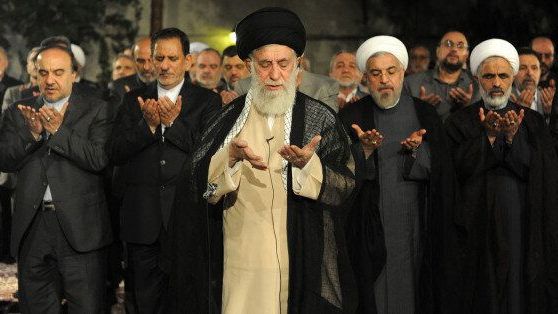
Iran’s ruler Ali Khamenei leading a prayer with reformist figures behind him

A relatively moderate politician says Iranians no longer believe in the reformist-conservative dichotomy that has been the mainstay of regime politics for 25 years.

Referring to mass disqualification of well-known reformist figures in previous elections, Ghavami told Entekhab news website in Tehran that the people are unlikely to vote for a few low-key reformists who are usually allowed to run for the parliament.

Reformist politician Nasser Ghavvami (undated)
100%
Reformist politician Nasser Ghavvami

"However, as a lot of people will take part in the elections anyway, they are likely to cast blank ballots in the 2024 parliamentary election," he added in the March 24 interview. However, Ghavami pointed out that the country's biggest problem in the new Iranian year that started on March 21 will be the back-breaking high cost of living.

“Reformists are those politicians and public figures who have long argued that Iran needs change and reforms, but have believed that in its current form the Islamic regime can evolve and become a more democratic political system. Opposing them are ‘principlists’ or conservatives and hardliners who traditionally did not believe in liberalization.

In the 2020 parliamentary and 2021 presidential elections, the Guardian Council that vets candidates according to the constitution blocked almost all reformists from putting forth their candidacy. As a result, all three government branches are now dominated by hardliners loyal to Iran’s authoritarian ruler Ali Khamenei.

Ghavami pointed out the "non-competitive" nature of elections in Iran and said the regime will hold next year’s elections anyway regardless of the people's reluctance to turn out to vote.

In another comment, Ghavami said that Iran needs reforms in the area of foreign policy, but the current administration of President Ebrahim Raisi is incapable of changing course. Probably out of political correctness, he did not mention that foreign policy is controlled by Khamenei.

Rising prices, Ghavami said, are likely to cause a political, economic and social catastrophe in the coming months. Positive change in Iran is unlikely as long as the government cannot solve its domestic and international problems and fails to respond to the demands Iranians have put forward during their protest.

Meanwhile, in an interview, academic Mohammad Javad Gholamreza Kashi said most of Iran's problems are due to the fact that hardliners in the government and parliament have refused to recognize the idea of people's participation in politics.

Mohammad Javad Gholamreza Kashi (undated)
100%
Mohammad Javad Gholamreza Kashi

He likened Iran's current situation to a case of childbirth during which the hardliners are determined to kill the baby before it is born. This comes while the society is looking for a natural birth, he said.

Kashi, an assistant professor of law and political science reiterated that while the people of Iran have pluralist demands, the hardliners continue beating on the drums of unilateralism. Explaining this in sociological terms, Kashi said that hardliners are adamant to solve a modern problem with an old and outdated solution.

He traced back Iranians demands to the 1905 Constitutional Revolution that although led to modernism in the form of new buildings, roads, railways and airports after less than half a century, its demands for the rule of law, freedom and justice were never met.

In the meantime, while the people have embraced modernism, Iran's new rulers are the same religious fundamentalist they used to be at the beginning the 20th century. "The baby is still not born," Kashi said, adding that "the people are running out of patience and demand a Cesarean surgery while the hardliners are likely to pull a new trick out of their sleeves."


Most Viewed

Ghalibaf defends Iran-US talks amid hardline backlash
1
INSIGHT

Ghalibaf defends Iran-US talks amid hardline backlash

2
ANALYSIS

From instability to influence: Pakistan’s pivotal role in US-Iran diplomacy

3
ANALYSIS

100 days on: why Iran’s January protests spread across social classes

4

War-hit homeowners feel abandoned as Iran’s reconstruction aid fades

5
INSIGHT

100 days on: the anatomy of Iran’s January crackdown

Banner
Banner

Spotlight

  • Bread shortages, soaring prices strain households in Iran, residents say
    VOICES FROM IRAN

    Bread shortages, soaring prices strain households in Iran, residents say

  • War-hit homeowners feel abandoned as Iran’s reconstruction aid fades

    War-hit homeowners feel abandoned as Iran’s reconstruction aid fades

  • 100 days on: the anatomy of Iran’s January crackdown
    INSIGHT

    100 days on: the anatomy of Iran’s January crackdown

  • Ghalibaf defends Iran-US talks amid hardline backlash
    INSIGHT

    Ghalibaf defends Iran-US talks amid hardline backlash

  • 100 days on: why Iran’s January protests spread across social classes
    ANALYSIS

    100 days on: why Iran’s January protests spread across social classes

  • From instability to influence: Pakistan’s pivotal role in US-Iran diplomacy
    ANALYSIS

    From instability to influence: Pakistan’s pivotal role in US-Iran diplomacy

•
•
•

More Stories

Killing Protesters Was Biggest Mistake By Regime - Sunni Leader

Mar 24, 2023, 23:01 GMT+0
•
Iran International Newsroom

Protests erupted again in Iran’s Sunni majority region Friday as community’s prominent religious leader slammed Islamic Republic for its violence and lack of real elections.

During his Friday prayer sermons, which was the first in the fasting month of Ramadan, Mowlavi Abdolhamid said, "In the past, we have had elections in which we elected representatives and presidents, but they were not real elections, they were appointments.” 

In a free election, people have a choice to vote for whoever they deem fit to represent them, but in Iran the Guardian Council puts forth a number of their cherrypicked insiders, who are not capable of running the country, he said. 

He further described killing of protesters and harsh treatment of people detained during over six months of nationwide rallies against the regime as a "big mistake" and a "grave sin."

Mowlavi Abdolhamid, the most influential Sunni cleric in Iran (March 2023)
100%
Mowlavi Abdolhamid, the most influential Sunni cleric in Iran

"There are protests everywhere in the world, but they (authorities) listen to the people and do not kill them like they did in Iran. Killing protesting people in Iran was a big mistake. They should not have hit and killed people with gunfire. Many people went to prison and the detainees were treated harshly, which was a painful and regretful incident,” he said.

Abdolhamid went on to say that neither religion, nor sect, should be a factor when it comes to elections, noting that the only people who should be in managerial positions are those who can make Iran prosperous, not like the current officials who only care about filling their own pockets.

Although street protests are not as frequent as the past few months, peoples’ hearts are "wounded and in pain," the cleric maintained.

Portraying the previous Iranian year as a grim year with lots of ups and downs that led to the creation of the current protest movement, he said, “The people of Iran felt difficulties regarding many issues, they saw themselves in trouble and failure in life, they were under the most severe economic pressures that threaten their livelihood."

In addition to economic issues, the outspoken Sunni leader said systematic corruption, as well as unpopular domestic and foreign policies were other factors led the people to revolt. 

This Friday again authorities shut down internet access in Zahedan, the provincial capital of Sistan-Baluchestan where Abdolhamid delivers his sermons and it is home to the country’s Sunni Baluch minority of up to two million people. Cyberspace watchdog NetBlocks confirmed the major disruption to internet service, saying that the incident follows an ongoing pattern of network blackouts targeting protests during Friday prayers. 

Following his sermons, people of the city held rallies to protest against the Islamic Republic for the 25th week in a row, chanting anti-regime slogans like “We Don’t Want a Child-Killing Regime.” The Sunni Baluch population have taken to the streets in Zahedan every Friday after prayers since September 30 when government forces cracked down on protesters and killed more than 80 protesters, known as Bloody Friday. Earlier in the day, Haalvsh website, a local news outlet that monitors rights violations in Iran's Baluchestan region, said 121 of the protesters who were killed in Zahedan and Khash on Bloody Friday were identified. 

Islamic Republic Blocks Access To Iranian Moderate Website

Mar 24, 2023, 22:17 GMT+0

Moderate Iranian news website Rouydad 24, which has been a relatively good source of news about developments in Iran, has been blocked by the country’s authorities. 

The media outlet said on Twitter Thursday that the punitive measure was taken without any prior notices, and it is not clear who ordered such a hasty action. It is not clear what specific report triggered the measure.

The news website closed to Iran’s ‘reformists’ published an interview with Amjad Amini, the father of Mahsa (Zina) Amini, a few months ago. Mahsa Amini was the Kurdish Iranian woman whose death in the custody of ‘hijab police’ sparked the current wave of antiregime protests, the biggest the Islamic Republic has faced since its establishment in 1979. Nazila Maroufian and Marzieh Amiri, the outlet’s journalists, were imprisoned temporarily over the interview and their reports on the protests.

The internet filtering committee of the Islamic Republic is chaired by Mohammad Jafar Montazeri, the Islamic Republic’s prosecutor general. Before the site was filtered, Tehran prosecutor Ali Salehi had talked to the media about a lawsuit against the manager of the website for publishing stories about the chemical attacks on Iranian schoolgirls that led to hundreds of girls hospitalized without any real explanation by the Islamic Republic's authorities. 

For more than 25 years, intelligence and judicial officials under the control of Supreme Leader Ali Khamenei’s office have been closing newspapers, banning books and films, as well as arresting and imprisoning hundreds of Journalists.

US Greenlights Sanctions Waiver That Allows Iraq To Pay Iran $500mn

Mar 24, 2023, 21:29 GMT+0

The Biden administration has agreed to a sanctions waiver that will see the Islamic Republic pocket a $500 million payment from Iraq for electricity and natural gas Baghdad imports. 

According to a report by Washington Free Beacon on Friday, the administration has given the go-ahead for a sanctions waiver issued by Secretary of State Antony Blinken and transmitted to Congress earlier this week, authorizing Iraq to pay Iran. 

The latest sanctions waiver permits "the Trade Bank of Iraq to engage in financial transactions … with the Central Bank of Iran in connection with the purchase of electricity." The payment will be in cash, the report says, something the Iranian regime needs desperately amid a financial crisis that has seen the Iranian currency drop by more than 50 percent since September.

Blinken signed the waiver on March 17, one day after reports surfaced about Iran's claims of imminent receiving of the $500 million, which elicited a denial from the Treasury Department.

Earlier in the month, Hamid Hosseini, the chairman of the Iran-Iraq chamber of commerce claimed that the United States has allowed Iraq to release $500 million of its debts to Iran. Iraq owes Tehran more than $10 billion for energy imports because US banking sanctions do not allow dollar transfers to Iran. However, Hosseini said that Iraq's debt has reached $18 billion.

"Of course the Biden administration lied that they wouldn't waive sanctions on Iran just days before they did so," said Senator Ted Cruz (R., Texas), adding, "They know that by allowing money to pour into Iran, they are not only endangering the safety and security of Americans but also undermining everything they claim to believe about defeating [Vladimir] Putin.”

Israeli, British Premiers Discuss Iran's Nuclear Threat

Mar 24, 2023, 18:19 GMT+0

Israeli Prime Minister Benjamin Netanyahu met with his British counterpart Rishi Sunak in London to discuss where Iran’s nuclear threat was discussed among other issues. 

Readouts of the Friday meeting from both sides said the two talked about the security and defense challenges they share, including the threat posed by Iran, as well as ways to strengthen the relationship between Britain and Israel.

Netanyahu also invited Sunak for an official visit to Israel, the Israeli statement said. He left Downing Street less than an hour after he arrived as hundreds of protesters gathered at the gates of No 10 to demonstrate against the Israeli prime minister’s policies, especially his overhaul of the judiciary.

Downing Street said that in his meeting with Netanyahu, Sunak "stressed the importance of upholding the democratic values that underpin our relationship, including in the proposed judicial reforms in Israel.”

It added that the two men also discussed the war in Ukraine and Iran's "destabilizing activity", as well as its nuclear program, and agreed that their “governments would continue to work closely together to push back against aggression and manage the risk of nuclear proliferation.”

According to a statement from Netanyahu’s office before his London trip, his meetings are set to focus on the need to formulate a “united international front” against Iran in order to stop its nuclear program.

Earlier in the month, Israeli Foreign Minister Eli Cohen was in London to argue for Jerusalem’s position about the Islamic Republic’s threat and bolster bilateral economic ties.

Wages In Iran Are Half Of Minimum Needed To Avoid Poverty

Mar 24, 2023, 16:03 GMT+0
•
Maryam Sinaiee

A petition launched against the meagre minimum wage increase for the new Iranian year violates the labor law by disregarding the inflation rate, critics say.

The petition which was launched on March 20, the last day of the previous Iranian calendar year, has already been signed by almost 15,000 people, despite the petition website having been blocked by the government. The text of the petition calls the 27 percent increase in the minimum wage to 82 million rials per month ($180) for a family of 3.3, including benefits, “unfair”.

The minimum wage in Iran is determined by a council composed of government, business, and government-approved unions, and in fact it sets the income for most wage earners.

The petition alleges that representatives of employers and the government which it calls “the biggest employer” imposed their bidding on the workers’ representatives and demands adjustment in the make-up of the council to allow workers have a bigger say in its decisions.

“This meager increase in the deplorable current economic circumstances and the several-fold increase, even in the basic costs of an ordinary life, is not logical or legal in any way,” the petition said.

Workers and their representatives say the low minimum wage increase was a “shock” to them. “This level of difference between the inflation rate and the minimum wage increase is unprecedented,” Hassan Izadi, an official of Labor House in Gilan Province said while demanding the parliament’s intervention.

Hassan Izadi, an official of Labor House in Gilan Province (undated)
100%
Hassan Izadi, an official of Labor House in Gilan Province

Iran has one of the lowest minimum wages in the world, but salaries were increasing from 2000-2010 when the minimum wage hit a record high of about $275 in 2010. This coincided with the time when the United Nations Security Council began imposing sanctions to force Tehran to roll back its nuclear program.

A few months into the presidency of Ebrahim Raisi last year, when inflation was around 40 percent, the High Council of Labor increased the minimum wage by an unprecedented 57 percent after two consecutive years of very high inflation. At the exchange rate of the time the minimum wage last year almost equaled $220.

Many politicians and commentators have warned that rising prices and declining incomes will lead to more protests in the coming months.

This year’s increase brings the monthly minimum wage (without benefits) down to around $120 although the overall rate of inflation has increased to around 50 percent and to at least 70 percent in the food group while rents have also hugely gone up in most cities.

Authorities keep promising to control inflation. In his New Year speech on March 21, Supreme Leader Ali Khamenei dubbed the new year as “the year of bringing inflation under control”, a promise also repeated by Raisi in his speech, but reminiscent of similar slogans in previous years.

Wages have become a fraction of what workers need to survive during five years of high double-digit inflation and huge devaluation of the national currency, particularly during the past year. The rial has fallen 13-fold since 2018 when the United States withdrew from the 2015 nuclear deal and imposed tough economic sanctions.

Some 60 percent of Iranians have fallen into what government officials describe as poverty and can no longer afford meat and even fruit and vegetables, with consumption dropping by half.

Ali-Asghar Najjari, an official of the Labor House of Zanjan Province (undated)
100%
Ali-Asghar Najjari, an official of the Labor House of Zanjan Province

“How is it that the government that set the poverty line at 145m rials monthly income sets half of this amount as minimum wage for workers,” said Ali-Asghar Najjari, an official of the Labor House of Zanjan Province. He also accused officials of trampling on the Labor Law which requires minimum wage to be proportionate with the inflation rate.

“We must remind [economy minister] that the government and its economic team are sadly not capable to deliver on their promises of lowering inflation,” Najjari said referring to promises to workers.