• العربية
  • فارسی
Brand
  • Iran Insight
  • Politics
  • Economy
  • Analysis
  • Special Report
  • Opinion
  • Podcast
  • Iran Insight
  • Politics
  • Economy
  • Analysis
  • Special Report
  • Opinion
  • Podcast
  • Theme
  • Language
    • العربية
    • فارسی
  • Iran Insight
  • Politics
  • Economy
  • Analysis
  • Special Report
  • Opinion
  • Podcast
All rights reserved for Volant Media UK Limited
volant media logo

US Defends Waiver Of Sanctions On Iran’s State Broadcaster
Iran International Newsroom
Feb 24, 2023, 12:58 GMT+0Updated: 17:37 GMT+1
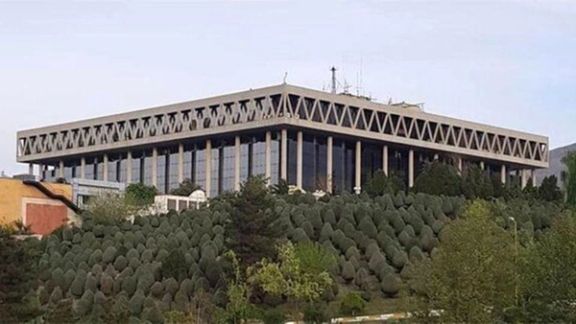
IRIB's headquarters in Tehran

Washington says it has renewed a waiver of sanctions against Iran’s state radio and television establishment, the IRIB, on the basis of US national interests. 

State Department spokesperson Ned Price said during his press briefing on Thursday that the US periodically reviews this waiver to allow the provision of satellite broadcast service to the IRIB under the auspices of the International Telecommunications Satellite Organization, or ITSO.

Trying to justify the decision by the administration, he said that "this waiver has been renewed by successive American administrations without any interruption since 2014. The waiver has been issued close to 20 times – some 18 or so times – in recent years.” 

Despite Price’s claim that Washington uses every single available tool to hold Iranian authorities accountable for their human rights abuses and for their censorship, the waiver seems to contradict repeated pledges to support the Iranians who for over five months have been protesting against the regime and its leaders. 

The sanctions waiver raises more questions as Price said, “We are and remain seriously concerned by the IRIB’s role in censoring the Iranian people’s access to information and its involvement in human rights abuses.” 

US State Department spokesperson Ned Price (file photo)
100%
US State Department spokesperson Ned Price

With a wording meant to minimize the effects of the waiver, Price said that “While this narrow waiver allows for the provision of satellite broadcast services to IRIB, IRIB and its senior leadership remain subject to US sanctions under various authorities, including for their involvement in censorship and human rights abuses.” He was referring to a series of recent sanctions on IRIB officials, including its president Peyman Jebelli and the chief of the world service Ahmad Norouzi. Two brothers of Jebelli, close to Ali Khamenei's son Mojtaba, have recently defected and sought asylum in the US.

While the sanctions on leaders are important, the waiver for IRIB allows it to continue to broadcast regime propaganda and forced confessions of prisoners on international satellites.

Price dodged a direct answer about the reason behind the waiver, saying, “These are underlying conditions that we look at every time this waiver comes up for renewal. We ultimately are going to do what is in our interest but ultimately what we deem to be most effective to promote the aspirations of the Iranian people.”

Questioned to elaborate on these “national interests,” he only said that “these are complex issues involving our membership in the ITSO, involving a number of factors, but we look at this very carefully through every single lens.”

Defending the decision, he said, “we have made the judgment call, as have previous administrations multiple times over every 180 days, that waiving these sanctions are in our interest.” He continued, however, “We also believe it’s in the interest of our ability to protect, to promote the aspirations of the Iranian people.”

Amid measures targeting the Islamic Republic’s financial and energy sectors, under Executive Order 13846, by then President Donald Trump in 2018 after he withdrew the US from the 2015 Iran nuclear agreement – US government departments are empowered to sanction entities implicated in “censorship or other activities with respect to Iran on or after June 12, 2009, that prohibit, limit, or penalize the exercise of freedom of expression…or that limit access to print or broadcast media.” 

The US first designated IRIB (Islamic Republic of Iran Broadcasting) in 2013, and in 2018 reimposed the move in what then Treasury Secretary Steven Mnuchin said was a part of “the maximum pressure exerted by the United States” after withdrawal from the 2015 nuclear agreement.


Most Viewed

100 days after carnage: Iran economy reels from war, inflation, unemployment
1
INSIGHT

100 days after carnage: Iran economy reels from war, inflation, unemployment

2
INSIGHT

Ghalibaf defends Iran-US talks amid hardline backlash

3
INSIGHT

A nation in limbo: 100 days after the massacre, has the world moved on?

4
ANALYSIS

From instability to influence: Pakistan’s pivotal role in US-Iran diplomacy

5
ANALYSIS

100 days on: why Iran’s January protests spread across social classes

Banner
Banner

Spotlight

  • War-hit homeowners feel abandoned as Iran’s reconstruction aid fades

    War-hit homeowners feel abandoned as Iran’s reconstruction aid fades

  • 100 days on: the anatomy of Iran’s January crackdown
    INSIGHT

    100 days on: the anatomy of Iran’s January crackdown

  • Ghalibaf defends Iran-US talks amid hardline backlash
    INSIGHT

    Ghalibaf defends Iran-US talks amid hardline backlash

  • 100 days on: why Iran’s January protests spread across social classes
    ANALYSIS

    100 days on: why Iran’s January protests spread across social classes

  • From instability to influence: Pakistan’s pivotal role in US-Iran diplomacy
    ANALYSIS

    From instability to influence: Pakistan’s pivotal role in US-Iran diplomacy

  • A nation in limbo: 100 days after the massacre, has the world moved on?
    INSIGHT

    A nation in limbo: 100 days after the massacre, has the world moved on?

•
•
•

More Stories

Switzerland Claims Iran Envoy Visit To Qom ‘Part Of Interreligious Dialog’

Feb 24, 2023, 02:44 GMT+0
•
Iran International Newsroom

The Swiss Foreign Ministry defended the decision by its ambassador in Tehran, Nadine Olivier Lozano to wear the full body veil, the chador, on a visit to Qom yesterday (Wed) following global outrage claiming the undermined five months of protests against the compulsory hijab.

Léa Zürcher, the Foreign Ministry spokesperson, claimed the ambassador had visited the holy city of Qom to attend an interfaith event at an unnamed university. Zurcher claimed “a short visit to an important religious site took place” and “the applicable dress protocol for women was followed”.

However, the black chador which covers the whole body, is not required of visiting female foreign dignitaries who can simply wear a long headscarf at the site.

Social media was flooded with condemnation, including leading political voices around the world who said the move flew in the face of global support for the protests which were sparked by the death in custody of Mahsa Amini, arrested by the morality police for the inappropriate use of her hijab. The nationwide protests have since seen hundreds killed and thousands more arrested since September in brutal crackdowns by security forces.

Hillel Neuer, Executive Director at Human Rights Watch, tweeted: "Meet Nadine Olivieri Lozano, Swiss Ambassador to Iran and star of the murderous regime's propaganda. While women in Iran are being beaten, blinded, tortured, raped and killed for daring to protest the compulsory hijab laws, she is complicit in her head-to-toe chador and hijab."

The Swiss embassy, responding to the global outrage, denied the move undermined the human rights aspect of the protests which deny women the basic right to choose how to dress.

“Switzerland repeatedly and clearly takes a stand on human rights violations in Iran,” Zurcher added. “In recent months, it has repeatedly and unequivocally condemned the use of violence against the demonstrators at various levels and also called on the Iranian authorities to choose the path of de-escalation and to seek dialogue with the demonstrators.”

During the visit, Lozano is seen with several clerics, gifted a religious book from one of the shrine’s caretakers at Iran's second most holy city, after Mashhad, home to the biggest and most prestigious of Iran's Shiite seminaries. Qom has been at the center of controversy for years, its institutions being disproportionately funded, not least, while the country is suffering from a bitter economic crisis.

Institutions such as the Al-Mustafa International University attract foreign students from countries across China, Africa and Latin America, teaching them the foundations of Shia Islam to take back to their countries, at the expense of the Iranian people, while millions of Iranians cannot afford to eat or heat their homes during the bitter winter months.

Masih Alinejad, a leading Iranian activist in exile, whose life was recently threatened by the country's security forces, called the ambassador’s decision “shameful” and a “betrayal to Iranian women”.

She tweeted: “While teenagers & women are getting beaten, jailed & killed for saying NO to forced hijab, NO to gender apartheid regime, Swiss ambassador in Iran obeyed forced hijab …Switzerland must respond why they took side with our killers.”

Exiled Prince Explains Why Europe Benefits From ‘Revolution’ In Iran

Feb 23, 2023, 21:43 GMT+0
•
Iran International Newsroom

Exiled Prince Reza Pahlavi has once again called on Europe to embrace the “revolution in Iran” while enumerating the benefits of a secular democracy in Tehran. 

In thread of tweets extracted from his interview with Austrian national public broadcaster ORF on Thursday, Pahlavi said the strategy of European countries vis-a-vis Iran should be focused on empowering the people while isolating and weakening the Islamic Republic. 

Since Europe is geographically near the borders of Iran, it is especially exposed to challenges aggravated by the Islamic Republic, such as security risks and energy demands, he added, noting that the regime is “an unreliable and largely unavailable supply partner in energy,” and “in commerce, an economic market that is neither attractive nor safe as a target for trade or investment.”

He described the policy of engaging with the regime as “betting on a dead horse” and elaborated on how it works against the security interests of Europe. He touched upon some of the issues that the Islamic Republic has been creating for the European countries such as promotion of Islamic extremism and planning and perpetration of assassinations and terror plots on the continent. 

He referred to millions of asylum seekers at Europe’s borders, underlining that most of these migrants are coming from the countries that have been hit by unrest due to the destabilizing acts by the Islamic Republic and its proxy militias. 

He particularly mentioned the regime’s military support for the Russian invasion of Ukraine that has caused numerous problems for other European countries. Iran’s Islamic government has supplied hundreds of drones to Russia since mid-2022 that have been used during missile attacks to swarm Ukrainian air defenses. Increasingly short of missiles to sustain its brutal bombing campaign of Ukraine’s towns and cities, Russia has turned to Iran and also North Korea to replenish its stocks.

Prince Pahlavi also denounced the Islamic Republic’s diplomatic blackmail via nuclear proliferation, warning the international community against negotiating with Iran as pundits believe that the regime will not be able to harness its growing inflation without lifting US sanctions.

He also talked about the policy of hostage-taking by the regime and using foreign nationals in the country as bargaining chips to get concessions from other countries. His remarks came on the same day that a hardliner newspaper in Tehran, which is funded by the Supreme Leader and its editor often speaks for Ali Khamenei, demanded that German embassy staff be banned from leaving Iran in response to expulsion of two Iranian diplomats from Berlin.

Pahlavi called it political shortsightedness “to engage the Islamic Republic rather than its opposition” especially at a time when the uprising of the people is yielding results and a secular democrat Iran “would solve many of Europe’s prevailing security issues instantly.”

Iran Welcomes Resumption Of Ties With Saudi Arabia: FM

Feb 22, 2023, 22:14 GMT+0

While Tehran has not changed its policies in the region, Foreign Minister Hossein Amir-Abdollahian claimed the Islamic Republic would welcome the resumption of ties with Saudi Arabia.

According to AFP, Amir-Abdollahian made the comments in his visit to Baghdad on Wednesday during talks with his Iraqi counterpart about the stalled negotiations between Tehran and Riyadh, which were held with the mediation of Baghdad.

Baghdad plays the role of a mediator in the talks between Tehran and Riyadh, which have been cut off since about seven years ago.

These negotiations started two years ago in Iraq and have been halted for more than a year now.

At a joint press conference with Iraqi Foreign Minister Fuad Hussein, Amir-Abdollahian said Tehran welcomes the Iraqi government's "efforts to strengthen dialogue and cooperation between Saudi Arabia and Iran."

He also referred to a similar mediation by Baghdad in talks between Tehran and Cairo to warm their relations.

The statements by Amir-Abdollahian come while a few months ago, Mohammed bin Salman, the Crown Prince of Saudi Arabia, and Abdel Fattah El-Sisi, the President of Egypt emphasized the necessity of preventing Iran from acquiring nuclear weapons.

After a meeting in Cairo in June, bin Salman and Sisi stressed his support for international efforts to prevent Tehran from developing nuclear weapons and to create a zone free of weapons of mass destruction in the Middle East.

IRGC Boasts Of Victory For Iran International's Relocation From UK

Feb 22, 2023, 13:47 GMT+0
•
Iran International Newsroom

Iran’s Revolutionary Guard has taken credit for the relocation of Iran International studios from the UK to the US following terror threats, calling it a victory for the Islamic Republic. 

IRGC Commander-In-Chief Major General Hossein Salami said Wednesday that the threats against the Persian channel’s journalists, which forced the channel to stop its broadcasting in London and move to Washington DC, "show how far the Islamic Revolution's realm of power, field of infiltration and radius of influence has extended."

Iran International was warned by authorities in November that its journalists were under threat from Iranian agents and the Metropolitan Police took measures to strengthen security around the network’s office in the area. On February 18, the network announced that following the advice of UK anti-terrorism officials it decided to temporarily move its studio operations to the US.

IRGC Commander-In-Chief Major General Hossein Salami (file photo)
100%
IRGC Commander-In-Chief Major General Hossein Salami

The decision solicited condemnations of Iran’s malign activities and worldwide reactions. “At its sharpest, this has involved police and MI5 working together to foil 15 plots since the start of 2022 to either kidnap or even kill British or UK-based individuals perceived as enemies of the regime,” said a senior official of UK counter terrorism police.

Despite the evident threats against Iran International’s journalists and UK’s acknowledgment of them, as well as several rallies by Iranian diaspora communities across Europe this month to push countries to list the IRGC as a terror outfit, European states are still hesitant. 

Economic embargoes and sanctions were among other measures the enemies used along with their entire intelligence and legal systems as well as international institutions and media powers to defeat the Islamic Republic, but they failed, Salami said, implying that the global community did not manage to designate IRGC as a terrorist organization or curb its destabilizing activities in the region and beyond. 

Western countries have strongly rebuked Tehran for its bloody crackdown on protests, its military support for Russia’s invasion of Ukraine and lack of compromise over its highly disputed nuclear program. The IRGC is the most important arm of the regime, doing the heavy lifting of cracking down on Iranians and circumventing global sanctions to sell oil and funnel money to keep the regime afloat. 

Salami added that “the enemies” are disappointed by the failure of all their strategies and have reached out for help from opposition figures “who are not even worth mentioning.”

After a historic forum in Washington earlier this month by eight prominent dissident activists, they have been traveling to events around the world to make the voice of the Iranian opposition heard. Such events signal the emergence of a leadership council in the diaspora to campaign for international support in favor of Iran’s protest movement.

Iran’s Foreign Ministry spokesman Nasser Kanaani (file photo)
100%
Iran’s Foreign Ministry spokesman Nasser Kanaani

In an interview on Tuesday, Iran’s Foreign Ministry spokesman Nasser Kanaani, however, dismissed Iran International’s relocation as a win for the regime, rather a coordinated effort by Western intelligence services. 

Kanaani said that the Islamic Republic reserves the right to file a lawsuit against the US over the TV channel’s role in “inciting riots,” reiterating the regime’s propaganda line that blames foreign countries for over five months of antigovernment protests. 

“The developments surrounding the Iran International terrorist media indicate that the channel is being supported and managed by the intelligence services of a number of certain countries, including the UK,” the spokesman said. “From our viewpoint, even if the channel is relocated from London to the US, the responsibility will still lie with the governments sponsoring and hosting such quasi-media, particularly the UK government, in relation to its (the channel’s) terrorist, separatist and anti-Iranian activities,” he added.

On Monday, UK’s Security Minister Tom Tugendhat at the British Parliament voiced full support for Iran International TV, saying “The Home Secretary and I absolutely condemn this outrageous violation of our sovereignty, and the attempted violation of the human rights of those journalists.”

“Its operatives and affiliates will be pursued by the Ministry of Intelligence,” Intelligence Minister Esmail Khatib said in November. “And from now on, any kind of connection with this terrorist organization will be considered to be tantamount to entering into terrorism and a threat to the national security of the Islamic Republic of Iran.”

On Monday, an estimated crowd of about 20 to 30 thousand people held a rally in Brussels outside the European Council to call on EU countries to designate Iran’s Revolutionary Guard as a terrorist organization. Thousands of Iranians from all over Europe held a massive rally in Strasbourg in January for the same purpose.

Germany Expels Two Iranian Embassy Staff Over Death Sentence

Feb 22, 2023, 11:01 GMT+0

Germany has declared two employees of the Iranian embassy personae non gratae and ordered them to leave the country on Wednesday.

The decision was in protest over Iran sentencing a German national to death, a statement from the foreign office said.

Germany also summoned Iran's charge d'affaires over the issue, Foreign Minister Annalena Baerbock said in a statement, adding: "He was informed that we do not accept the massive violation of the rights of a German citizen."

"We call on Iran to revoke Jamshid Sharmahd's death sentence and provide him with a fair appeal process based on the rule of law," she added.

Sharmahd, a German-Iranian national, was sentenced to death on charges of "corruption on earth", the judiciary's Mizan news agency reported on Tuesday.

The verdict can be appealed.

Iran accuses Sharmahd, who also has US residency, of heading a pro-monarchist group accused of a deadly 2008 bombing and planning other attacks in the country.

On Tuesday, Baerbock called the sentencing "absolutely unacceptable". She said Sharmahd had been denied a fair trial and that the ministry had been refused consular access.

Tensions between Iran and the West have intensified in recent months, pushing already-stalled efforts to revive talks on Tehran's nuclear program further into the background.

Germany has been a vocal backer of EU sanctions against Iran over its crackdown on protesters in the country. The bloc plans to widen the measures to include Iranian actors involved in the Russian war in Ukraine.

Report by Reuters