• العربية
  • فارسی
Brand
  • Iran Insight
  • Politics
  • Economy
  • Analysis
  • Special Report
  • Opinion
  • Podcast
  • Iran Insight
  • Politics
  • Economy
  • Analysis
  • Special Report
  • Opinion
  • Podcast
  • Theme
  • Language
    • العربية
    • فارسی
  • Iran Insight
  • Politics
  • Economy
  • Analysis
  • Special Report
  • Opinion
  • Podcast
All rights reserved for Volant Media UK Limited
volant media logo

Washington Not To Opt For Reviving 2015 Nuclear Deal – Ex-Adviser
Iran International Newsroom
Jan 26, 2023, 19:57 GMT+0Updated: 18:09 GMT+1
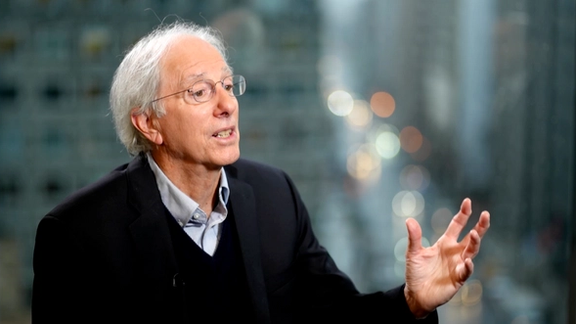
Dennis Ross, a former Middle East aide in the Obama administration

An American foreign policy aide in successive US administrations told Iran International that the only way the US would remove sanctions on Tehran is a whole new deal. 

In a face-to-face with our correspondent Arash Alaei, Dennis Ross said that the Islamic Republic has lost its chance to revive the 2015 nuclear deal with making extra demands, noting that now the only move that may kickstart the talks is a halt in Tehran’s uranium enrichment to over five-percent purity. 

Iran should not be enriching to 60 percent or even 20 percent, he said, adding that the Islamic Republic is crossing thresholds that may push the Biden administration to a path that it would not like to pursue, he said. The Biden administration might say “what was on the table is no longer on the table. You had a chance to do the JCPOA and you chose to try to get more,” he added. 

He said that the administration sought a longer and stronger deal since the beginning, speculating that if they want to agree on a deal, it will not be going back to the JCPOA. “The deal has to apply for much longer; it has to be stronger, then there would be readiness to talk about a deal,” he said, foreseeing that Washington would ask Tehran to give up more if it wants to potentially get more.

Ross was the director of policy planning in the State Department under President George H. W. Bush, the special Middle East coordinator under President Bill Clinton, and a special adviser for the Persian Gulf and Southwest Asia -- which includes Iran -- to the former Secretary of State Hillary Clinton. 

Referring to the recent round of Western sanctions on the Islamic Republic officials, Ross said that this is a message to Tehran that “we are collectively hardening our approach because of the behavior of the Iranian regime.” He added that slapping the Revolutionary Guard with the terrorism label by the Europeans has never been really considered. Ross mentioned the coordination among the US and its allies to close the loopholes so that Iran cannot sell its oil as another measure that showed the world is standing against the regime.

Dennis Ross, a former Middle East aide in the Obama administration, during an interview with Iran International’s Arash Alaei (January 2023)
100%
Dennis Ross, a former Middle East aide in the Obama administration, during an interview with Iran International’s Arash Alaei

All of these indicate that “the Islamic Regime needs to understand that life is going to become more difficult for them if they stay in the path they are on,” he underlined. 

The West on Monday stepped up pressure on Iran over its crackdown on protests and arms supply for the Russian invasion of Ukraine as the US, the European Union and United Kingdom imposed fresh sanctions on Tehran. However, the EU stopped short of designating the IRGC a terrorist outfit, as the European Parliament had voted last week to urge the block to do.

He said that the regime is enriching uranium to the levels that have no civilian use, elaborating that Iran “continues to move ahead with its nuclear program. It has 16 cascades of advanced centrifuges – the IR6s -- that are enriching to 60 percent, for which there is no justifiable civilian purpose.” “When you enrich uranium, you can rationalize it saying we’re going to use it to generate electrical power. When you enrich to 60 percent, you have one purpose in mind.” 

The Islamic Republic “has probably four bombs worth of enriched material to 60 percent,” adding that “60 percent is not weapons grade but it’s close to weapons grade,” Ross said. It means it takes very little time for them to turn the fissile material into bombs, he added. “You still have to take that fissile material and take it to weapons. There is a big difference between enrichment, which is taking place in large facilities and the process of weaponization, which can be taking place in facilities that we wouldn’t be aware of,” Ross warned. 

The Middle East expert believes that Iranians are playing with fire. If the Biden administration says, “we will prevent you from having a nuclear weapon, they are pushing the Biden administration towards what will be a military action, even if that's not what the Biden administration would prefer to do.” 

About the joint military war games by the US and Israel -- their biggest so far with thousands of forces, a dozen ships, and 142 aircraft, including nuclear-capable bombers – he said the nature of this maneuver is unprecedented as they have integrated every domain. “They are doing it in space, they are doing it in air with aircraft, they are doing it in cyber, they are doing it on the ground, and they are doing it with naval. All these separate domains, all these separate forces are being integrated between the two and they include suppression of air defenses; it includes B52 bombers,” he added. The scope of such war games “involves a kind of action the US and Israel would be taking if there was a decision to carry out the use of force against Iran’s nuclear program.” He described the drills as a rehearsal or preparation for such an action against Iran, he highlighted. 

Most Viewed

Iran International says it won’t be silenced after London arson attack
1

Iran International says it won’t be silenced after London arson attack

2
VOICES FROM IRAN

Hope and anger in Iran as fragile ceasefire persists

3

Iran halts petrochemical exports to supply domestic market

4
INSIGHT

How Tehran bends its own red lines to boost state rallies

5

US arrests Iranian national over alleged Basij-linked visa fraud

Banner
Banner

Spotlight

  • Hardliners push Hormuz ‘red line’ as US blockade tests Iran’s leverage
    INSIGHT

    Hardliners push Hormuz ‘red line’ as US blockade tests Iran’s leverage

  • Ideology may be fading in Iran, but not in Kashmir's ‘Mini Iran'
    INSIGHT

    Ideology may be fading in Iran, but not in Kashmir's ‘Mini Iran'

  • War damage amounts to $3,000 per Iranian, with blockade set to add to losses
    INSIGHT

    War damage amounts to $3,000 per Iranian, with blockade set to add to losses

  • Why the $100 billion Hormuz toll revenue is a myth
    ANALYSIS

    Why the $100 billion Hormuz toll revenue is a myth

  • US blockade targets Iran oil boom amid regional disruption
    ANALYSIS

    US blockade targets Iran oil boom amid regional disruption

  • Iran's digital economy battered by prolonged blackout
    INSIGHT

    Iran's digital economy battered by prolonged blackout

•
•
•

More Stories

US Democrats Still Not Ready To Walk Away From Iran Nuclear Talks

Jan 25, 2023, 23:03 GMT+0

While the Islamic Republic is becoming more isolated in the international community, some US Democratic Senators say efforts should continue to revive the 2015 nuclear deal. 

Senator Ben Cardin (D-MD) told Iran International’s Arash Alaei on Wednesday that the Biden administration should never officially walk away from the negotiations. 

However, he added that "I was not happy with the original JCPOA. I was not happy with us leaving the JCPOA. I always supported a longer and stronger agreement, so I think this is a matter on which the US needs to be more in harmony with Europe.” 

Talks initiated by the Biden Administration in April 2021 to return to the accord known as JCPOA faltered last September. Following this failure, protests that began in Iran were brutally suppressed by the government, which led to more isolation for the clerical regime.

Referring to State Department’s neither confirming nor denying recent meetings between US special envoy for Iran Robert Malley and Tehran's UN ambassador in New York, Cardin said such moves depend on strategic issues and the effectiveness of backchannel conversations. 

Another Democrat, Senator Bob Casey of Pennsylvania said he believes “it’s not likely to reach an agreement anytime soon but I would hope that we continue to pursue that.” “We were in a better posture, if we had that agreement (the JCPOA) in place.”

Meanwhile, Republican Senator Rick Scott (R-FL) told our correspondent that "We should not be negotiating with Iran except to make sure they start giving liberty and freedom to their citizens and stop being a menace to the world.”

The United States and its European allies say that they are not focused on the nuclear talks with Iran because of Tehran’s human rights violations and its arms support for the Russian invasion of Ukraine.

Iraqis Protest As US Sanctions On Iran Weakens The Dinar

Jan 25, 2023, 15:21 GMT+0

The impact of US banking sanctions on Iran has affected neighboring Iraq, weakening its currency and leading to protests against the government.

Hundreds of people demonstrated near central bank headquarters in Baghdad Wednesday to protest at the recent slide of the Iraqi dinar against the dollar that has triggered a rise in prices of imported consumer goods.

Hundreds from different Iraqi regions waved Iraqi flags or carried banners demanding government intervention to stop the dinar's decline to around 1,620 to the greenback from 1,470 in November.

The dinar went into a tailspin against the dollar after the New York Federal Reserve imposed tighter controls on international dollar transactions by commercial Iraqi banks in November to halt the illegal siphoning of dollars to neighboring Iran, which is under tough US sanctions.

Under the curbs that took effect this month, Iraqi banks must use an online platform to reveal their transaction details. But most private banks have not registered on the platform and resorted to informal black markets in Baghdad to buy dollars.

This has created dollar shortages as demand has outstripped supply and accelerated the dinar's descent against the greenback.

“Our demands are clear: government must intervene to stop the decline of dinar value because we’re suffering from high prices in local markets,” said Asaad Khudhaer, a laborer who came from the southern city of Najaf to attend the protest.

“Stop the neighbors stealing our dollars,” one banner read, alluding to Iran.

Prime Minister Mohammed al-Sudani replaced the central bank governor on Monday as he had not taken effective steps to tackle the consequences of the new Fed regulations and their impact on the dinar, government sources told Reuters.

US Says 'Robustly Engaged' With China To Curtail Iranian Oil Sales

Jan 25, 2023, 08:51 GMT+0
•
Mardo Soghom

The United Sates is “robustly engaged” with enforcing sanctions on Iran and regularly engages with China to discourage violations, the State Department said Tuesday.

“As Iran’s largest oil customer, the PRC remains a top focus for our sanctions enforcement,” State Department spokesperson Ned Price said in a briefing with reporters.

For two years, the department has stayed low-key on the issue of China violating US oil sanctions on Iran and buying ever-increasing volumes of crude oil at discounted prices.

“We don’t preview potential sanctions actions, but we continue to monitor Iran’s oil exports and to engage Iran’s trading partners about the possibility of exposure to US sanctions,” Price added.

But these efforts and engagements with different countries have not been effective as Iran increased its oil exports from around 250,000 barrels per day in 2019 to more than one million, according to estimates. For some reason, China was buying less than 200,000 barrels a day during the Trump administration, while in 2022 it was buying around 700,000 barrels to most industry estimates.

Neither China nor Iran announce the volume of their oil trade, which takes place through intermediaries who make tanker-to-tanker oil transfers, mix cargoes, and forge documents to hide the source of the oil.

Chinese imports from Iran began to increase in late 2020, exactly when candidate Joe Biden in September of that year announced his plans to return to the Obama-era Iran nuclear deal, which Trump had abandoned two years earlier.

The new administration began indirect negotiations with Iran in April 2021, and China, as a signatory of the 2015 deal known as the JCPOA, was part of the talks in Vienna. From all appearances, Iran dragged out the talks for 18 months and in the end refused to accept a compromise deal put on the table by the European Union.

In the meantime, Tehran was selling ever-increasing volumes of oil to Chinese refineries and making tens of billions of dollars.

At the same time, the Biden administration was signaling that sanctions imposed by its predecessor were not effective to force Iran to curtail its nuclear program, and they should be lifted to revive the JCPOA. At the same time, the administration kept the sanctions on the books to put pressure on Tehran and occasionally announced sanctions on individuals and companies caught red-handed in facilitating sanctions’ violations.

“We, during the course of this administration, have levied multiple tranches of designations targeting Iran’s illicit petroleum and petrochemical trade over the past year or so,” Price said on Tuesday.

But to what extent there was serious pressure on Beijing, is not clear. It seems that the administration now admits its efforts have been ineffective and it intends to increase that pressure.

The new focus began only when the nuclear talks came to a halt in September, just when popular protests broke out in Iran that were met with a brutal and deadly government response that became world headlines.

The administration changed its tune in October, saying that it is no longer focused on JCPOA and its attention is on the struggle of the Iranian people who were demanding their basic rights. Price reiterated the new policy once again on Tuesday, admitting that Iranians “renege on commitments, and “This was a pattern that we’d seen from Iran.”

Another factor that left little option for the Biden team except adopting a tougher posture was Iran’s delivery of kamikaze drones to Russia that have been used against civilian targets in Ukraine.

Iran’s Friends Restrict Relations Due To US Sanctions: Official

Jan 24, 2023, 22:46 GMT+0

A member of the Tehran Chamber of Commerce says that the scope of US sanctions has been extended to friendly countries, including China, the UAE, and Iraq.

Mehrad Ebad told ILNA Tuesday that these countries have limited their commercial dealings with Iran.

Previously, some Iranian officials had confirmed that an important part of the country's exports rely on hidden middlemen and barters, including the exchange of oil with goods, which increases the cost of imports and reduces the profit of exports.

Ebad also stated that currently exports from Iran to Europe have reached their lowest level and the largest volume of Iranian exports to Europe, especially Eastern Europe, is carried out through Turkey.

The European Union has not yet published the trade volume for 2022 with Iran, but in 2021, it had about 900 million euros of imports from Iran, which was less than a tenth of the amount before the US imposed sanctions in 2018. Also, the European Union's exports to Iran have decreased by a third and declining to 3.9 billion euros.

Ebad went on to say that large European companies abide by the US sanctions and do not easily communicate with Iran, "but small and medium-sized companies from Germany and Italy continue to cooperate with Iran,”

If Europe's restrictions increase, “we will face a serious challenge in meeting our needs, especially in the field of technology in the oil and gas sector,” he underlined, referring to fresh European sanction being imposed on Iran for its human rights violations and supply of drones to Russia.

US Says Will Increase Pressure On China To Stop Iran Oil Imports

Jan 24, 2023, 20:33 GMT+0

The Biden Administration will pressure China to stop importing Iranian crude oil, US Special Envoy for Iran Robert Malley told Bloomberg television on Tuesday.

“China is the main destination of illicit exports by Iran” and the United States will intensify talks to dissuade Beijing not to break US sanctions, Malley told Bloomberg.

The Trump administration imposed third-party sanctions on Iran’s oil exports after it withdrew from the 2015 nuclear accord, but China increased its purchases when President Joe Biden got elected and pledged to return to the agreement known as the JCPOA.

Latest estimates are that small Chinese refineries are buying at least 700,000 barrels per day at discounted prices through middlemen and illicit channels. Beijing does not officially report the Iranian oil cargoes as they are usually labeled as shipments from other countries.

Some reports say Iranian oil shipments increased in December, but it is not clear if exports to China have surged or more exports are sent elsewhere, such as Venezuela.

Critics have been accusing the Biden administration of not exerting enough pressure on Beijing to stop imports from Iran, hoping that China will play a positive role in nuclear talks with Tehran. These negotiations came to a halt last September and since then the US and its European allies have adopted tougher positions against Iran, for its human rights violations and supplies of kamikaze drones to Russia.