• العربية
  • فارسی
Brand
  • Iran Insight
  • Politics
  • Economy
  • Analysis
  • Special Report
  • Opinion
  • Podcast
  • Iran Insight
  • Politics
  • Economy
  • Analysis
  • Special Report
  • Opinion
  • Podcast
  • Theme
  • Language
    • العربية
    • فارسی
  • Iran Insight
  • Politics
  • Economy
  • Analysis
  • Special Report
  • Opinion
  • Podcast
All rights reserved for Volant Media UK Limited
volant media logo

As Government Kills More Children In Iran, Funerals Fuel Protests
Iran International Newsroom
Nov 17, 2022, 21:08 GMT+0Updated: 17:20 GMT+1
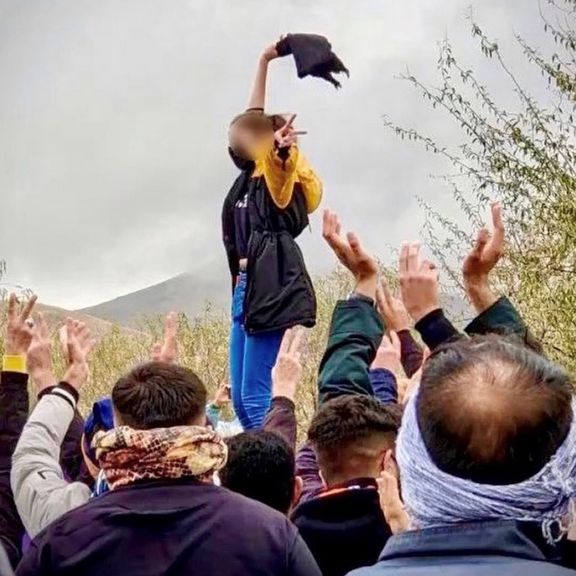
Protests after a funeral on November 17 in the Kurdish city of Saqqez

Thursday was the third day of pre-announced nationwide protests in Iran, with numerous mourning ceremonies held for those killed in recent days. 

In the past three days, the grassroot nature of the protests manifested itself in small towns, where people were almost unstoppable and brought the security forces to their knees. 

Government forces have killed nearly 350 people since the protests began following the death in custody of 22-year-old Mahsa Amini in mid-September, and each death has fueled more protests since holding mourning ceremonies and funeral services is culturally important for Iranians.

sanandaj (November 17)
100%

No day passes without some event in honor of one or more protesters in cities across Iran. In addition, hundreds of families also hold ceremonies for their loved ones who were killed three years ago during the November 2019 unrest when security forces began firing at people from the first day of protests, killing at least 1,500 citizens. Every one of these ceremonies is an opportunity for people to hold gatherings and express their resentment against the regime. Thursday was no exception as many funerals and mourning gatherings morphed into protest rallies. 

Another new low for the clerical regime is killing children, whose deaths enrage Iranians even more and their funerals and mourning ceremonies bring out larger crowds. According to human rights groups, over 40 children were already killed by government agents until this week when security forces killed several more. Some children take part in the protests but many simply happen to be in the wrong place at the wrong time, when riot police or government vigilantes open fire.

Mourning ceremonies for a 10-year-old boy in the city of Izeh, in Khuzestan province, was one of the main events of the Thursday protests in several cities, as social media exploded with depictions inspired by his death. 

In addition to pockets of protests in large cities, which have been scenes of protests and clashes during the past two months, more protesters turned out in towns with less than 50,000 population, blocking streets, chanting antigovernment slogans and setting fire to government buildings. 

Law enforcement forces in small cities normally tend not to respond violently to the protesters because people in such cities usually know each other’s families. Many of the people who are now members of Basij paramilitary forces are cracking down on people who used to be their classmates or neighbors while they were growing up. Therefore, the regime transfers forces from other cities, but the strategy is only partially useful because outside forces do not know the localities as well as its residents, so they are easily outsmarted by the protesters, making towns fall under the control of the people. 

On Thursday, some towns were scenes of clashes that earlier were not hotbeds of protests. Semirom and Khorasgan in Esfahan province, Paveh and Sarpol-e Zahab in Kermanshah, Khomein in Markazi Province, Eyvanki in Semnan, Khonj in Fars, Qorveh in Kordestan, Khoy in West Azarbaijan, Sarableh in Ilam, and Masal in Gilan were some of the small cities and towns whose residents held remarkable protest rallies on Thursday. 

The cities that have become well-known for the bravery of their citizens were also among the places of biggest demonstrations. People on social media say Sanandaj witnessed its largest rally in the past two months.


Most Viewed

Ideology may be fading in Iran, but not in Kashmir's ‘Mini Iran'
1
INSIGHT

Ideology may be fading in Iran, but not in Kashmir's ‘Mini Iran'

2
INSIGHT

Hardliners push Hormuz ‘red line’ as US blockade tests Iran’s leverage

3
VOICES FROM IRAN

Hope and anger in Iran as fragile ceasefire persists

4

Iran International says it won’t be silenced after London arson attack

5

US sanctions oil network tied to Iranian tycoon Shamkhani

Banner
Banner

Spotlight

  • Hardliners push Hormuz ‘red line’ as US blockade tests Iran’s leverage
    INSIGHT

    Hardliners push Hormuz ‘red line’ as US blockade tests Iran’s leverage

  • Ideology may be fading in Iran, but not in Kashmir's ‘Mini Iran'
    INSIGHT

    Ideology may be fading in Iran, but not in Kashmir's ‘Mini Iran'

  • War damage amounts to $3,000 per Iranian, with blockade set to add to losses
    INSIGHT

    War damage amounts to $3,000 per Iranian, with blockade set to add to losses

  • Why the $100 billion Hormuz toll revenue is a myth
    ANALYSIS

    Why the $100 billion Hormuz toll revenue is a myth

  • US blockade targets Iran oil boom amid regional disruption
    ANALYSIS

    US blockade targets Iran oil boom amid regional disruption

  • Iran's digital economy battered by prolonged blackout
    INSIGHT

    Iran's digital economy battered by prolonged blackout

Tweet unavailable

•
•
•

More Stories

Strikes, Protests Continue In Iran To Mark ‘Bloody November’

Nov 17, 2022, 13:12 GMT+0

Small businesses in Iran are still on strike for the third consecutive day with shops kept closed in different cities to show solidarity with the uprising against the Islamic Republic.

Reports say bazaars and markets of Tehran, Mashhad, Kermanshah, Shiraz, Arak, Qazvin, Kerman, and many other cities were closed on Thursday.

Workers in some large government-owned companies, such as steel and oil producers are also on strike.

Massive strikes come in response to calls published on the anniversary of the massacre of protesters in November 2019.

A series of nationwide protests in Iran, sometimes known as Bloody November, took place in 2019. Initially triggered by a 50 to 200-percent increase in fuel prices, the demonstrations quickly turned into calls for the overthrow of the government and Supreme Leader Ali Khamenei. According to a report by a rights group, at least 3,000 protesters were killed by the Islamic Republic security forces from November 15 to 17, and nearly 20,000 arrested. Reuters at the time reported 1,500 deaths.

Grassroot groups last week called for protests across the country for November 15, 16, and 17.

Videos from the western city of Bukan show that people held a protest rally in front of the municipality of the city on Thursday after the funeral of Mohammad Hassanzadeh and Salar Mojaver, who were killed by regime forces Wednesday. There have also been reports that people attacked the municipality building.

According to reports, security forces attacked people during the funeral ceremony firing live rounds and tear gas.

In Sanandaj, the capital of Kordestan province, the protesting people also gathered at a cemetery to mark the fortieth day after the death of some demonstrators chanting slogans such as “Death to the dictator”.

UN Body Approves Resolution Over Iran’s Human Rights Violations

Nov 17, 2022, 12:41 GMT+0
•
Iran International Newsroom

The UN’s Third Committee has approved a draft resolution on Iran’s human rights situation, expressing concern at the alarmingly high frequency of the death penalty in the country.

The motion was ratified by a recorded vote of 80 in favor to 28 against, with 68 abstentions on Wednesday [Nov. 16]. The committee, which deals with human rights, humanitarian affairs and social matters, meets every year in early October and aims to finish its work by the end of November. 

The United Nations General Assembly Third Committee -- also known as the Social, Humanitarian and Cultural Committee or C3 – also approved four other resolutions on Myanmar, Syria, North Korea, Crimea and one about the refugees and displaced persons in Africa. 

In the resolution on Iran, the committee urged the Islamic Republic to cease the use of excessive force against protesters, who have been holding daily rallies across the country since Mahsa Amini’s arbitrary arrest and subsequent death while in ‘morality’ police custody.

According to Canada’s representative, despite “deplorable actions by Iranian authorities against protesters, mass peaceful protests continue into their eighth week,” noting that the killing of Mahsa Amini is just one instance of human rights atrocities in Iran. He added that “violent implementation of the hijab and chastity laws undermine the human rights of women and girls.”

Calling for accountability, he expressed deep concern over the authorities’ use of force, as well as the increasing use of the death penalty. He pointed to the systemic prosecution of minorities, alarming restrictions on the Internet and mobile data, and the generalized use of arbitrary detentions and enforced disappearances.

A view of the 34th plenary meeting of the General Assembly. The Assembly elected members of the Committee for Programme and Coordination. (November 15, 2022)
100%

The Australian representative also condemned the disproportionate use of force against protesters and called on the Islamic Republic to establish a moratorium on all executions and to cease its long-standing oppression of the LGBTI community and its discrimination against ethnic and religious minorities. “Sovereignty is not a shield” for human rights violations, she added.

The UK representative described the death of Mahsa Amini “a shocking reminder of the oppression faced by women in Iran,” condemning the enforcement of the hijab and chastity laws by the so-called morality police. He also voiced concern over the situation of 14,000 arrested protestors and the death sentences. Expressing support for the UN Human Rights Special Rapporteur’s work on Iran’s oppression of minority groups and media freedom, he said “the Iranian people have suffered enough.”

The US envoy highlighted the deteriorating human rights situation in Iran since last year and recalled listening to experts tell of egregious violations during a recent Security Council meeting. Detailing the torture of activists and protestors as well as recent death sentences, she said that Iran obscures its acts by limiting access to the Internet, intimidation and refusing access to the Special Rapporteur. She described the resolution as a message of support to the Iranian people and welcomed the specific language on the death of Mahsa Amini.

Rejecting the draft, the Islamic Republic’s delegate denounced the co-sponsors -- including Canada, the United States, the United Kingdom, Israel and Germany. She claimed that women and girls in Iran are fully aware of their rights and how to interact with the government, adding that there is no need for Western countries to advocate for them. She made the remarks while around 350 Iranian protesters have been killed in the current wave of protests and about over 14,000 have been detained with the judiciary sentencing several of them to death in sham trials.

The UN Human Rights Council will also adopt a resolution aimed at holding the Islamic Republic accountable on November 24. 


French President Macron Hails Courage Of Iranian Protesters

Nov 17, 2022, 11:16 GMT+0

French President Emmanuel Macron has once again expressed support for the protest movement in Iran saying it's important to commend the courage and legitimacy of this fight.

These people "defend our values, our universal principles. When I say 'our', I am not talking about France, they are universal, they are also those of our Charter of the United Nations: equality between women and men, the dignity of every human being," Macron said.

In response to a question raised by Iran International, Macron called for regional stability noting that Tehran must return to “calm and the spirit of cooperation.”

Making the comments during his press conference at the G20 summit in Indonesia, the French president also slammed the Islamic Republic’s bombardment of Iraqi Kurdistan.

Iran launched on Monday a new series of missile and drone strikes against Iraq-based Kurdish opposition groups that Tehran accuses of stoking what it calls the "riots" at home.

The United States and the United Nations censured the attacks in which at least one person was killed and several other were injured.

Elsewhere in his remarks, he condemned the “hostage-taking” approach of the Islamic Republic, warning that Tehran must respect the rights of French nationals.

At least seven French nationals are held hostage by the totalitarian rulers of Iran and Paris has for several times urged the authorities in Tehran to release them.

Tehran claims the French detainees have been locked up due to their espionage activities; something that France has categorically rejected.

Amnesty Intl. Warns About Death Penalty For Iranian Protesters

Nov 17, 2022, 10:30 GMT+0

Amnesty International says Iran’s regime is seeking the death penalty for at least 21 people in “sham trials” designed to intimidate those who take part in antigovernment protests.

In a statement on Wednesday, Amnesty added that these trials are to deter other people to join the movement that began with the death of Mahsa Amini in September in police custody.

“The Iranian authorities must immediately quash all death sentences, refrain from seeking the imposition of the death penalty and drop all charges against those arrested in connection with their peaceful participation in protests. The death penalty is the ultimate cruel, inhuman and degrading punishment, its abhorrent nature further compounded by a fundamentally flawed criminal trials devoid of transparency or independence,” said Diana Eltahawy, Amnesty International’s Deputy Director for the Middle East and North Africa.

Amnesty also noted in its statement that since November 13, the Iranian officials have announced, in separate statements, that Revolutionary Courts in Tehran have sentenced five unnamed individuals to death for “enmity against God” and “corruption on earth”. At least 12 other people including a woman are also facing capital charges in connection with the protests.

The international body urged all governments with embassies in Iran to immediately send high level observers to all ongoing trials where defendants are at risk of being sentenced to death. The Iranian authorities have said such trials will be public.

Iran Again Claims Israeli, Western Plots, As Protests Intensify

Nov 17, 2022, 10:04 GMT+0
•
Iran International Newsroom

Iran’s foreign minister Thursday accused Israel and Western intelligence agencies of trying to start a civil war and divide Iran, as protests raged across the country.

"Various security services, Israel and some Western politicians who have made plans for civil war, destruction and the disintegration of Iran, should know that Iran is not Libya or Sudan," Hossein Amir-Abdollahian tweeted, adding that Iranians would not fall for such plans.

Protests intensified this week when anonymous activists called for three days of demonstrations to commemorate the death of at least 1,500 people who were killed in November 2019 in nationwide protests. The overwhelming public response to their call on Tuesday and Wednesday and the death of more people resulted in a new announcement to extend the demonstration until November 21.

State media presented the death of seven people during protests in the southwestern city of Izeh on Wednesday as a “terrorist attack” and drummed up the narrative that antigovernment protests were being inflamed and partly controlled by “enemies”.

Iranian officials have been insisting on this narrative for weeks, as popular protests that began with the killing of Mahsa Amini in ‘hijab police’ custody have turned into a full-fledged anti-regime movement.

One of the children killed in Izeh on November 16, 2022
100%
One of the children killed in Izeh on November 16, 2022

So far, the authorities have not presented any tangible evidence except detaining some foreigners, possibly dual nationals, claiming they were foreign intelligence agents. The government has not revealed any names, but France acknowledged last week that two more of its citizens were arrested in Iran.

What happened in Izeh is not clear. Armed men opened fire on people in the streets, killing seven adults and children. The government says “terrorists” riding on motorcycles opened fire, but it could well have been plainclothes agents and vigilantes the government uses against protesters. They often appear on motorcycles, beat people in the streets and shoot at protesters.

Reports say at least 8 people were killed in Esfahan Province on November 15 and 16, and government media alleges that these were also attacks by terrorists, although Esfahan is in the center of the country and far from regions where infiltration would be relatively easy.

Fars news website affiliated with the Revolutionary Guard squarely blamed “separatists” on Thursday, as a last-ditch argument the Islamic Republic has used before to justify violence against protesters and spread fear among Iranians who are overwhelmingly committed to the territorial integrity of the country.

So far, security forces have killed around 350 people and detained up to 15,000 without being able to control the uprising. In fat, protests this week have been the most intense since the uprising began in September.

In fact, people of various ethnicities and religious backgrounds have been remarkably united in the past two months, from the Sunni majority in Zahedan, close to the Pakistani border to the capital Tehran and Kurdish and Arab regions in the west and southwest. Protesters routinely chant slogans such as, “From Zahedan to Tehran, My life for Iran.”

The killing of Mahsa Amini, who was a Kurdish woman, triggered the nationwide protests because most Iranians regard all ethnic groups as part of a diverse country.