• العربية
  • فارسی
Brand
  • Iran Insight
  • Politics
  • Economy
  • Analysis
  • Special Report
  • Opinion
  • Podcast
  • Iran Insight
  • Politics
  • Economy
  • Analysis
  • Special Report
  • Opinion
  • Podcast
  • Theme
  • Language
    • العربية
    • فارسی
  • Iran Insight
  • Politics
  • Economy
  • Analysis
  • Special Report
  • Opinion
  • Podcast
All rights reserved for Volant Media UK Limited
volant media logo

Iran Gives Drones, Receives Nuclear Help From Russia: Zelensky
Iran International Newsroom
Oct 25, 2022, 13:30 GMT+1Updated: 17:45 GMT+1
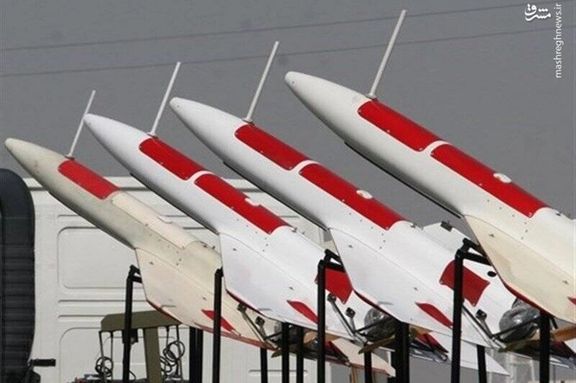
Iranian Arash drones, said to be on Moscow's shopping list

Ukrain’s President Volodymyr Zelensky says Tehran supports Moscow with drones in its invasion in exchange for getting assistance to develop its nuclear program.

Addressing the Haaretz Democracy Conference on Monday, Zelensky said that the Islamic Republic would have not been able to send equipment to Russia if Israel had not decided to stay neutral in the Ukraine war.

“In eight months of full-scale war, Russia has used almost 4,500 missiles against us. And their stock of missiles is dwindling. Therefore, Russia went looking for affordable weapons in other countries to continue its terror. It found them in Iran,” noted Zelensky.

The Ukrainian president further noted that “I have a question for you – how does Russia pay Iran for this, in your opinion? Is Iran just interested in money? Probably not money at all, but Russian assistance to the Iranian nuclear program. Probably, this is exactly the meaning of their alliance.”

Although Zelensky did not offer any evidence, Russia has built Iran’s sole nuclear power plant in Bushehr and has a contract to expand the plant with the addition of two new reactors at a cost of $10 billion.

Zelensky’s comments come as the Ukrainian Defense Ministry's Intelligence Directorate said Monday that Russia's mobilized soldiers are being provided with Iranian-made body armors and helmets, and new groups of “advisers” are also arriving in Russia to train them on the use of a new and more lethal type of drones, Arash UAVs.

Major General Kyrylo Budanov stated that “Russian forces have used most of their cruise missile arsenal and only have 13 percent of their pre-war Iskander, 43 percent of Kaliber, and 45 percent of Kh-101 and Kh-555 pre-war stockpiles left.”

President Volodymyr Zelensky in an interview in Ktiv on September 16, 2022
100%
President Volodymyr Zelensky in an interview in Ktiv on September 16, 2022

Budanov added that with the supply of cruise missiles dwindling Russian military relies on Iranian drones, but Tehran can send 300 drones per shipment as it takes a long time to manufacture the drones.

In remarks reported Monday, Iran’s foreign minister appeared to accept as possible, despite past denials, that Moscow had used Iranian drones in Ukraine.

“If it is proven to us that Iranian drones are being used in the Ukraine war against people, we should not remain indifferent,” Hossein Amir-Abdollahian said, as reported by Reuters.

The Iranian foreign ministry website and official news agencies last Friday reported Amir-Abdollahian denying claims at a European summit last week that Iran had supplied Russia with military drones deployed in the Ukraine war.

Last week, Ukrainian Foreign Minister Dmytro Kuleba officially asked for air defense systems and training from Israel’s Foreign Ministry in the face of attacks launched by Iranian Shahed drones. Yet, Israeli Defense Minister Benny Gantz stressed “that we are not selling weapons to Ukraine.”

Ukrainian police officers firing at an Iranian drone over Kyiv on October 17, 2022
100%
Ukrainian police officers firing at an Iranian drone over Kyiv on October 17, 2022

However, Israeli Prime Minister told Jerusalem Post on Sunday that Tel Aviv is increasingly concerned by the “dangerous closeness” between Moscow and Tehran over the supply of Iran-made drones to attack Ukraine.

Lapid said Israel is holding daily assessments to review its position on the conflict, adding that “It’s not something we are going to ignore or do nothing about… so what we need to do is reassess on a daily basis and react.”

Meanwhile, US House of Representatives Speaker Nancy Pelosi said on Monday that Iran was making the world less safe by supplying Russia with drones to be used against targets in Ukraine.

The US has been “trying for a while now to have a nuclear agreement with Iran so that we can make the world a safer place and now they're going off aiding the Russians and making the world a less safe place,” added Pelosi.

With the long suspension of negotiations to revive the 2015 nuclear agreement, Iran is now accused of involvement in the Ukraine war. On the other hand, Tehran’s crackdown on domestic protests is also drawing attention from the international community raising the possibility of more isolation and sanctions for Iran.

An Iranian daily on Tuesday said that the developments of the war in Ukraine are in an alarming way to the detriment of Iran.

Aftabnews warned the Iranian government that Russia’s invasion of Ukraine is an aggressive move to occupy an independent UN member state and the governments that support the aggressor will be considered violators of international law.

“It is said that the United States and three European countries have interpreted the provision of drones by Iran as a violation of UN Resolution 2231. If proved after investigations, it will justify and legitimize the activation of the snapback mechanism against Iran in the JCPOA agreement,” Aftabnews added.

If the snapback mechanism would be triggered, Iran will return to Chapter Seven of the UN Charter and all sanctions in place before the 2015 nuclear deal would be automatically reimposed on Iran.


Most Viewed

Ideology may be fading in Iran, but not in Kashmir's ‘Mini Iran'
1
INSIGHT

Ideology may be fading in Iran, but not in Kashmir's ‘Mini Iran'

2
INSIGHT

Hardliners push Hormuz ‘red line’ as US blockade tests Iran’s leverage

3
VOICES FROM IRAN

Hope and anger in Iran as fragile ceasefire persists

4

US sanctions oil network tied to Iranian tycoon Shamkhani

5

Iran International says it won’t be silenced after London arson attack

Banner
Banner

Spotlight

  • Hardliners push Hormuz ‘red line’ as US blockade tests Iran’s leverage
    INSIGHT

    Hardliners push Hormuz ‘red line’ as US blockade tests Iran’s leverage

  • Ideology may be fading in Iran, but not in Kashmir's ‘Mini Iran'
    INSIGHT

    Ideology may be fading in Iran, but not in Kashmir's ‘Mini Iran'

  • War damage amounts to $3,000 per Iranian, with blockade set to add to losses
    INSIGHT

    War damage amounts to $3,000 per Iranian, with blockade set to add to losses

  • Why the $100 billion Hormuz toll revenue is a myth
    ANALYSIS

    Why the $100 billion Hormuz toll revenue is a myth

  • US blockade targets Iran oil boom amid regional disruption
    ANALYSIS

    US blockade targets Iran oil boom amid regional disruption

  • Iran's digital economy battered by prolonged blackout
    INSIGHT

    Iran's digital economy battered by prolonged blackout

•
•
•

More Stories

Iran's Industries Suffer From Government Internet Disruption

Oct 25, 2022, 08:10 GMT+1
•
Maryam Sinaiee

Curfew-style shut down of the internet in Iran has begun to show its highly damaging impact on several industries including food, medicine, and steel production.

Private sector trade officials have repeatedly warned about the massive damage that the six-week-old government internet disruption is causing to the production cycle and its destructive effect on the livelihoods of millions.

Deputy Chairman of Iran Chamber of Commerce Hossein Selahvarzi told the Iranian Labour News Agency (ILNA) last week that production of many commodities including dairy products, medicine, textiles, and steel has been affected. “It’s naïve to think that disruption of the internet and filtering of so many websites, [online] programs, and platforms will only affect small businesses,” he added.

Selahvarzi explained that many operations including logistics as well as marketing and sales, financial transactions in foreign currencies are impacted and that the disruption will cause a drop in sales and profits. This will force companies to lay off workers in an already depressed economy.

According to Selahvarzi, the current unrest and lack of access to the internet has also resulted in the cancellation of visits and cooperation plans by foreign trade officials and businessmen.

There are many reports on social media about the scarcity of pharmaceutical products such as intravenous solutions, antibiotics, and even simple over-the-counter painkillers in most parts of the country.

Deputy Chairman of Iran Chamber of Commerce Hossein Selahvarzi. FILE PHOTO
100%
Deputy Chairman of Iran Chamber of Commerce Hossein Selahvarzi

He added that recurrent unrest since 2009, when a disputed election drew huge crowds of protesters to the streets, has resulted in a drop in investment, economic growth rate, and unemployment.

From the very early days of the protests, social media users reported serious damage to a host of small and home-based businesses. These businesses relied on the internet, social media, and messaging applications for advertising and selling their products.

These small businesses, particularly those run from homes by women or small farms in rural areas, heavily relied on Instagram for advertising and WhatsApp for communication with potential customers. The government has specifically blocked these two apps used by protesters.

The number of these businesses exponentially grew after the Covid pandemic.

Larger e-commerce companies such as online retailers, hotel and transportation bookings and food delivery services have business and there are reports of many companies having serious difficulties in paying salaries and instalments of loans.

The government has been using the so-called “kill-switch” since antigovernment protests and civil disobedience began six weeks ago to stop the flow of information and footage of protests as well to disrupt communication among protesters. The use of VPNs and anti-filtering software has increased by 30-fold since the unrest began following the death of a young woman, Mahsa Amini, in the custody of morality police.

Despite the toughest curbs that have been put into force, both information and footage have trickled out as young and tech-savvy protesters persevere, sometimes spending hours to post a single short video.

Authorities insist that foreign enemies take advantage of social media and messaging applications to incite “riots” against the government and insist that Iranians should use the National Information Network (NIN), a very tightly controlled intranet, and domestically developed applications such as Rubika and Rubio.

Experts say these applications are specifically developed to allow censorship and are very unsafe as they allow authorities to trace and identify users who do not abide by the censorship rules.

Iran Making World Unsafe By Drone Supply To Russia – US House Speaker

Oct 24, 2022, 23:23 GMT+1

US House of Representatives Speaker Nancy Pelosi said Monday that the Islamic Republic is making a big mistake by supplying drones to Russia used in its invasion of Ukraine.

She made the remarks after a meeting with Croatia's Prime Minister Andrej Plenkovic on Monday, noting that "I think Iran is making a big mistake."

She traveled to Zagreb to attend a forum aimed at supporting Ukraine's independence and the return of the Crimean Peninsula to Kyiv, dubbed the Crimea Platform summit.

"First of all, we have to be able to counter the drones... it is a dangerous technology, and it must be stopped," she added, underlining that the United States has been “trying for a while now to have a nuclear agreement with Iran so that we can make the world a safer place and now they're going off aiding the Russians and making the world a less safe place.”

Earlier in the day, Iran’s Foreign Minister Hossein Amir-Abdollahian said, “If it is proven to us that Iranian drones are being used in the Ukraine war against people, we should not remain indifferent,” implying that to have accepted it as possible despite past denials.

The Iranian foreign ministry website and official news agencies last Friday reported Amir-Abdollahian denying claims at a European summit last week that Iran had supplied Russia with military drones deployed in the Ukraine war. The European Union, the United Kingdom, and the United States all last week introduced sanctions against three Iranian military commanders and a defense company over the reported supply.

Foreign Minister: ‘Iran Not Indifferent’ If Drones Used In Ukraine

Oct 24, 2022, 21:10 GMT+1
•
Iran International Newsroom

In remarks reported Monday Iran’s foreign minister appeared to accept as possible, despite past denials, that Moscow had used Iranian drones in Ukraine.

“If it is proven to us that Iranian drones are being used in the Ukraine war against people, we should not remain indifferent,” Hossein Amir-Abdollahian said, as reported by Reuters.

The Iranian foreign ministry website and official news agencies last Friday reported Amir-Abdollahian denying claims at a European summit last week that Iran had supplied Russia with military drones deployed in the Ukraine war. The European Union, the United Kingdom, and the United States all last week introduced sanctions against three Iranian military commanders and a defense company over the reported supply.

Abdollahian was last Friday reported as saying Tehran was “strongly opposed to war and to the arming of any warring side.” The minister said Iran had “told the Ukrainian officials to show any evidence they have that would prove the use of Iranian drones in the Ukraine war.”

Foreign ministry spokesman Nasser Kanaani reiterated early on Monday that Tehran had not supplied Moscow with munitions for the war in Ukraine despite “defense cooperation.”

Volte-face?

Amir-Abdollahian’s latest remarks suggested a shift if not a volte-face. But it was unclear if he was implying “Iranian drones” might have reached Russia without any official sanction, or without the specific knowledge of the foreign ministry. Alternatively, some analysts have long argued Iran often employs a tactic of ‘plausible deniability.’

US officials began claiming back in July, without offering conclusive evidence, that Iran had agreed to supply drones to Russia. Security analysis have said they could offer Moscow a cheaper, if far less effective, alternative to missiles.

Iranian officials have denied these claims, but they have talked up the Iranian-made weapons. Major-General Yahya Rahim Safavi, a military adviser to Iran’s leader Ali Khamenei, claimed October 18 that 22 countries had expressed an interest in buying Iranian military drones.

‘Giving them to X and Y’

Supreme Leader Ali Khamenei himself in a tweet October 19 compared past western dismissal of Iranian drone-manufacturing with their current fears: “A few years ago they questioned the authenticity of photos of Iranian-made advanced drones & missiles and claimed they’re photoshopped. Now they’re saying Iranian drones are dangerous, why are you selling & giving them to X & Y.”

The issue of drones was also taken up last week at the United Nations Security Council, where France, the United Kingdom, and the United States presented a letter arguing that it would contravene a provision in UNSC Resolution 2231, which in 2015 endorsed the Iran nuclear agreement, the JCPOA (Joint Comprehensive Plan of Action). The controversy at the UNSC adds a further challenge in the frozen talks aimed at reviving the JCPOA.

In a further political twist, Ukraine is highlighting Iran-Russia links as a way of justifying its arguments that the US and EU should supply it more advanced weapons.

Israeli Airstrikes Hit Targets Near Syrian Capital Damascus

Oct 24, 2022, 20:12 GMT+1

Israel conducted airstrikes in areas near the Syrian capital Damascus on Monday, hitting targets presumably affiliated with Iran in a rare daytime attack. 

According to a Syrian military source, the "bursts of rockets” were fired from north of Israel at about 02:00 p.m. local time, claiming that “the army air defenses intercepted the missiles and downed most of them.”

The source told SANA that one soldier was injured as the result of the attack, and some material damage was also inflicted to the targets. 

There are unconfirmed reports that a senior member of Iran’s Revolutionary Guards was killed in the Monday attack. Iran International cannot independently verify the reports.

Israel has been attacking Iranian and Iran-backed targets in Syria since 2017, but recently it has intensified attacks on Syrian airports -- including Damascus International Airport -- to disrupt Tehran’s increasing use of aerial supply lines to deliver arms to allies in Syria and Lebanon including Hezbollah, regional diplomatic and intelligence sources say. 

In addition to Iran’s support for militants in Syria and Iraq, Tehran’s military support for the Russian invasion of Ukraine has also ruffled feathers in the international community.

Earlier in the day, Israeli Prime Minister Yair Lapid told The Jerusalem Post that Israel is growingly concerned by the “dangerous closeness” between Russia and Iran over the supply of drones by Tehran and is holding close consultations with American and Ukranian officials about the developing situation.

Iran To Provide Russia With 40 Turbines To Help Its Gas Sector

Oct 24, 2022, 14:37 GMT+1

Amid international controversy about Iran’s military support for the Russian invasion of Ukraine, Tehran announced a contract to supply Moscow with 40 turbines to help the country’s gas industry. 

Managing Director of Iran Gas Engineering and Development Company Reza Noshadi told the official oil ministry’s news agency SHANA on Sunday that Iran's "industrial successes are not limited to the fields of missiles and drones."

Noting that the US sanctions on Russia are aimed at excluding Moscow from the gas market, he said that “In recent years, the US has widely set up LNG production plants, and recently, with the all-out embargo on Russia and then the explosion in the Nord Stream gas pipeline, it effectively eliminated one of its biggest competitors in gas exports.”

The Kremlin claims that sanctions have prevented the proper maintenance of Russian gas infrastructures and facilities, saying that, in particular, they blocked the return of a Siemens turbine that had been undergoing repairs in Canada.

In September, Vladimir Putin said at the Vladivostok forum that "Give us a turbine, we will turn Nord Stream on tomorrow", referring to a vital gas pipeline between Russia and Germany.

Both Russia and Iran hold some of the world's largest gas reserves, and are both under strict US sanctions. 

Along with the US, European countries and the UK have been intensifying pressure on the Islamic Republic over its supply of military drones to Russia. 

Iran has also reportedly promised to send its own Fateh-110 and Zolfaghar surface-to-surface missiles to Russia for strikes on Ukrainian cities and troops.