• العربية
  • فارسی
Brand
  • Iran Insight
  • Politics
  • Economy
  • Analysis
  • Special Report
  • Opinion
  • Podcast
  • Iran Insight
  • Politics
  • Economy
  • Analysis
  • Special Report
  • Opinion
  • Podcast
  • Theme
  • Language
    • العربية
    • فارسی
  • Iran Insight
  • Politics
  • Economy
  • Analysis
  • Special Report
  • Opinion
  • Podcast
All rights reserved for Volant Media UK Limited
volant media logo

Russia Launches Controversial Satellite For Iran
Aug 9, 2022, 07:40 GMT+1Updated: 14:43 GMT+1
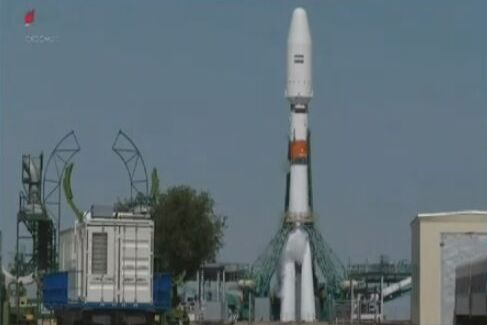
Photo published by government media in Iran apparently showing the Russia launch vehicle. August 9, 2022

Russia launched a controversial Iranian satellite into space Tuesday from its Baikonur space station in Kazakhstan as planned, government media in Iran reported.

The satellite called Khayyam after a 12th-century Persian polymath sparked controversy last week when The Washington Post quoted two Western security officials as saying that Moscow intends to use the space platform for its war effort in Ukraine.

Iran's Space Agency denied the report on Sunday, saying the satellite will be fully operated and controlled by the Islamic Republic from inside Iran once launched into space by Russia. It said that all operations of Khayyam will be controlled by Iranian engineers and researchers from a space base in Iran immediately after it reaches orbit, adding that data management stations of the satellite are also in Iran.

Iran and Russia are close political and military allies and have fought in Syria in close coordination to save Bashar al-Assad’s government in the decade long civil war in that country.

Western sources have said the surveillance satellite will greatly enhance Tehran’s ability to spy on military targets across the Middle East, including near-continuous monitoring of sensitive facilities in Israel and across the Persian Gulf.

Iran’s homegrown attempts at putting satellites into orbit have largely failed due to its technological limitations, so Russia agreed to build and launch the Kanopus-V Earth-observation satellite that can resolve features as small as 3.9 feet (1.2 meters) on Earth's surface.

US officials in July voiced concern that Iran intended to sell military drones to Russia for deployment in Ukraine, a charge that Tehran has not categorically denied.


Most Viewed

Ghalibaf defends Iran-US talks amid hardline backlash
1
INSIGHT

Ghalibaf defends Iran-US talks amid hardline backlash

2
ANALYSIS

From instability to influence: Pakistan’s pivotal role in US-Iran diplomacy

3
VOICES FROM IRAN

Bread shortages, soaring prices strain households in Iran, residents say

4
ANALYSIS

100 days on: why Iran’s January protests spread across social classes

5

War-hit homeowners feel abandoned as Iran’s reconstruction aid fades

Banner
Banner

Spotlight

  • Iran diplomacy wobbles as factions compete to avoid looking soft on US
    INSIGHT

    Iran diplomacy wobbles as factions compete to avoid looking soft on US

  • The politics of pink: how Iran uses cuteness to rebrand violence
    ANALYSIS

    The politics of pink: how Iran uses cuteness to rebrand violence

  • Bread shortages, soaring prices strain households in Iran, residents say
    VOICES FROM IRAN

    Bread shortages, soaring prices strain households in Iran, residents say

  • 100 days on: the anatomy of Iran’s January crackdown
    INSIGHT

    100 days on: the anatomy of Iran’s January crackdown

  • Ghalibaf defends Iran-US talks amid hardline backlash
    INSIGHT

    Ghalibaf defends Iran-US talks amid hardline backlash

  • From instability to influence: Pakistan’s pivotal role in US-Iran diplomacy
    ANALYSIS

    From instability to influence: Pakistan’s pivotal role in US-Iran diplomacy

•
•
•

More Stories

Iranian Lawmakers Want To Limit Prenups For Women

Aug 8, 2022, 22:18 GMT+1

A motion to amend laws regarding payment of ‘mehrieh’ (pre-nups for brides) in Iran has sparked controversy that it could benefit men but be detrimental to women.

The motion signed by fifty lawmakers will likely be given priority in parliament. If turned into law, men will no longer be prosecuted by law for not paying the mehrieh if they do not have the means to pay and their assets cannot be frozen by the court to make them pay.

Mehrieh (affection) is assets (usually gold coins) the husband agrees to give the wife in a prenuptial agreement if they divorce or whenever the wife demands it.

For many Iranian women, this could mean getting a divorce becomes potentially harder as according to Iran's Sharia-based laws of matrimony, only men have the right to divorce. Some women use their mehrieh to encourage their husbands to divorce them by forsaking it altogether instead of demanding payment or by asking for a smaller sum if he agrees to the divorce.

Fatemeh Ghasempour, chairwoman of the Women’s Faction in the parliament, is among the critics of the proposed law. “Prosecution of men [who refuse to abide by their mehrieh pledge] will be impossible if the motion passes,” she said adding that the law would encourage more men to refuse to pay and deprive women of mehrieh as leverage in getting a divorce.

Mehrieh can be in the form of money, property, jewelry, or whatever the bride-to-be demands, even a flower when a future wife wants to make a statement about her love and devotion.

Payment, whether large or small in value, is required by the Sharia law and its amount and form are stated in Iranian marriage certificates.

In Iran mehrieh was traditionally paid in cash or in the form of land or other property, but in the past few decades gold coins issued by the government have become the normal form of mehrieh. The value of the coins naturally fluctuates.

Families negotiate the amount of mehrieh before the wedding, much like lawyers in the West negotiate pre-nups.

The number of coins demanded by the bride’s family often has religious significance. Many brides ask for fourteen coins to represent the 12 Shia imams plus the Prophet and his daughter Fatima. But the number can also be representative of the future bride’s year of birth or any given number such as 100 or 1,000. A woman born in 2001 (1380 in the Persian calendar) may demand 1380 Bahar-e Azadi coins the total value of which amounts to over $660,000 in the Iranian market now.

If the parliamentary motion passes, the state will also charge a tax, payable by both sides, at the time of registration of the marriage depending on the value of the pledged gift. The mehrieh tax is meant to lower the astronomically high mehrieh many women and their families demand from grooms these days.

It is not clear if the motive behind the new law is to make marriage easier. After all, the parliament is dominated by hardliners loyal to Supreme Leader Ali Khamenei who has repeatedly called for Iran’s population to increase to 150 million.

Mehrieh debts have landed thousands of men who refused to pay in jail over the years, both before and after divorce. Based on current laws, courts will make men pay in monthly installments if they claim they cannot pay the total all in one go.

Annual Per Capita Meat Consumption In Iran Drops To 3kg

Aug 8, 2022, 21:59 GMT+1

As inflation has drastically risen in Iran impoverishing millions, annual per capita meat consumption has decreased to three kilograms, or less than7 pounds.

According to a report on Monday, the Statistical Centre of Iran says per capita meat consumption is about four kilograms but Masoud Rasouli, the head of the country's meat packaging industry association, has said the number is not more than three kilograms.

The report said if an ordinary family of three wants to eat a meat-based food, they have to spend the whole daily wage of the breadwinner to buy just one kilogram of red meat.

Expressing worries about the trend, Rasouli said the amount of meat consumption is a function of the country's economic growth indicators. “For example, in 1993, per capita meat consumption of the Chinese people was 5 kilograms, but now this number has reached 53 kg," he added.

The CEO of an Iranian livestock union said last year that "per capita meat consumption decreased from 12 kg to 6 kg per year, in other words, consumption has decreased by 50 percent," in three years.

In April, the chairman of the country's livestock supply council, Mansour Pourian, said that a rise in red meat prices had accelerated despite an oversupply in the market.

Soybean meal, barley and corn for livestock and chicken feed are mainly imported from Russia and other countries. Any shortages or higher prices can push up the price of meat in Iran.

The average per capita consumption of meat worldwide is about 34 kilograms, although the figure is about 100 kg for North America, and about 13 in Africa.

US Says Ready To Revive Iran Nuclear Deal Based On EU Proposals

Aug 8, 2022, 19:59 GMT+1

A US State Department spokesperson has told Iran International that Washington stands ready to quickly conclude an agreement on the basis of the EU’s text for renewing the 2015 nuclear deal.

"As the EU said two weeks ago, the text they tabled then is the best and only basis on which to reach a deal,” the spokesperson said on Monday in response to an inquiry by Iran International’s correspondent Samira Gharaei. “Our position is clear: we stand ready to quickly conclude a deal on the basis of the EU’s proposals,” the State Department Press Office noted.

“Over the past few days, the EU Coordinator engaged in further consultations to help clarify and finetune any remaining questions regarding that text. Those consultations were completed today and we’ll now await the EU’s next steps,” the spokesperson said.

The spokesperson said Iran repeatedly says it is prepared for a return to mutual implementation of the JCPOA, underlining that the current text “is the only possibility basis on which to do so.” Let’s see if their actions match their words."

American and Iranian diplomats left Vienna Monday after the European chair of talks offered a fresh and “final” text for renewing the deal.

European officials described the document to journalists as a ‘take it or leave it’ offer for both sides. One told Iran International that Enrique Mora, the European Union official coordinating talks, had circulated a “final text…with all the necessary points to put into action.” Another European official told AFP that the text was “not subject to further negotiations” and that a result was expected in “the next few weeks.”

Johnny Depp Lookalike In Iran’s Religious Ceremonies Goes Viral

Aug 8, 2022, 18:17 GMT+1

Video and photos of an Iranian man who looks like Hollywood star Johnny Depp during an Islamic mourning ceremony in Tehran have gone viral in Iranian media.

The Depp lookalike is reportedly identified as Amin Sa'les, who apparently does some modelling gigs thanks to his uncanny resemblance to the American actor.

Sa'les lives in Iran and is reportedly from the north-western city of Tabriz. His modelling work is with local agencies.

100%
100%

Huge gatherings have been held in Iran and some other Muslim countries in the past 10 days, the first days of the first month of the Islamic calendar, to commemorate the third Shiite Imam Hussain.

Such ceremonies are vastly popular among Iranians as they are complemented by copious supplies of free food and drinks, known as nazri. They are given free by individuals and groups at kiosks called heyats set up all over the country.

The highlight of the month-long ceremonies of Muharram are the Days of Tasu'a and Ashura, the anniversary of the slaying of Shiite Imam Hussein and his 72 companions by his rivals to the leadership of Muslims in the 7th century.

Ceremonies have been held for centuries in Iran and among Shiites in other countries, marking the event in the 680 AD battle of Karbala, in present-day Iraq, and have gained greater state support since the 1979 Islamic Revolution.

Six Iranian, Lebanese Military Experts Killed In Missile Mishap In Yemen

Aug 8, 2022, 16:08 GMT+1

At least six Iranian and Lebanese advisers were killed in Yemen on Monday by a ballistic missile that exploded while being redeployed at a camp run by the Iran-backed Houthis.

According to reports by Saudi broadcaster Al Arabiya and other Arabic-language news outlets, dozens of Houthi militants were also killed as the blast triggered a second explosion in a nearby factory and weapons depot near Yemen’s capital Sa’ana.

Yemeni websites also quoted a military source as saying that these explosions were caused by the unsuccessful launch of a missile from the Al-Hafa military base by Houthi militias.

Later in the day, Yemen’s internationally recognized government accused the Iran-backed Houthis of not abiding by a key element in a UN-brokered truce to reopen roads to the besieged city of Taiz, saying the group was “running away” from its commitments.

Foreign Minister Ahmed Awad bin Mubarak also said in a news conference in Amman that his Aden-based government supports any move to expand the truce beyond the latest two-month extension to a durable peace deal.

The Houthis receives military and political support from Iran in their conflict with other Yemenis backed who are backed by a Saudi-led coalition since 2014. Iran has been sharing its missile and drone technology with Yemen’s Houthis and has also supplied other proxy forces, such as the Lebanese Hezbollah and Iraqi Shiite militias.

The United States, its Western allies and others blame Iran’s drones and missiles for attacks by Houthis on Saudi and Emirati energy facilities.