• العربية
  • فارسی
Brand
  • Iran Insight
  • Politics
  • Economy
  • Analysis
  • Special Report
  • Opinion
  • Podcast
  • Iran Insight
  • Politics
  • Economy
  • Analysis
  • Special Report
  • Opinion
  • Podcast
  • Theme
  • Language
    • العربية
    • فارسی
  • Iran Insight
  • Politics
  • Economy
  • Analysis
  • Special Report
  • Opinion
  • Podcast
All rights reserved for Volant Media UK Limited
volant media logo

Iran Pundits Pessimistic Over Outlook For A Nuclear Deal
Iran International Newsroom
Jul 28, 2022, 13:59 GMT+1Updated: 17:41 GMT+1
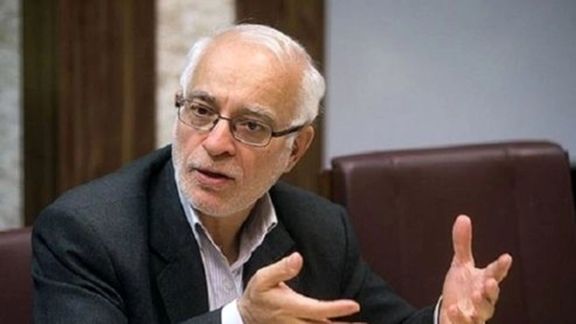
Hassan Beheshtipour, Iranian expert on Tehran's nuclear issue

Hassan Beheshtipour, an expert on Iran's nuclear case, says the latest statement by IAEA Chief Rafael Grossi paves the way for a new UN resolution against Iran.

Grossi told CNN on Tuesday, July 26, that "Iran has to restore all our inspection capabilities" after Iran's nuclear chief Mohammad Eslami declared on the same day that Iran will keep cameras monitoring its nuclear activities switched off until a deal is struck with the United States." Grossi, the head of the UN nuclear watchdog, the International Atomic Energy Agency explained: "We do not know what is happening with Iran's nuclear program."

In an interview with the Iranian Labor News Agency ILNA on Wednesday, Beheshtipour criticized Iranian officials for saying repeatedly that the IAEA is under the influence of the United States and Israel, and said that this will not solve any problem. He stressed that the difference between Iran and IAEA can be solved only through negotiations.

Beheshtipour said while Iran and the IAEA level accusations against each other it means that this is not the right time for cooperation and added that Iran possibly expects Grossi to also call on the United States to go back to its commitments under the 2015 nuclear deal.

With the latest accusations against Iran, the IAEA will certainly issue a resolution against Tehran in September, Beheshtipour remarked, adding that Iran will take that as a step fabricated to condemn Tehran. However, Beheshtipour pointed out that the IAEA has confirmed in 14 previous reports that Iran was committed to the terms of JCPOA.

Jalal Sadatina, former Iranian envoy to the United Kingdom
100%
Jalal Sadatina, former Iranian envoy to the United Kingdom

Meanwhile, Iran's former ambassador to the United Kingdom Jalal Sadatian said in an interview with Didban Iran website that the negotiations to revive the JCPOA have failed. He added that the 2015 agreement could be revived only with a miracle. "We should consider the JCPOA as a terminated case, and if Iran's nuclear issue is not resolved, its economy will not improve," Sadatian said, adding that Russia and China are not able to solve Iran's economic problems. He argued that there has been no benefit for Iran in the boosting of its ties with Russia.

Lately, Iran has been insisting that it can survive under US sanctions by closer ties with Russia and China. Vladimir Putin visited Tehran earlier this month and Supreme Leader Ali Khamenei praised him for his invasion of Ukraine.

The former diplomat further said that Russia is determined to prevent Iran from providing oil for Europe while Europe is keen to have access to Iran's energy market.

In a related development, former diplomat and current political analyst Ali Bigdeli said in an interview with Nameh News website that there is no hope the nuclear talks would continue and bear results, nonetheless, the two sides are reluctant to declare the failure of the negotiations, partly because they know that there is no chance for another agreement.

Bigdeli's view is more pessimistic than the position of commentators such as Heshmatolah Falahatpisheh who believe that Iran and the United States should forget about the JCPOA and start working from the scratch on a new agreement.

Bigdeli went on to say without an explanation, that the United States is by no means prepared to accept a new agreement. In the meantime, Iran has demands from the US which are beyond the scope of the JCPOA, and the United States insists that the two sides should return to the 2015 nuclear deal.

It is not in Iran's interest to declare the failure of the JCPOA as this would be a bonus for Israel, which could launch a war in that case to protect its security, the analyst added.


Most Viewed

Ghalibaf defends Iran-US talks amid hardline backlash
1
INSIGHT

Ghalibaf defends Iran-US talks amid hardline backlash

2
INSIGHT

A nation in limbo: 100 days after the massacre, has the world moved on?

3
ANALYSIS

From instability to influence: Pakistan’s pivotal role in US-Iran diplomacy

4
ANALYSIS

100 days on: why Iran’s January protests spread across social classes

5

War-hit homeowners feel abandoned as Iran’s reconstruction aid fades

Banner
Banner

Spotlight

  • Bread shortages, soaring prices strain households in Iran, residents say
    VOICES FROM IRAN

    Bread shortages, soaring prices strain households in Iran, residents say

  • War-hit homeowners feel abandoned as Iran’s reconstruction aid fades

    War-hit homeowners feel abandoned as Iran’s reconstruction aid fades

  • 100 days on: the anatomy of Iran’s January crackdown
    INSIGHT

    100 days on: the anatomy of Iran’s January crackdown

  • Ghalibaf defends Iran-US talks amid hardline backlash
    INSIGHT

    Ghalibaf defends Iran-US talks amid hardline backlash

  • 100 days on: why Iran’s January protests spread across social classes
    ANALYSIS

    100 days on: why Iran’s January protests spread across social classes

  • From instability to influence: Pakistan’s pivotal role in US-Iran diplomacy
    ANALYSIS

    From instability to influence: Pakistan’s pivotal role in US-Iran diplomacy

•
•
•

More Stories

Tehran Politician Says Proposed EU Nuclear Deal Is A 'Partial' One

Jul 28, 2022, 09:55 GMT+1
•
Iran International Newsroom

A former senior Iranian lawmaker says that European Union’s latest plan to bring about a nuclear deal with Iran would be a partial one, with minimal trade-offs.

Fararu website in Tehran quoted Heshmatollah Falahatpisheh, former chairman of parliament’s foreign policy committee as saying that fully restoring the JCPOA is not possible in current circumstances, therefore, the EU is proposing lifting oil exports sanctions in return for “some monitoring” of Iran’s nuclear activities.

The conservative Iranian politician did not say if he has concrete information about the EU plan, which this week its foreign policy chief Josep Borrell presented to Washington and Tehran for consideration. But given statements lately by some officials and well-informed sources that restoring the 2015 nuclear agreement, JCPOA, is difficult, a limited plan might make sense from the perspective of Iran.

Tehran has always labeled the nuclear talks as “negotiations to lift sanctions” and if a plan calls for oil sanctions to be lifted in exchange for monitoring by the International Atomic Energy Agency, IAEA, Iran has not really given up much.

Falahatpisheh did not say if he believes Iran’s uranium enrichment would be stopped or curtailed according to Borrell’s plan, a key issue given the fact that Tehran has enriched a considerable amount of fissile material to 60-percent and either already has enough for a nuclear bomb or is close to obtaining it.

Meanwhile, Axios quoted White House Middle East coordinator Brett McGurk as having told of experts last week that it “highly unlikely” that the JCPOA will be revived in the near future. He was also quoted as saying that with a deal highly unlikely, the Biden Administration plans to strengthen sanctions and diplomatic isolation against Tehran, “but not needlessly escalate the situation.” Use of force would only be a last resort; he was quoted as saying.

Borrell has said that his proposal includes a detailed plan about the lifting of sanctions, as well as steps that Iran must take, without offering details. This, in general might not be much different from what Falahatpisheh says the “temporary” deal could be.

John Kirby, the US National Security Council spokesman in a briefing on Wednesday refused to comment on what Axios had reported about McGurk’s remarks.

However, he told reporters that the US remains committed first, “to seeing Iran never achieve a nuclear weapons capability,” and second, “the President believes diplomacy is the best path forward to see that outcome.” This was a reiteration of the long-held White House position.

Kirby added, “the negotiations are pretty well complete on a new JCPOA, and it’s on the table. And the onus is now on Iran to decide whether they’re going to take that deal or not.” He said that Washington and its European allies still believe that Tehran will “come back into compliance” with the JCPOA.

Kirby was not asked about Borrell’s proposal at the briefing, but he added that the President has an obligation to defend US interests and allies in the Middle East against continuing non-nuclear threats by Iran. The US has an obligation “to defend ourselves and to help defend our allies and partners against the range of other Iranian threatening behavior: their burgeoning ballistic missile capability, which continues to improve; their support for terrorist groups; their threats in the maritime environment. All of that is still happening.”

Trump Says Biden Admin Is Allowing Iran To Build Nuclear Weapons

Jul 27, 2022, 12:55 GMT+1

Former US president Donald Trump says Washington is allowing Iran to build “a massive nuclear weapon,” criticizing the Biden administration’s policies regarding the Islamic Republic.

Delivering a keynote speech on rising crime in the United States on the second day of a two-day America First Agenda Summit on Tuesday, July 26, in Washington, Trump said Iran would never have been allowed to develop nuclear weapons if he had been the president.

“They (Iran) were dying to make a deal. They would have made a deal with us right after the election, and it would have been a good deal,” he added.

Trump claimed that “Iran, China, Russia and North Korea weren't going to do a thing against us just two years ago,” but now “we're a nation that is no longer respected or listened to around the world. We are a nation that in many ways has become a joke.”

Lashing out the policies of President Joe Biden and the Democratic Party for the country's ills, he decried Biden allowing an "invasion" by millions of migrants crossing the southern border, highest inflation in 49 years and highest gas prices “in the history of our country." "Our country is going to hell and is going to hell very fast... We are a nation in decline. We are a failing nation."

He stopped short of declaring his candidacy but hinted that he would run for president in the next election, noting that a Republican will be back in the White House in 2024.

US Reviewing EU’s Draft Agreement To Revive Nuclear Deal

Jul 27, 2022, 10:45 GMT+1

The United States says it is reviewing a draft understanding on reviving Iran’s nuclear deal that has been tabled by the European Union. 

In his daily briefing on July 26, State Department spokesperson Ned Price said that “we are reviewing the draft understanding on mutual return to full implementation with the JCPOA that the high representative shared with us, as well as with Iran and the other JCPOA participants,” referring to a draft agreement by Josep Borrell, the EU high representative for foreign affairs and security policy. 

About the proposal being fully acceptable to the Biden administration, he said “this new text” that Borrell referred to [in an op-ed] is based on “an outline of what we believe to be a good deal on the table since March that we have been prepared to accept.”

In an article published by the Financial Times on Tuesday, Borrell said there is “no other comprehensive or effective alternative within reach,” stressing the need for swift political decisions. 

“We are studying the changes that have been proposed by the EU; we’ll respond to them in short order. And we hope that Iran finally and ultimately decides to seize the opportunity that has been before it for some time now,” he added. 

Dodging a direct answer about any definite timeframe or deadline on the talks to restore the deal, Price said that “we are going to continue to pursue a mutual return to compliance with the JCPOA for as long as it’s in our interest to do so. That remains the case."

Iran Lawmaker Warns West To Return To Talks 'Before It Is Too late'

Jul 27, 2022, 09:20 GMT+1
•
Iran International Newsroom

A hardliner Iranian lawmaker has warned and threatened Western countries negotiating a nuclear deal to return to the suspended talks before it is too late.

In a warning mixed with threats Iranian lawmaker Mohammad Hassan Asafari warned, "Iran's nuclear capabilities are being boosted and tomorrow would be too late for the West to return to the negotiations."

Asafari said in an interview with the government-owned Iranian Students News Agency (ISNA) that "the Western parties to the JCPOA have pushed the negotiations into a deadlock and it is in their interest to come back to the negotiating table."

The hardliner member of parliament also said: "It is a lie that it is the IRGC that prevents the negotiators from getting a result from the talks." He added: "This is not true. It is a lie told by the US side in the negotiations. What has led to the suspension of the talks is the reneging by the other side."

He was referring to numerous reports since the talks were suspended that Iran demands that the United States remove the Revolutionary Guard from its list of ‘Foreign Terrorist Organizations’.

Meanwhile, he criticized the Iranian government for not informing the parliament about where the negotiations stand, adding that the government's behavior is unacceptable.

Mohammad Hassan Asafari, conservative Iranian lawmaker
100%
Mohammad Hassan Asafari, conservative Iranian lawmaker

Hoever, Iranian Foreign Ministry's former director general for Middle east affairs, Ghasem Mohebali reiterated that the members of Iran's current negotiating team have always been opposed to the JCPOA. He added that recent developments in Iran including statements made by Supreme Leader Ali Khamenei's senior foreign policy adviser Ali Akbar Velayati have proven that the negotiators' objective is not to revive the JCPOA, and Tehran is no longer following that objective.

Velayati last week praised Russian President Vladimir Putin and recommended an alliance with Moscow.

Mohebali said that one of the main reasons why Iranian negotiators are not interested in telling the media about what they are doing is that they have not had any achievements and their inaction has brought the negotiations to a standstill. "They do not want to talk to the media because they do not want the public to know about their failure," he said.

The former diplomat added that members of Iran's former negotiating team were career diplomats who had a lot of experience and spoke English, while the members of the new team lack these attributes.

Mohebali further charged that the negotiating team does not have a roadmap for the talks. Asked if there is any hope for a change in this policy, Mohebali said: "Unfortunately, the government is inefficient in both domestic and foreign policy, and even in running the everyday business of its ministries. You cannot expect much from such a government." He added: "In a democratic country,” and in a democratic country they would have called for early elections.

Tehran needs political determination to revive the JCPOA, the former diplomat said and pointed out that Iran's new alliance with Russia is also a hindrance to returning to the talks.

Meanwhile, a statement made by Iran's nuclear chief Mohammad Eslami, appears to have made Iran's mixed messages to the West even more confusing. Eslami told the IRGC-linked Fars News Agency , this week that Iran will not allow monitoring cameras of the International Atomic Energy Agency (IAEA) to be turned on until there is a nuclear agreement.

Time For Swift Decisions On Iran Deal Or Dangerous Nuclear Crisis – EU

Jul 26, 2022, 22:50 GMT+1
•
Iran International Newsroom

The European Union foreign policy chief says the draft agreement to restore the JCPOA agreement addresses all elements with hard-won compromises by all sides.

In an article published by the Financial Times on Tuesday, Josep Borrell, the EU high representative for foreign affairs and security policy, said there is “no other comprehensive or effective alternative within reach,” stressing the need for swift political decisions “to seize this unique opportunity to succeed, and to free up the great potential of a fully implemented deal.”

Borrell said the JCPOA remains politically polarizing in Washington while the midterm elections approach as it may not have addressed all US concerns with respect to Iran, and the EU shares concerns that go beyond the nuclear issue, such as human rights and Iran’s activities in the region. “The JCPOA does not address them and was never supposed to do so. It did, however, provide the benefit of winding down the previously expanding Iranian nuclear program and opening it up to strict IAEA monitoring and inspections.”

He added that there are significant reservations over fully implementing a deal in Tehran too after the negative experience of recent years.

“The deal serves the cause of non-proliferation in return for sanctions lifting, showing that in turbulent times balanced international agreements are still possible,” he noted, saying that “Every day with no agreement in Vienna postpones concrete economic benefits to the Iranian people through substantial US sanctions lifting, as well as the benefits of non-proliferation for the world.”

Borrell also warned of “a dangerous nuclear crisis” if the deal is rejected, opening the “prospect of increased isolation for Iran and its people.”

Acknowledging the EU officials’ ideas to conclude the negotiations, Iran’s nuclear negotiator Ali Bagheri-Kani also said on Tuesday that he had serious and constructive exchanges with other sides in the past week on Vienna negotiations. “We, too, have our own ideas, both in substance and form, to conclude the negotiations which would be shared,” he added.

State Department spokesperson Ned Price in his daily briefing on July 25 said, lack of a response from Iran to the proposal made a while ago is an indication that Tehran is not serious and not ready to re-enter the JCPOA.

“And in fact, every day that they drag their feet or every day that is filled with nothing but silence on their end, it’s an indication to us that they are not serious and that they are not ready to re-enter the JCPOA on a mutual basis,” he said. US officials have maintained that an offer was made to Iran after months of talks in Vienna and so far Tehran has dragged its feet.

The comments came one day after chief of Iran's nuclear program, Mohammad Eslami said that Tehran will not allow monitoring equipment of the International Atomic Energy Agency (IAEA) to operate until the JCPOA is restored.

At the same time, the director general of the IAEA, the UN nuclear watchdog, Rafael Grossi told the Spanish newspaper El Pais on July 22 that Iran’s nuclear program is “galloping” forward. He added that enriching uranium at 60 percent is not needed if there are no military intentions, referring to Iran accumulating highly enriched fissile material that can be elevated to weapons-grade uranium in a relatively short time.





