• العربية
  • فارسی
Brand
  • Iran Insight
  • Politics
  • Economy
  • Analysis
  • Special Report
  • Opinion
  • Podcast
  • Iran Insight
  • Politics
  • Economy
  • Analysis
  • Special Report
  • Opinion
  • Podcast
  • Theme
  • Language
    • العربية
    • فارسی
  • Iran Insight
  • Politics
  • Economy
  • Analysis
  • Special Report
  • Opinion
  • Podcast
All rights reserved for Volant Media UK Limited
volant media logo

Iranian Cleric Tells Government: ‘Wake Up! Revolution Is Over!’
Iran International Newsroom
May 20, 2022, 11:28 GMT+1Updated: 17:36 GMT+1
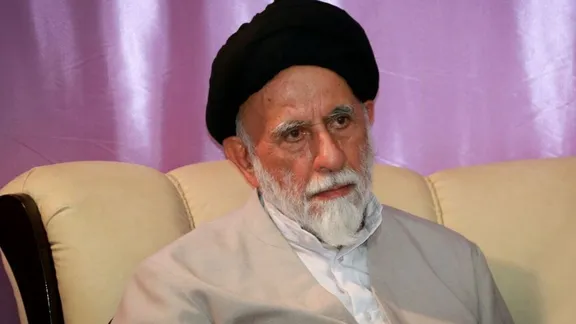
Former member of parliament, cleric Nasser Ghavami

A former reformist lawmaker says criticizing Iran’s current situation and telling the truth about the government might land him in jail as a man in his 70s.

Lashing out at the new generation of ultra conservatives who currently dominate the government and the parliament in Iran, Nasser Ghavami said in an interview with Didban Iran website: “They call themselves revolutionaries. But who are they revolting against? The People?”

Ghavami, a former member of the Iranian parliament’s legal committee suggested that those currently in power in Iran have already started a revolution against the poor people of Iran. Addressing the “revolutionaries,” Ghavami said: “Wake up! The revolution is over!”

After years of a declining economy, a recent government decision to stop subsidizing food imports has led to a sudden rise in prices, impoverishing millions of people.

As inflation, estimated at more than 40 percent last year kept climbing in 2022, many current and former politicians began criticizing the government’s performance.

The cleric-politician told the website: “If I begin to tell you about the root-cause of Iran’s current chronic problems, neither I am brave enough to tell you all there is, nor you are allowed to publish it. Talking about the causes of country’s economic problems is a security issue and the government’s treatment of its critics is violent.”

The funeral of a protester killed earlier this week. May 18, 2022
100%
The funeral of a protester killed earlier this week. May 18, 2022

Ghavami added, it is natural that some leaders even in the United States fail to meet all the promises they make during their election campaigns, but if a reporter writes about President Ebrahim Raisi’s broken promises, he or she might find himself in jail like many others. He added that “We cannot tell the truth about the government’s performance as long as people get arrested without any prior notice and no one knows where they are kept.”

Ghavami was probably referring to the detention of Kayvan Samimi, the editor of Iran Farda magazine who was arrested on Wednesday, May 18. Samimi was released from jail recently, but his new detention came after a new interview.

Ghavami explained: “Activists and reporters know about the problems and their causes, but they often cannot say anything because they fear detention and torture.”

Ghavami claimed that Raisi wishes to solve the problems but individuals such as his Vice President Mohammad Mokhber obstruct any solution. “Why they do not say what are they doing with the oil revenues while they say they are selling oil at $100 per barrel?” he asked.

Speaking about recent protests, Ghavami tried not to appear as a rabble-rouser, saying that “not all problems can be solved by taking to the streets.”

He also suggested, like many other critics, that “Iran should maintain acceptable relations with other countries if problems are to be solved.”

Other Iranian politicians, including former Vice President Mostafa Hashemitaba have also been criticizing the government’s economic policies as protests have taken place in many provinces. Hashemitaba said in an interview published on Thursday that a major economic plan such as doing away with food subsidies “should not have been implemented before seeking the people’s views.”

Meanwhile, he criticized the government for cutting off Internet access as a way of controlling the protests to rising prices. He also lashed out at the government for preventing freedom of speech.

Hashemitaba went on to say that instead of seeking public approval for its policies, “the Raisi administration’s actions and words were uncoordinated and wrong news dissemination at times leads to chaos and unrest.”


Most Viewed

Hardliners push Hormuz ‘red line’ as US blockade tests Iran’s leverage
1
INSIGHT

Hardliners push Hormuz ‘red line’ as US blockade tests Iran’s leverage

2

Iran International says it won’t be silenced after London arson attack

3
VOICES FROM IRAN

Hope and anger in Iran as fragile ceasefire persists

4

US sanctions oil network tied to Iranian tycoon Shamkhani

5

Iran halts petrochemical exports to supply domestic market

Banner
Banner

Spotlight

  • Hardliners push Hormuz ‘red line’ as US blockade tests Iran’s leverage
    INSIGHT

    Hardliners push Hormuz ‘red line’ as US blockade tests Iran’s leverage

  • Ideology may be fading in Iran, but not in Kashmir's ‘Mini Iran'
    INSIGHT

    Ideology may be fading in Iran, but not in Kashmir's ‘Mini Iran'

  • War damage amounts to $3,000 per Iranian, with blockade set to add to losses
    INSIGHT

    War damage amounts to $3,000 per Iranian, with blockade set to add to losses

  • Why the $100 billion Hormuz toll revenue is a myth
    ANALYSIS

    Why the $100 billion Hormuz toll revenue is a myth

  • US blockade targets Iran oil boom amid regional disruption
    ANALYSIS

    US blockade targets Iran oil boom amid regional disruption

  • Iran's digital economy battered by prolonged blackout
    INSIGHT

    Iran's digital economy battered by prolonged blackout

•
•
•

More Stories

Iranian Truckers Plan Nationwide Strike Amid Protests

May 19, 2022, 23:07 GMT+1

Iranian truckers have announced plans to hold a nationwide strike as anti-government protests continue and Tehran’s bus drivers have been on strike all week.

In a statement issued on Thursday, the Union of Truckers and Drivers' Organization said that holding strikes and protests for the realization of their demands are their inalienable right. The date of the strike is to be announced soon.

Their demands include better transport fares based on the weight of the cargo per kilometer, higher pays and job security, lower prices for spare parts, lower fuel prices through subsidies, removing customs tariffs and road tolls, as well as welfare and health facilities at terminals.

The statement referred to the previous nationwide strike by the truck drivers that took place in over 160 cities four years ago, saying that their demands have not been met since then and their lives have become harder.

“For the past four years, we have been struggling with a lot of pain and suffering every day and every moment... Today, the country's road transport fleet is on the verge of destruction”, they said.

"The experience of that great strike tells us that we can unite again and shout our demands”, the statement read.

The 2018 strike finished following unfulfilled promises by the government, threats of serious repercussions and hundreds of arrests.

Authorities scrapped a food import subsidy in early May, which triggered a sudden jump in prices and led to protests that have taken on an anti-regime tone.

Iran’s Detention Of Foreigners Frightens Investors, Says Former Diplomat

May 19, 2022, 18:00 GMT+1
•
Iran International Newsroom

Hossein Mousavian, a former Iranian ambassador and now a research fellow at Princeton University, says foreign investors find Iran insecure country for capital.

In an interview with the reformist Ensaf News website in Tehran Mousavian said that politics, ideological biases, and obstacles created by certain interest groups in Iran not only hinder foreign investment, but also dissuade Iranian expats from investing in the country.

The former Iranian official also insisted that Iran can never attract foreign capital as long as it refuses to solve its problems with the United States. While lack of coordination among various institutions inside Iran has paralyzed the system, Tehran’s enmity with Washington has led to devastating US sanctions and all this has made Iran an insecure and high-risk country for investment.

Mousavian recalled that once he invited a prominent German industrialist to Iran, but officials refused to meet him. Speaking of another problem that hinders foreign investment, Mousavian said that despite rich natural and human resources in Iran, the misery index, which was around 14 percent before the Islamic Revolution, has reached 50 percent. This is an index directly linked to corruption, inflation, unemployment, crime and insecurity, he explained.

Mousavian’s remarks are a noteworthy admission by a former Iranian diplomat and operative that the Islamic Republic has failed in many respects.

Mousavian, currently a research fellow at Princeton, has been accused of lobbying for the Islamic Republic in the United States. He has also been implicated in court cases in Europe following the assassination of Kurdish leaders by Iranian and Lebanese terrorists in Germany in 1992. However, he has defended himself in several interviews since then. His explanations have not been convincing for Iranian activists and human rights defenders abroad.

Mousavian recalled, “Once when I was Iran’s ambassador in Germany, I found out that Hossein Sabet, an Iranian in Germany had made a big investment in Spain. I contacted him and urged him to invest in Iran. But as soon as he arrived in Iran security forces confiscated his passport. I chased his case for several days and officials found out that it was another Mr. Sabet with whom they had a problem. Nonetheless, terrified and worried, Sabet left Iran and did not look back again.”

Mousavian said, “The detention of foreigners and dual nationals in Iran is a familiar issue in international media. I invited many Iranian expats to invest in Iran when I was Iran’s ambassador to Germany, but most of them refused to have anything to do with Iran. Sabert was only one of therm.”

Mousavian said that some of Iran’s officials basically do not believe in the importance of foreign investment, others were not able to remove the obstacles.

According to Mousavian, there are around 6 million Iranians living abroad with a total wealth of around $3 trillion but the Iranian government’s policies and ideological biases deprive the country of this huge financial resource. He added that during the past 40 years Iran has been suffering from the adverse effects of brain drain and capital flight.

Meanwhile, Mousavian added that Iran’s poor and problematic foreign relations have pushed capital out of Iran to neighboring countries.

Mousavian, 65, was Iran’s ambassador to Germany (1990-1997). His latest position in Iran was the deputy director of the Presidential Office’s Strategic Research Center (2005-2007). He was briefly jailed in 2007 on charges of espionage but was soon cleared of the charges.

Instagram Contractor Reportedly Blocks Posts Related To Iran Protests

May 19, 2022, 01:20 GMT+1
•
Maryam Sinaiee

Some Iranians complain that their Instagram posts are being restricted, allegedly by other Iranians working for the company's content review subcontractor.

In recent days some Iranian activists and groups have complained about restriction on public access to their direct messages as well as removal of hashtags, videos, and posts related to ongoing protests in the country.

‘1500 Tasvir’ which runs popular Instagram and Twitter accounts dedicated to Iranian politics and protests said on Twitter Tuesday that it can no longer access videos sent to their Instagram account by citizen reporters in Iran.

In January Instagram also removed posts with the hashtag #IWillLightACandleToo which many used to commemorate 176 victims who died when Iran’s Revolutionary Guard in January 2020 fired two missiles at a Ukrainian passenger plane near Tehran. Instagram later apologized and said the hashtag had been “restricted by mistake.”

Instagram also explained that the restriction was due to the hashtag being “reported” by other users for not meeting Instagram community guidelines.

In April 2019, Instagram also deleted accounts of many current and previous Iranian Revolutionary Guards (IRGC) commanders after the US designated the IRGC a ‘foreign terrorist organization.’

BBC’s sources alleged that pro-regime employees of the German branch of Telus International, a Canadian contractor which provides content moderation to Instagram, are responsible for restricting anti-government content of Iranian users.

One the sources told the BBC that pro-regime employees would first report certain hashtags, posts and accounts for violation of Instagram rules during their breaks when they could use their personal mobile phones and then remove the post or account based on their own anonymous reports.

The source currently working for Telus, who the BBC report introduced with the alias Mehdi, said the company had over 400 Iranian employees for reviewing Persian-language content.

In response to BBC Persian’s enquiry, Meta – the mother company of Facebook, Instagram, and WhatsApp – said decisions of its 15,000 staff who review content in 70 languages , including Persian, were also reviewed to establish their fairness. Meta also said it had not found any evidence of restriction of a hashtag related to recent protests in Iran’s Hafshajan.

Iran's Supreme Leader Ali Khamenei who is ultimately responsible for all human rights violations in the country has multiple accounts on Instagram and the company has not acted to take them down despite many appeals aby activists.

Instagram which has around 45 million users in Iran is the only major social media platform not blocked in the country where other platforms such as Facebook, YouTube, WhatsApp, Twitter, and Telegram cannot be accessed without the use of anti-filtering software and VPNs.

Iran’s Supreme Leader Ali Khamenei who often refers to pro-regime cyber propagandists as “soldiers” in a soft war, has repeatedly criticized slow progress in launching a regulated national internet network.

The National Information Network (NIN) to be established under the Fifth Development Plan Act, is a system of control over internet access and content, blocking websites and social-media platforms deemed religiously or politically unacceptable

Iran has one of the world’s worse internet censorships, with tens of thousands of websites blocked since the early 2000s and most social media platforms banned. In the absence of free media and the very high level of censorship, many Iranians turn to social media for political news and information.

Dozens Of Iranian Officials Traveling To Switzerland For Online Conference

May 18, 2022, 23:33 GMT+1

While Iranians are protesting rising prices and the government talks about cost savings, a group of over 40 officials are set to travel to Switzerland for a two-week online conference.

The group is mainly comprised of officials from the Ministry of Cooperative, Labor and Social Welfare, including Minister Hojatollah Abdolmaleki himself, as well several members of parliament, local media reported.

The 110th Session of the International Labour Conference is scheduled to be held in Geneva from May 27 to June 11, which means the government is willing to spend hundreds of thousands of euros airfare and accommodation for the delegation apart from their per diems for an event that can be attended online.

Several cities across Iran are a scene of protests that began in the southwestern province of Khuzestan over a week ago triggered by a sudden jump in food prices, and have spread to other provinces.

The protests have quickly taken an anti-government tone and protesters often chant slogans against authorities, including the supreme leader, the president, and the ruling clerics. In some instances, protesters have attacked local headquarters of the Basij militia of the Revolutionary Guards (IRGC) whose members are often deployed to suppress protesters.

In larger cities such as the capital Tehran, Mashhad, Zanjan and Shiraz security forces have displayed a heavy presence on the streets, creating an atmosphere of fear and apprehension.

Iran Wealth Fund Chairman Slams Politicians For ‘Cash Withdrawals’

May 18, 2022, 17:56 GMT+1
•
Mardo Soghom

As Iran’s economic woes continue, the manager of its sovereign wealth fund has criticized successive governments for bad planning and treating the fund as an ATM.

In a gathering of senior officials on Tuesday, Mehdi Ghazanfari, a graduate of Australia’s University of New South Wales (Sydney) lashed out at ministers and civil servants for drafting unbalanced budgets and then running to Iran’s National Development Fund (NDF) for money.

Ghazanfari, the fund’s chairman, complained that at the end of each year, the presidential administration and parliament spend at least three months drawing up and debating a new budget, “but in the end whatever they plan includes a budget deficit and they turn to NDF.”

Since its establishment in 2000 as a currency reserve to supplement the Oil Stabilization Fund, successive governments have dipped into the NDF for current spending, including the withdrawal of the equivalent of 2 billion euros in 2019 to boost defense spending. The administration of President Mahmoud Ahmadinejad (2005-13) borrowed heavily from the fund, which contained $24 billion when he was elected. The populist president withdrew $2.7 billion to pay New Year cash handouts to all Iranians in 2013.

While the fund was originally intended to net 20 percent of Iranian oil income – a target subsequently increased to 40 percent – United States ‘maximum pressure’ sanctions introduced in 2018 reduced Iran’s oil exports from over 2.5 million barrels a day (bpd) in 2017 to around 650,000 bpd in 2021. In two years of deep recession 2019-2020, the government raided the fund to finance spending, introducing a veil of secrecy around reserves.

‘Go To Mr Kazemi if you need money’

Claiming there had been a recent request from an unnamed minister for close to $1 billion, Ghazanfari asked why the government needed extra cash so early in the fiscal year, which began March 21.“If you need money for operational or developmental budgets, go to Mr [Masoud Mir] Kazemi [head of the Planning and Budget Organization],” Ghazanfari quipped. He also argued the government could borrow from banks.

Ghazanfari called for a consistent approach based on realistic targets. “When you say NDF’s share from oil revenues is 40 percent, then allow it to remain 40 percent and don’t mess with it in the middle of the year,” he said. “If there are sanctions and you cannot deposit money in the fund, then don’t deposit [in the first place].”

President Ebrahim Raisi’s government has claimed credit for higher oil exports despite US sanctions and has insisted the proceeds have reached Iran, despite US banking sanctions threatening punitive action against any third party dealing with Iran’s financial sector.

The Wall Street Journal recently estimated that Iran's oil exports, going mainly to China, had risen to 870,000 barrels a day in the first three months of 2022, up around 30 percent from an average 668,000 bpd in full-year 2021. But the falling rial – losing 20 percent of its value in the past two months – suggests there has been no great influx of foreign currency.

A money request from NDF means the government is short of cash, which puts the claims about higher oil revenues in doubt. This can also be surmised from the falling exchange rate for Iran’s currency, rial. In the past two months, the rial has fallen from 250,000 to 300,000 against the US dollar, a 20 percent decline.

It was perhaps in this context that Ghazanfari mentioned a minister asking for close to a billion dollars from NDF.