• العربية
  • فارسی
Brand
  • Iran Insight
  • Politics
  • Economy
  • Analysis
  • Special Report
  • Opinion
  • Podcast
  • Iran Insight
  • Politics
  • Economy
  • Analysis
  • Special Report
  • Opinion
  • Podcast
  • Theme
  • Language
    • العربية
    • فارسی
  • Iran Insight
  • Politics
  • Economy
  • Analysis
  • Special Report
  • Opinion
  • Podcast
All rights reserved for Volant Media UK Limited
volant media logo

Protests In Iran Were Expected, Sociologists Say
Iran International Newsroom
May 14, 2022, 15:05 GMT+1Updated: 17:36 GMT+1
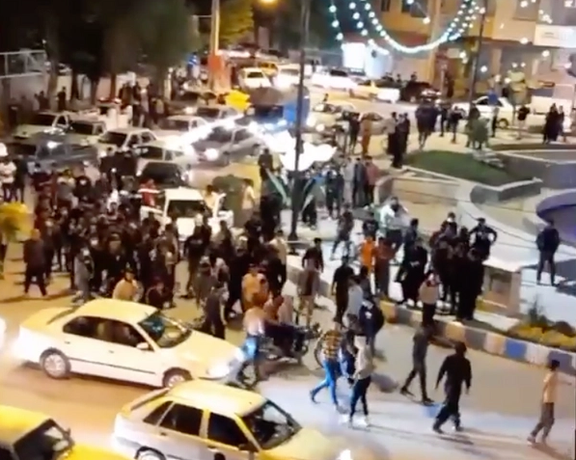
Protesters moved through the streets of small cities Friday nightas security forces chased them.

As anti-government protests triggered by rising prices sweep across Iran, state media and officials are in denial, but many observers were expecting the unrest.

In the meantime, two sociologists explained the underlying reasons for the protests in interviews with Iran International Television.

Majid Mohammadi, an exiled sociologist and commentator, told the IITV that "There is a war in Iran between the government and the people over their share of the country's national resources. The government believes that it owns the national wealth while the nation should be kept in poverty. Men in government believe in "resistance economy" for the nation while they live an affluent lifestyle as they continue their expansionist policies abroad."

Mohammadi went on to say that the rulers are actively involved in sending their money and children to other countries while economic pressure and lack of freedoms force some ordinary people to become refugees. On the other hand, others are not willing to leave the country's resources to the government.

He added that during the past 43 years, the government has usurped many of the people's rights and has monopolized the ownership of the media and banned freedom of expression and association. In smaller towns where people have little access to the country's wealth, people are more determined to prevent the government's monopoly on resources.

Mohammadi said that there are three characteristic elements in smaller towns where protests are more intense. The first is poverty, misery and unemployment. The government in its own estimates considers 90 percent of the population "poor". They live in small towns while the other 10 percent live in big cities such as Tehran, Mashhad, Esfahan and Shiraz.

"The second characteristic is that people in small towns have distanced themselves from political Islam. In their slogans during protests in the past four years, there is no trace of political Islam," Mohammadi said, adding that "the third characteristic of small towns is that the people who take to the streets have cut off their ties with the clerics and see them as their enemies. They do not want the Shiite clerics to have any role in the government in Iran."

Mohammadi said that chanting slogans in favor of Reza Shah Pahlavi, the founder of the Pahlavi dynasty, mainly marks the protesters' opposition to the ruling clerics.

Meanwhile, Hossein Ghazian, another Iranian sociologist told Iran International TV that although the protests are taking place in the form of a reaction to rising prices, Iranian society has been expecting such a development. Many had earlier likened Iran to a gunpowder keg. Some even said that Iranian society was sitting on a gasoline tank short of a spark to ignite it. "However, I like to say that we have many social and political fault lines that might lead to a small or a bigger jolt at any moment, as saw in nationwide protests in 2017, 2018 and 2019," Ghazian said.

The sociologist added that the dynamics of these jolts are affected by a few factors: First, it is important how widespread they are and how many locations they affect. The second factor is for how long every jolt lasts. The third factor is the magnitude or the number of individuals who join the protests. The nature of demands is also important – whether protesters for example have sectoral demands or ask for wholesale change.

Ghazian said, it is still too early to pass judgement on the current protests and to determine in which direction they might move. He further said that all the major protests since 2017 have been reactions to government actions. No one or group from abroad or from within the country has called for protests.

However, Ghazian noted that "There is accumulated dissatisfaction in society that gives way to anger. This anger might occur in various places and at various times without necessarily targeting the true cause of the anger."


Most Viewed

Iran negotiators ordered to return after internal rift over Islamabad talks
1
EXCLUSIVE

Iran negotiators ordered to return after internal rift over Islamabad talks

2
ANALYSIS

US blockade enters murky phase as tankers spoof signals and buyers hesitate

3
ANALYSIS

Why the $100 billion Hormuz toll revenue is a myth

4

US tightens financial squeeze on Iran, warns banks over oil money flows

5
INSIGHT

Ideology may be fading in Iran, but not in Kashmir's ‘Mini Iran'

Banner
Banner

Spotlight

  • Hardliners push Hormuz ‘red line’ as US blockade tests Iran’s leverage
    INSIGHT

    Hardliners push Hormuz ‘red line’ as US blockade tests Iran’s leverage

  • Ideology may be fading in Iran, but not in Kashmir's ‘Mini Iran'
    INSIGHT

    Ideology may be fading in Iran, but not in Kashmir's ‘Mini Iran'

  • War damage amounts to $3,000 per Iranian, with blockade set to add to losses
    INSIGHT

    War damage amounts to $3,000 per Iranian, with blockade set to add to losses

  • Why the $100 billion Hormuz toll revenue is a myth
    ANALYSIS

    Why the $100 billion Hormuz toll revenue is a myth

  • US blockade targets Iran oil boom amid regional disruption
    ANALYSIS

    US blockade targets Iran oil boom amid regional disruption

  • Iran's digital economy battered by prolonged blackout
    INSIGHT

    Iran's digital economy battered by prolonged blackout

•
•
•

More Stories

Protests In Iran Spread Wider On Friday As Government Blames Media

May 13, 2022, 21:17 GMT+1
•
Maryam Sinaiee

Anti-government unrest in Iran triggered by a sudden rise in food prices spread further on Friday, with officials blaming foreign-based Persian-speaking media.

Protests that began in some cities in southwestern oil-rich Khuzestan Province over a week ago have now spread to many other provinces. Friday evening, protesters took to the streets in many large and small cities including Rasht (capital of the northern province of Gilan), Ardabil (capital of northwestern province of the same name), Iranshahr (in southeastern province of Sistan and Baluchestan) as well as Boroujerd (in western province of Lorestan(.

Calling the Raisi administration "agile", the secretary of Iran's Supreme National Security Council, Ali Shamkhani, said " in a tweet Friday that it will overcome all obstacles through reforming the country's "[economic] structures, optimization of resources, and people's cooperation" and accused foreign-based Persian-speaking media and those following them in Iran of being hostile and exploiting the situation for propaganda against the regime.

"The enemy wants to defeat us through satellite TV [channels], the Internet, rumors, and calls to rally and protest but is impeded by the [IRGC's] Basij militia," Commander of the Revolutionary Guards (IRGC) Hossein Salami also said on Thursday.

Members of the militia are often used to suppress anti-government protests.

The state-appointed Friday prayer imam of Khorramabad, capital of the western province of Lorestan where considerable protests took place on Thursday and Friday, also accused the BBC's Persian channel, Iran International TV, and the Persian channel of Voice of America of trying to exploit these protests.

Videos of protests are rather few as the government has slowed down or completely shut off Internet access in areas where protests have been taking place to prevent videos to be uploaded to social media.

Protesters have been chanting slogans against clerics including Supreme Leader Ali Khamenei and President Ebrahim Raisi amid heavy presence of security forces and riot police. In some of the scant footage available on social media the sound of gunfire is heard in several cities including Izeh and Andimeshk in Khuzestan, Shahr-e Kord, the capital of the western province of Chahar Mahal and Bakhtiari, and Boroujerd in the western province of Lorestan.

‘1500 Tasvir’, an opposition Twitter account, has claimed that security forces shot Omid Soltani, a 21-year-old protester, on Thursday evening in Andimeshk in Khuzestan Province.

Many people have been rushing to supermarkets after the sudden rise in flour, chicken, oil, dairy and eggs to buy food supplies including pasta, a staple for most Iranian families that cannot afford rice, only to find empty shelves. The official news agency (IRNA) on Friday claimed that protesters had looted supermarkets in some cities.

In the meantime, Iran’s battered currency dropped further on Friday, reaching 307,000 rials to one US dollar. Just two months ago the rial stood at 260,000, up from 33,000 in 2017.

Iran’s already weak economy was shaken by former US President Donald Trump’s decision in 2018 to withdraw from the Obama-era nuclear deal with Tehran known as JCPOA, and impose tough sanctions, including a ban on crude oil exports.

Tehran and Washington started negotiations after President Joe Biden took office last year, but so far the effort has not succeeded in reviving the JCPOA.

Tens Of People Arrested In Iran's Anti-Government Protests

May 13, 2022, 11:50 GMT+1
•
Maryam Sinaiee

Weeklong protests in Iran triggered by soaring prices spread to several provinces Thursday as they took on anti-regime tones, and tens of people were arrested.

Confirming that protests had taken place in several other cities outside the oil-rich Khuzestan where unrest had alreay begun last week, the official news agency IRNA reported Friday that tens of protesters had been arrested.

Most Iranian media did not report the protests at all but IRNA in its report downplayed the extent of the protests and said they have ended and "calm was established" in all areas where there was unrest.

Early reports and some video evidence show security forces used force in some instances against peaceful protesters marching in the streets and chanting against rising prices and government leaders.

Chants by protesters show that their anger goes beyond higher prices and the unrest has turned into a manifestation of anti-regime sentiments.

In cities where protests took place on Thursday, as videos show, protesters chanted "Death to Khamenei" and "Shame on You Raisi, Leave the Country Alone" and against the government's move to raise prices of food staples including bread, chicken, oil, eggs, and dairy products.In some areas protesters also chanted praises for Reza Shah, the founder of the Pahlavi Dynasty, who began modernization in Iran almost a century ago.

President Ebrahim Raisi announced Monday that his government has begun the process of removing import subsidies for basic foods, animal feed, and medicine. He also confirmed that his government would pay cash assistance to most Iranians as compensation.

The measure has already resulted in soaring bread prices, and economic chaos in the markets.

Many Iranians believe that the effect of cash handouts will soon be offset by more inflation and even higher costs of living.

Raisi on Friday visited a municipality-run food market in the south of the capital to personally check the prices of chicken and other staples and speak to people. A video posted on Twitter shows him saying he will never allow people to be harmed as long as he lives, in response to one of the shoppers questioning him.

Protests outside Khuzestan, where people took to the streets over a week ago, were reported in cities of Lorestan, Chahar Mahal and Bakhtiari, Kohgiluyeh and Boyer-Ahmad and Kermanshah in western Iran as well as Fashafuyeh to the south of the capital Tehran.

According to social media reports security used tear gas in Izeh (Khuzestan), Kermanshah (capital of province of the same name), Shahr-e Kord (capital of Chahar Mahal and Bakhtiari) and fired air shots to disperse the protesters.

Protesters in Jouneghan in Chahar Mahal and Bakhtiari Province attacked the local Basij militia's headquarters and set fire to it. In a video circulating on social media that shows the burning establishment and a vehicle burning inside, the narrator chants "Death to the Dictator" and tells the clerics in power that this is only the beginning, and they will all be killed.

IRNA claimed protesters in Izeh (Khuzestan), where it said only tens had been protesting, attacked some chain stores and torched a mosque and in Andimeshk (Khuzestan), where it said around 200 were protesting threw stones at security forces and firefighters. According to IRNA in Fashafuyeh (Tehran) "tens" of protesters chanted against price hikes.

An attack on a chain store, IRNA said, prompted the interference of security forces who dispersed the protesters. IRNA also reported the arrest of 15 in Dezful (Khuzestan) and seven in Yasuj (capital of Kohgiluyeh and Boyer-Ahmad Province).

Available videos show the number of protesters were much higher than what IRNA claimed and its report about attacks on stores cannot be verified.

Pundits in Iran predicted the unrest in the past one week as prices suddenly jumped. Some have said that if nationwide protests start, they will be much more intense than in November 2019 when security forces were ordered to fire on protesters killing at least 1,500 people.

Protests In Iran Spread To Several Cities Thursday Evening

May 13, 2022, 00:43 GMT+1

Protests triggered by rising food prices in Iran spread to several regions and cities Thursday evening, as people chanted anti-government slogans and lit fires.

Since last week when the government stopped a key import subsidy, effectively raising bread and other food prices, protests have been taking place in the southwestern oil-rich Khuzestan province. But Thursday, the unrest spread elsewhere in mostly western Iran.

Early reports and some video evidence shows security forces used force in some instances against peaceful protesters marching in the streets and chanting against rising prices and government leaders. In some instances sound of firing tear gas and weapons is heard in videos shared by citizens.

Protesters in Shahre-Kord shouted slogans against President Ebrahim Raisi and voiced solidarity with the people of Khuzestan. They also chanted praises for Reza Shah, the founder of the Pahlavi Dynasty and the leader who began modernization in Iran almost a century ago.

Reza Shah’s grandson, exiled Prince Reza Pahlavi has issued a statement supporting the protesters.

In Andimeshk, Dorood, Izeh and elsewhere protesters shouted slogans against the Supreme Leader Ali Khamenei and other senior officials.

Pundits in Iran predicted the unrest in the past one week as prices suddenly jumped. Some have said that if nationwide protests start, they will be much more intense than in November 2019 when security forces were ordered to fire on protesters killing at least 1,500 people.

France Condemns Nationals’ Arrests As EU Envoy Holds Iran Nuclear Talks

May 12, 2022, 16:31 GMT+1
•
Iran International Newsroom

As teachers protested across Iran amid government allegations of foreign influence in their campaign, France Thursday condemned the arrest of two French citizens.

France’s Ministry for Europe and Foreign Affairs told Iran International in a communiqué Thursday it had summoned the Iranian charge d'affaires in Paris after Iran detained two French nationals on charges that they fomented teachers’ demonstrations. The ministry said the ambassador in Tehran had requested consular access to the detainees.

The Iranian Intelligence Ministry claimed Wednesday that the two had met with members of the Coordination Council of Iranian Teachers’ Trade Associations, which has organized nation-wide teachers’ protests since last year. Iran International Wednesday named those arrested as Cécile Kohler, head of the biggest federation of French teachers' unions, and her husband.

The couple arrived in Tehran's Imam Khomeini Airport April 29, stayed in Tehran for two days, and then went to Kashan and Esfahan. They were due to return home May 8, the day of their arrest. An intelligence ministry statement said Wednesday that the two went to Iranwith the aim of changing “popular” demand into “chaos, social disorder and destabilization of society.”

On Thursday, Iranian teachers took to streets for the third time in under two months despite the education ministry’s threat to fire them. According to videos posted to social media, teachers demanded better working conditions and the release of colleagues arrested in previous protests.

‘Reckless and cowardly’

The Coordination Council of Iranian Teachers’ Trade Associations said later in the day said that several people had been arrested after security forces used force to disperse the protesters in some cities, including Ahvaz, Khuzestan province, which Wednesday saw protests over increased food prices.

In a resolution published at the end of the Thursday’s rallies, protesting teachers condemned a "reckless and cowardly” attempt to attribute “decades” of their protests to foreign hands. In Tehran, police cordoned off streets leading to parliament, where teachers had gathered in previous protests. 

The protests and the arrest of French nationals occurred as Enrique Mora, the senior European Union official chairing talks to revive the 2015 Iran nuclear deal (the JCPOA, Joint Comprehensive Plan of Action), was in Tehran in an effort to restart the stalled negotiations. Republican Senator James Risch, a JCPOA opponent, said Wednesday that Iran’s detention of European nationals while Mora was in Tehran “should be the final nail in the coffin for any bad deal with Iran”.

Protests Ignite In Southern Iran Against Government Price Hikes

May 12, 2022, 11:28 GMT+1
•
Maryam Sinaiee

People took to the streets in several cities in southwest Iran Wednesday evening to protest a massive hike in food prices and chanted anti-government slogans.

The largest protests appear to have occurred in Dezful and there are claims on social media that people had also taken to the streets in the provincial capital Ahvaz, Izeh, and at the port city of Mahshahr.

Khuzestan Province where the protests took place is where Iran's oil fields and production are concentrated.

There are few videos of the protests amid government’s disruption of Internet access, but some videos include the narrator's statement of the date, Wednesday, and place which confirm the social media reports about protests in Dezful. In these videos protesters chant against President Ebrahim Raisi, Supreme Leader Ali Khamenei and the hike in prices.

Protesters also chanted slogans in support of the last Iranian royal family. “God bless your soul, Reza Shah,” they shouted for the founder of the Pahlavi dynasty. “King of Iran, return to Iran,” was another call aimed at the core of the Islamic Republic.

Khuzestan has been the scene of widespread protests in the past few years. Protests over water shortage in July 2021lasted for over a week during which at least eight protesters were shot dead by security forces.

A conservative lawmaker from Khuzestan, Qasem Saedi, on Wednesday warned that rising prices could trigger unrest worse than nationwide protests that rocked Iran in 2018 and 2019.

The cash-strapped government of hardliner President Raisi announced last week that it would stop paying cheap dollar for flour imports which immediately affected the price of bread and pasta. On Thursday a hike in the prices of chicken, cooking oil, and dairy products by two to threefold was also announced. Meanwhile, the Iranian rial broke the politically sensitive 300,000 threshold to the US dollar on Wednesday. It rapidly climbed to 306,000 on Thursday. Forty-five years ago, before the 1979 revolution, 70 rials bought one US dollar.

The government says it will compensate for the rise in prices of basic foodstuffs by paying cash to 90 percent of the population for the time-being, but many believe this will cause further inflation, which already stands above 40 percent.

Minister of Cooperatives, Labor, and Social Welfare Hojjat Abdolmaleki on Thursday said payment of cash will stop within a couple of months, but ration cards will be issued for lower cost food. Rationing foodstuff has been unprecedented since the Iran-Iraq War (1980-1988).

Iran's authorities often shut down or drastically slow down the Internet to prevent protesters from communicating and spreading images and videos of the protests on social media. In November 2019, NetBlocks reported a major disruption of the Internet amid nationwide protests over an increase in fuel prices.

Wednesday evening Internet access of at least one mobile carrier was completely shut down and others were seriously slowed down at the national level.

Social media users had reported disruptions in their connections in the restive province since Thursday last week in areas affected by protests over bread prices.

The international Internet freedom watchdog NetBlocks confirmed Wednesday evening that real-time network data had shown a brief collapse in international connectivity on Internet provider Rightel, as well as a deterioration on other mobile and fixed-line providers.

According to official figures published in August 2021, 94 percent of Iranians have access to mobile Internet while only around 11 percent use broadband. Authorities often reduce connection quality and speed, mainly in mobile Internet, to prevent sharing of videos and photos of protests.