• العربية
  • فارسی
Brand
  • Iran Insight
  • Politics
  • Economy
  • Analysis
  • Special Report
  • Opinion
  • Podcast
  • Iran Insight
  • Politics
  • Economy
  • Analysis
  • Special Report
  • Opinion
  • Podcast
  • Theme
  • Language
    • العربية
    • فارسی
  • Iran Insight
  • Politics
  • Economy
  • Analysis
  • Special Report
  • Opinion
  • Podcast
All rights reserved for Volant Media UK Limited
volant media logo

Prominent Critic Calls On Raisi To Step Down Amid Economic Crisis
Iran International Newsroom
May 8, 2022, 01:17 GMT+1Updated: 17:40 GMT+1
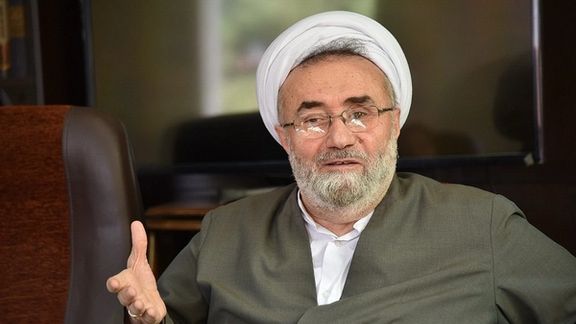
Cleric Masih Mohajeri, editor of a leading conservative newspaper.

The editor of one of Tehran's leading pro-regime newspapers has called on President Ebrahim Raisi to step down if he cannot solve Iran's economic problems.

While rising bread prices have turned even some of Raisi's supporters against him, Massih Mohajeri, the editor of Jomhouri Eslami (Islamic Republic) newspaper who usually criticizes the administration's policies wrote in an editorial on Saturday, "Now that it has become clear that you cannot solve the problems, step down bravely and leave the job to those who can do it and save the people from this dangerous quagmire."

The editorial charged that "Media close to the administration label those who criticize you for the problems you have created as counter-revolutionaries who work for Israel and the United States." It went on to say that some of Raisi’s supporters are also protesting the government's policies.

Mohajeri further asked, "The president should say how much time does he need to understand that problems cannot be solved by just talking and the government cannot be run in this way." He added: "Blaming all shortages on smugglers is not a solution,” and if that is the problem, why the government does not stop them.

Ukraine and nuclear talks with the US

"If the problem of flour shortage is caused by the war in Ukraine, why you don’t condemn Russia's aggression against Ukraine and not try to stop Vladmir Putin from continuing the invasion, which threatens the livelihood of a major part of the world?" Mohajeri asked Raisi.

He also asked Raisi why he does not do anything to reach an agreement with the United States. "You said you will not tie the country's fate to the [nuclear] negotiations, but by not doing anything, you have created new problems for the nation."

Raisi receiving his presidential seal of approval from Khamenei n August 3, 2021.
100%
Raisi receiving his presidential seal of approval from Khamenei n August 3, 2021.

Many in Iran know it is Supreme Leader Ali Khamenei who decides key foreign policy and other state matters, but semi-official media would not dare to blame the economic crisis directly on Khamenei.

Mohajeri addressed Raisi that "If the instability of the government and the current dangerous situation have not been created by infiltrators, then they must be attributed to the poor management of your economic ministers."

He reminded that the price of bread in Iran did not rise even during the war with Iraq in the 1980s. He warned that raising the price of flour and rationing bread are like setting fire to gunpowder. Further warning that there are several individuals affiliated with the deviant group [jargon referring to those close to former President Mahmoud Ahmadinejad], Mohajeri charged that these elements could be attempting to unseat the current government and asked Raisi to take this warning seriously.

Economic crisis main topic of media

On Saturday, most newspapers in Tehran which are usually silent about economic problems, covered the shortage of these items in extensive stories, although the government's own newspaper, Iran, and the hardline daily Khorasan claimed that people were happy about the situation and "over 62 percent of Iranians said they were happy about the government's performance in a poll that was conducted before the unusual bread price rise."

At the same time, Mostafa Hashemi Taba, a former presidential candidate, said in an interview published by Didban Iran website that "the Raisi Administration has totally lost its social capital." He said the government wants to be portrayed as a revolutionary government abroad, but it wishes to adopt liberal economic policies inside the country. He said there are only two solutions to the problem: Either the government should be able to distribute all of the people's needs, or it has to resort to rationing essential commodities.

Meanwhile, economist Hossein Raghfar told Khabar Online website that the government's policy over bread is not transparent. He dismissed the official statements about flour being smuggled out of Iran as "fabrication" and maintained that the problem is the falling value of the currency, which he said rose from 10,000 rials per dollar to 35,000 rials in 2011, and from 30,000 rials in Janyary 2018 to 320,000 rials in January 2021. He charged that rich people in power benefitted from all of these changes while they ignored the interests of the ordinary Iranians.


Most Viewed

Ghalibaf defends Iran-US talks amid hardline backlash
1
INSIGHT

Ghalibaf defends Iran-US talks amid hardline backlash

2
VOICES FROM IRAN

Bread shortages, soaring prices strain households in Iran, residents say

3
ANALYSIS

From instability to influence: Pakistan’s pivotal role in US-Iran diplomacy

4
ANALYSIS

100 days on: why Iran’s January protests spread across social classes

5

War-hit homeowners feel abandoned as Iran’s reconstruction aid fades

Banner
Banner

Spotlight

  • Is Iran entering its Gorbachev moment?
    INSIGHT

    Is Iran entering its Gorbachev moment?

  • Iran crackdown reaches cemeteries as graves of slain protesters defaced
    EXCLUSIVE

    Iran crackdown reaches cemeteries as graves of slain protesters defaced

  • Iran diplomacy wobbles as factions compete to avoid looking soft on US
    INSIGHT

    Iran diplomacy wobbles as factions compete to avoid looking soft on US

  • The politics of pink: how Iran uses cuteness to rebrand violence
    ANALYSIS

    The politics of pink: how Iran uses cuteness to rebrand violence

  • Bread shortages, soaring prices strain households in Iran, residents say
    VOICES FROM IRAN

    Bread shortages, soaring prices strain households in Iran, residents say

  • Ghalibaf defends Iran-US talks amid hardline backlash
    INSIGHT

    Ghalibaf defends Iran-US talks amid hardline backlash

•
•
•

More Stories

Iran's Capital Faces Water Shortage As Less Water Flows Into Dams

May 7, 2022, 23:39 GMT+1

Water inflow into Tehran dams has decreased by about 27 percent since the start of the wet season, in Iran which started in November.

Mohammad-Reza Bakhtiari, the managing director of Tehran province Water and Wastewater Company, said on Saturday that input of the five dams around the capital has decreased to over 620 million cubic meters, while the figure was about 855 million cubic meters in the same period last year.

He added that the current volume of water reserve in Amir Kabir, Latian, Lar, Taleghan and Mamlu dams is 97, 60, 67, 232 and 71 million cubic meters, respectively.

According to Bakhtiari, rainfall was also down 31 percent from the beginning of the wet season to 164.1 millimeters, down from 218.9 millimeters in the same period last year.

Head of Iran's Geological Survey and Mineral Explorations Organization, Alireza Shahidi, has recently said that the country is in a 30-year drought cycle, noting that the dry spell started about 10 to 20 years ago and now its effects are more observable.

In 2021, large-scale water protests took place in two important provinces, Khuzestan and Esfahan, with several people killed and hundreds injured by security forces.

As drought persists, more underground water is exploited for irrigation, depleting natural reservoirs formed during thousands of years. However, politicians and experts say that there are no consistent government plans to deal with the water crisis, which can result in mass migration of millions of people in the next ten years.

Iran's Currency Falls To Four-Month Low, Amid Bread Crisis

May 7, 2022, 17:06 GMT+1
•
Iran International Newsroom

Iran’s currency, rial hit a four-month low on Saturday against the US dollar, as soaring bread prices created political and economic uncertainty in the country.

The US dollar rose to 285,000 rials in Tehran, the highest point since early January, when the currency was marginally recovering from previous lows on optimism over nuclear negotiations with the West. After talks in Vienna came to a standstill in mid-March, the currency began gradually losing its value again.

The rial has fallen almost ninefold since late 2017 when signs emerged that former US president Donald Trump intended to withdraw from the 2015 nuclear agreement, JCPOA, and impose economic sanctions on Iran.

Trump eventually pulled the United States out of the Obama-era agreement in May 2018 and imposed oil export and other sanctions that began to squeeze Iran’s oil-dependent economy. High double-digit inflation and a falling currency followed, leading to at least two years of a deep recession.

The falling currency makes everything else more expensive for people who earn depreciated rials. Key foodstuff, such as cooking oil, and 15 million tons of wheat are imported annually. In addition, animal feed is also imported and a falling currency makes meat and poultry more expensive. Most Iranians have stopped buying meat according to industry people in Iran.

This week the government finally acted on an earlier decision to stop a subsidy in the form of cheap dollars for imports of essential commodities, such as flour and animal feed. Immediately, cooking oil disappeared from supermarket shelves and flour prices increased fivefold, leading to a bread crisis.

The government’s handing of the price jump has been haphazard, claiming to be ready to provide cash assistance to citizens for buying bread but offering contradictory information on how the process would work. Pundits and citizens have reacted by saying that apparently the government failed to prepare for the eventuality.

There were reports on Friday of bread protests breaking out in the oil-rich Khuzestan province

President Ebrahim Raisi and his oil minister Javad Owji have been insisting that Iran’s illicit oil exports and revenues have risen in the past year, with evidence that Iran has been exporting anywhere between 750,000 to one million barrels per day. However, the economic impact of higher oil revenues is nowhere to be seen.

The key to lifting US sanctions and getting a reprieve form economic pressure is reaching an agreement with the United States over the nuclear issue, but talks in Vienna have stopped since mid-March.

As bread prices shot up almost fivefold in two days, economy minister Ehsan Khandouzi promised Saturday that the government will start a system of cash assistance to buy bread, but his statement was vague as to who what income groups would be eligible to receive the cash subsidy.

Meanwile, Hamshahri newspaper reported that the government is also planning to hike the price of cooking oil and gasoline, to begin reducing decades of subsidies paid by oil export income.

A gasoline price hike in November 2019 led to nationwide protests in which security forces shot dead at least 1,500 people and arrested 8,000.

Prices for all these commodities are very low in Iran compared to other countries, but so are wages. An Iranian worker earns an average of $150 per month and when one flatbread costs one dollar, the family can only afford to buy 3-4 breads a day, and nothing else.

Iran Burning Natural Gas From Oil Wells For Lack Of Investments

May 6, 2022, 23:21 GMT+1
•
Dalga Khatinoglu

Iran’s gas flaring levels increased by 32% year-on-year to 17.4 billion cubic meters (bcm) in 2021, according to a new report, released by Word Bank.

Iran ranked third globally after Russia and Iraq in terms of gas flaring levels during last year.

The country has failed to develop and install needed equipment to collect associated gas, produced from oil fields during last two decades.

According to the Oil Ministry’s estimates, some $5 billion is needed for curbing gas flaring, which sonstitutes about 7% of the country’s total gas production, while the annual worth of such a volume is more than $5 billion in regional markets. For comparison, it is equal to 30% of Turkey’s total gas consumption in 2021 or Iran’s total gas exports to Iraq and Turkey during last year.

Iran has failed to make significant investments in its oil and gas sectors for at least 10 years as international sanctions (2011-2015) and US oil export sanctions since 2018 have limited the country’s financial resources. In November, oil minister Javad Owji said that at least $160 billion in investments is needed to revitalize the sectors.

In 2017, a French company signed a deal with Iran to help install technology to trap natural gas escaping from oil producing wells, but the reimposition of US sanctions in May 2018 scuttled all such projects.

The Word Bank says the ratio of the flared gas to produced oil in Iran is 15.36 cubic meters per one barrel, the highest level in the world after Venezuela and Algeria.

Gas flaring also shares 8% of Iran’s greenhouse gas emissions. Iran, with 745 million tons of greenhouse gas emissions, ranked 6th globally in 2020, of which 60 million tons came from gas flaring, according to the Global Carbon Atlas’s latest statistics.

There is no new report about Iran’s greenhouse emissions level, but regarding the 32% growth in flaring gas volume, as well an end to Covid-related quarantines, it should be continuing to rise.

Iran’s greenhouse gas emissions increased by 18% since 2015, when the international community, including Iran, decided to decrease emissions, based on the Paris Climate Agreement.

Word Bank said the global flaring gas level stood at 144 bcm in 2021, almost unchanged year-to-year, and resulted in 328 million tons of carbon dioxide emission.

Last year, total greenhouse gas emissions in the world hit a historic record, reaching above 36 billion tons, which was about 2 billion tons more than in 2020, according to the International Energy Agency.

Jump In Bread Prices Raises Alarm At Friday Prayers Across Iran

May 6, 2022, 18:35 GMT+1
•
Iran International Newsroom

Dozens of Friday Prayer imams in Iran have urged the government to sort out economic problems, saying people are suffering under the pressure of rising prices.

Some clerics and para-military organizations have warned that the sudden rise in the price of items such as bread could lead to protests and riots.

Meanwhile, journalists in Tehran Friday reported on Twitter that the price of bread has risen nearly five-fold in Tehran despite statements by economic officials that higher flour prices would not affect traditional bread bought at neighborhood bakeries and the rise will be limited to baguettes and other western-style rolls.

The Friday Prayer Imam of Tehran, Mohammad Hassan Abutorabi Fard, said in his sermon that the government should focus its efforts on improving the nation's livelihood. He called on the government to explain the reasons of recent price increases and to make sure people understand that the government strives to compensate the higher cost of living by introducing economic reform.

On Tuesday, in Eid al-Fitr sermons, other clerics including firebrand Ahmad Khatami promised that the economic situation will improve but did not say how. Kazem Seddiqi, another prayer leader in Tehran had also expressed concern over the consequences of rising prices.

On Friday, imams in cities including Dayyer, Bojnourd, Zahedan, Shar-e Kord, Bushehr, Kermanshah, as well as many other cities warned the government that people are suffering from rising prices of bread and other everyday necessities.

Traditional Iranian flat breads in a bakery in Tehran.
100%
Traditional Iranian flat breads at a bakery in Tehran.

In Tehran, the commander of the students Basij militia of the IRGC warned President Ebrahim Raisi on Thursday that the situation could lead to a major riot in the country. Meanwhile, prominent reformist cleric Mohammad Taqi Fazel Maybodi also warned Raisi that "if the rise in prices is not controlled Iran should wait for riots more dangerous than a revolution."

Social media users in Iran on Friday shifted from complaints about the scarcity and high price of pasta to more serious complaints and warnings about the possible impact of the rising prices of all sorts of bread in Tehran.

Somaye Naghi, an economic journalist in Tehran wrote that they sent someone from the newspaper’s office to buy traditional stone-baked bread called Sangak, but they were told that the price has increased from 60,000 rials to 250,000 rials ($1) per loaf. She pointed out that's this comes while Raisi's Minister of Agriculture had promised the day before that the price of traditional bread will not rise and it will impact "luxury western-style" rolls.

In the meantime, many Iranian journalists have interpreted Vice President for Executive Affairs Solar Mortazavi's strong defense of doing away with cheap government dollars for importing essential commodities, including flour, as a sign that the living conditions for workers, teachers, pensioners and low wage earners will dramatically deteriorate.

The government has resorted to rationing bread in some cities and the general perception is that the practice is going to be widely introduced all over the country. Journalist Ameneh Mousavi wrote on Twitter that rationing has started in Zanjan.

None of the clerics who spoke about the rising price of bread on Friday talked about the impact of sanctions apparently because they find it difficult to explain why the country is under sanctions and why Iranian officials cannot negotiate with the United States to have the sanctions lifted. They fear this will offend Supreme Leader Ali Khamenei who is responsible for major decisions, including the talks with the United States.

Many Question Hardliners’ Sway In Iran Amid Rising Food Prices

May 5, 2022, 17:05 GMT+1
•
Iran International Newsroom

Ten months after conservatives in Iran gained full control of the government, many are now complaining about lack of efficient governance amid economic crisis.

While the assumption behind the idea of creating a consolidated conservative government was to make it agile and efficient, even supporters of the government say a hardliner president and parliament have been unable to feed the people.

In recent weeks, prices of essential food items, such as cooking oil, flour and sugar have at least doubled.

According to moderate conservative Khabar Online, what was initially a dream, has become a challenge for the Islamic Republic. The heavy political cost of consolidation, wrote the website, fell on the shoulders of everyone including those who had designed the new system in which the main criterion for appointment of government officials is their loyalty to a single political group.

That group has one single trait and that is loyalty to the Supreme Leader Ali Khamenei.

The process started with facilitating a landslide victory for hardliners in the 2020 parliamentary elections and completed by doing the same in the 2021 presidential election, mainly by eliminating all the candidates that were not part of the hardliner conservative camp. Later in 2021, Khamenei appointed a well-known hardliner as Judiciary Chief, completing the handover of all power to loyal hardliners who soon got rid of anyone in the government who was not in their camp.

Ali Larijani, a leading moderate-conservative. May 2021
100%
Ali Larijani, a leading moderate-conservative was denied the chance to run for president in June 2021

The keyword throughout the entire process was "change." And what was to be changed was presumably the worsening economic situation. However, ten months later, government officials including the president still blame "those who created the current situation.”

However, few openly say that the economic crisis, reflected in rapidly increasing food prices, is to an extent the result of sanctions imposed by the United States that can only be lifted if Khamenei agrees to resolve Iran’s nuclear dispute with the West.

Analysts coming from various political factions, even those at the IRGC-linked Fars news agency were saying that "the root cause of the country's problems was corruption, coupled with plundering of national resources by a well-connected few." They also thought a consolidated government can put an end to all that by getting rid of political rivalries.

But rivalries did not end. Last week, Majles Speaker Mohammad Bagher Ghalibaf suggested that the controversy about his family's luxury shopping in Turkey was engineered by his political rivals with the assistance of some intelligence agencies. Later in the week, a letter signed by 233 out of the 290 lawmakers was sent to Khamenei expressing support for Ghalibaf. This week, several lawmakers complained that the letter was supposed to be containing a pledge of allegiance to Khamenei and that they were not told it was to express support for Ghalibaf.

Meanwhile, while Raisi had promised to form a non-factional cabinet, he chose nearly all his ministers from among the ultraconservative Paydari Party and the officials of former President Mahmoud Ahmadinejad's cabinet. The parliament also became divided into at least four factions of Paydari, Ahamdiejad's men, Ghalibaf's neo-con aides and traditional conservatives.

Former lawmaker Gholam Ali Jafarzadeh Imanabadi has said that the government has failed and now those who engineered the consolidated system should be held accountable. Some lawmakers includingMostafa Reza Hosseini Ghotbabadi have gone further and called on parliament to table a motion to unseat the President for incompetence. Ghotbabadi said that the Majles has been mulling the idea of Raisi's incompetency at least twice in recent months.



