• العربية
  • فارسی
Brand
  • Iran Insight
  • Politics
  • Economy
  • Analysis
  • Special Report
  • Opinion
  • Podcast
  • Iran Insight
  • Politics
  • Economy
  • Analysis
  • Special Report
  • Opinion
  • Podcast
  • Theme
  • Language
    • العربية
    • فارسی
  • Iran Insight
  • Politics
  • Economy
  • Analysis
  • Special Report
  • Opinion
  • Podcast
All rights reserved for Volant Media UK Limited
volant media logo

Iran Lawmaker Lashes Out At Raisi: Change Your Economic Team
Iran International Newsroom
Mar 27, 2022, 17:52 GMT+1Updated: 17:26 GMT+1
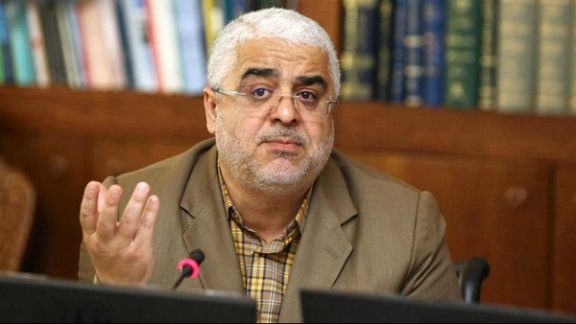
Iranian conservative lawmaker Gholamali Jafarzadeh Imanabadi

A hardliner member of Iran's parliament has harshly criticized President Ebrahim Raisi's inaction amid a serious economic crisis and hardship for many Iranians.

Without naming Supreme Leader Ali Khamenei Gholamali Jafarzadeh Imanabadi said those who "engineered" the June 2021 presidential election and brought a man to power who still needs to learn the basics of economics should be accountable for his failures.

Raisi, a cleric with just elementary school education, was Khamenei’s choice for president and all his serious rivals were barred from running in the June 2021 vote.

Raisi should know that he is the president of 85 million Iranians, Imanabadi, who supported Raisi last year, said, and that he does not represent only the 15-17 million people who voted for him despite his limited abilities.

Zayban Ghabishavi, the Iranian journalist who interviewed Imanabadi for Rouydad24 news website, wrote: "Raisi has been in office for more than seven months now, but nothing appears to have changed during this period. Criticism of Raisi and his economic teams still remain unanswered, and there is no hope in any improvement in the performance of the government."

She added that "the lack of executive experience on the part of Raisi and his cabinet indicates that the situation will get even worse." Ghabishavi quoted Imanabadi as having said: "None of Raisi's promises have been met,” and the few things he has done so far have never been the people's priority.

Accountable to people

According to Imanabadi, Raisi has not done anything other than wasting his time by blaming the Rouhani administration for all the shortcomings. The lawmaker added that throughout the past seven months Raisi's advisers misled him and the people.

Conservatives in parliament were ecstatic during Raisi's inauguration in August 2021
100%
Conservatives in parliament were ecstatic during Raisi's inauguration in August 2021

"Raisi should know that he has to give a report to the people this coming summer about the progress he has made," Imanabadi said, while pointing out that the people's dire financial situation during the Iranian New Year (Noruz) holidays revealed the decline in their purchasing power. "He wanted to eliminate poverty, but the people have become poorer during the past seven months, and the situation is going to look much worse in the future."

Imanabadi particularly criticized the government for failing to pay millions of Iranian pensioners until the last hour before the holidays.

Meanwhile, he said Raisi had claimed that he has a 7,000-page plan to run the economy. "I wish he presented only seven pages of that plan to the public," he said. He added that Iran lawmakers expected Raisi to take action to replace the ministers of labor and economy and the chairman of the Planning and Budget Organization and not wait for the Majles to impeach them.

Did you come from Mars?

The lawmaker, who was once one of Raisi’s staunch supporters, said that he is certain at least 30 percent of those who voted for him have been disappointed. He added that the government's slogans are based on illusions rather than realities. "You have not come from Mars. You have been holding official positions during the past 30 years, and still, you fail to realize that you are responsible for the current situation."

He said Raisi does not allow reporters to accompany him during his provincial tours because he fears they might record his blunders and let the public know about t. He added that government officials do not allow any criticism, and target anyone who dares to criticize them.

Meanwhile, the lawmaker called on Raisi to explain how he can claim to manage the economy independent of the nuclear negotiations and lifting of US sanctions. He also asked Raisi to explain Iran's over-reliance on Russia. But first and foremost, he has to change his economic team. He must realize that many mechanics, tailors, hairdressers, doctors and nurses are leaving this country" because of the poor performance of the government's economic team.

Earlier, many politicians, lawmakers and analysts, including Reformist activist Gholamali Rajaei had also called on Raisi to change the members of his economic team. Rajaei had called the Raisi administration "the most incapable cabinet since the 1979 Islamic revolution."

Meanwhile, Iranian economists such as Hossein Raghfar had warned that "national interests and the interests of 85 million Iranians are not on the Raisi administration's agenda."


Most Viewed

Iran negotiators ordered to return after internal rift over Islamabad talks
1
EXCLUSIVE

Iran negotiators ordered to return after internal rift over Islamabad talks

2
ANALYSIS

US blockade enters murky phase as tankers spoof signals and buyers hesitate

3
ANALYSIS

Why the $100 billion Hormuz toll revenue is a myth

4

US tightens financial squeeze on Iran, warns banks over oil money flows

5
ANALYSIS

US blockade targets Iran oil boom amid regional disruption

Banner
Banner

Spotlight

  • Hardliners push Hormuz ‘red line’ as US blockade tests Iran’s leverage
    INSIGHT

    Hardliners push Hormuz ‘red line’ as US blockade tests Iran’s leverage

  • Ideology may be fading in Iran, but not in Kashmir's ‘Mini Iran'
    INSIGHT

    Ideology may be fading in Iran, but not in Kashmir's ‘Mini Iran'

  • War damage amounts to $3,000 per Iranian, with blockade set to add to losses
    INSIGHT

    War damage amounts to $3,000 per Iranian, with blockade set to add to losses

  • Why the $100 billion Hormuz toll revenue is a myth
    ANALYSIS

    Why the $100 billion Hormuz toll revenue is a myth

  • US blockade targets Iran oil boom amid regional disruption
    ANALYSIS

    US blockade targets Iran oil boom amid regional disruption

  • Iran's digital economy battered by prolonged blackout
    INSIGHT

    Iran's digital economy battered by prolonged blackout

•
•
•

More Stories

Iran Eliminates Key Subsidy For Medicines Amid Economic Hardship

Mar 27, 2022, 17:21 GMT+1

Iran’s health minister has confirmed that the government has eliminated a major subsidy for medicines, a move some see as a death sentence for many people who cannot afford market prices.

Minister Bahram Einollahi said on Sunday that manufacturers will no longer receive cheap dollars from the government to import raw materials, meaning they should buy dollars at a fivefold higher rate on the exchange market.

The public relations manager prof the ministry said, however, that the change hasn’t been finalized yet and the supply of medicine with cheap dollars is still going on.

Social media users say such a decision would be “an obvious and deliberate act of mass murder!”

Earlier in March, Iran’s parliament decided to scrap an annual subsidy of up to $15 billion for essential food and medicines, despite warnings of more inflationand hardship, but there were speculations that the government would make an exception for medicine.

The idea to eliminate the subsidy emerged after hardliner president Ebrahim Raisi (Raeesi) assumed office in August and could count on backing from conservatives and ultra-conservatives in control of Iran’s parliament.

The subsidy was introduced in April 2018 when former US president Donald Trump signaled his intention to withdraw from the Obama-era nuclear agreement with Iran known as JCPOA, and Iran’s national currency began to nosedive. Prices for imported goods skyrocketed and the government decided to provide cheap dollars to importers of essential goods to keep prices low.

Iran Lawmaker Warns Essential Commodities Running Out

Mar 25, 2022, 18:13 GMT+0
•
Maryam Sinaiee

An Iranian lawmaker has warned that reserves of essential commodities are running out and it would be very hard to replenish them given current circumstances.

"Our strategic reserves are finishing, and we won't be able to replenish them," Jalal Mahmoudzadeh, a member of the parliament's Agriculture Committee, told Shafaq News Agency on Friday.

According to Mahmoudzadeh, the war in Ukraine, the government's decision to scrap cheap dollars for importing essential commodities, and mismanagement are the three factors that will affect the availability and prices of essential goods.

Mahmoudzadeh predicted that prices of commodities such as sugar, oil, and rice in the Iranian market will rise considerably in the coming months due to the elimination of subsidies.

Iran decided to end a costly subsidy for importing food and animal feed recently, raising fears of rising prices in the new year that started on March 21. According to a report by ISNA on March 19, out of about $19 billion worth of basic goods imported in the past 12 months nearly $15 billion was subsidized with cheap dollars provided to importers.

Member of Iranian parliament Jalal Mahmoudzadeh. FILE
100%
Member of Iranian parliament Jalal Mahmoudzadeh

Animal feed, much of the grains imported from Russia and Ukraine with cheap dollars until now would also become scarce and prices of red and white meat will therefore rise considerably, he said. Importers might be jittery about making commitments given the unpredictable foreign currency rates in Iran and government price fixing.

Last week it was announced that Iran’s agriculture minister, Javad Sadatinejad, had signed an agreement during a recent visit to Russia to import 20 million tons of basic goods, including vegetable oil, wheat, barley and corn. The report said the deal is to address concerns about shortages of basic goods and livestock feed in the coming months but did not mention the monetary value of the deal.

Iran is under US sanctions, but the government of President Ebrahim Raisi insists that it has succeeded in blocking their effect on the economy and neutralized the sanctions to a great extent. "The biggest achievement of the government in Vienna [nuclear] talks has been greatly reducing the strategic value of sanctions for the other side through the strategy of neutralizing sanctions," the official news agency (IRNA) wrote Friday.

Recent news about higher oil exports coincides with the most critical phase of indirect nuclear talks that the Biden Administration started with Iran almost a year ago. If talks fail, sanctions will continue.

Reuters reported on February 10 that daily illicit shipments of crude oil had surpassed one million barrels a day in the previous two months. This was the highest since May 2019 when the Trump administration imposed full sanctions on Iran’s oil exports.

Between May 2019 and late 2020, Iran’s clandestine oil exports hovered around 200,000 bpd, or 10 percent of its sales before Donald Trump withdrew from the Iran nuclear agreement, JCPOA, and imposed sanctions. The exports increased in 2021, but it is not clear how much cash revenues Iran receives, given the illicit nature of the shipments primarily going to China.

Oil exports may have increased but the government coffers appear to be still empty. The value of rial remains near its all-time lows at 260,000 to the US dollar, while liquidity keeps rising as the government prints more money.

Just before the Iranian New Year earlier this week, for the first time in over four decades, the Islamic Republic's government failed to make the monthly payments of millions of pensioners. Payments had regularly been made even during eight years of war with Iraq (1980-1988) under difficult conditions.

Iran Police Call For More Resources To Help Personnel

Mar 25, 2022, 11:30 GMT+0

The deputy commander of Iran's police says the livelihood of their personnel is one of the main concerns of the Law Enforcement Force, amid high inflation.

Brigadier-General Qasem Rezaei told the ILNA news agency Friday that housing units and other facilities would be provided for officers to improve their living conditions. Rezaei also said that salaries paid to police were not in a par with the important services they provided.

Late in January, dozens of members of the armed forces and retirees protested in several Iranian cities over living and working conditions. Teachers, nurses, firefighters, prison guards, and employees of the judiciary have all held protest rallies or strikes to demand higher salaries.

Earlier in January, the spokesman for Iran's police said that while salaries for police officers had increased several times in the previous Iranian year (ending March 20, 2021), the government could not afford substantially higher salaries.

Akbar Shokat, head of the construction workers union, recently claimed prices had risen five to ten-fold since 2018, when the United States introduced ‘maximum pressure’ sanctions. The International Monetary Fund gives consumer price inflation of 34.6 percent in 2019, 36.4 percent in 2020, 39.3 percent in 2021 and projects 25.7 percent for 2022 – giving an overall increase to date of over 255 percent since 2018.

Iran Statistical Center and media, however, have reported higher inflation in 2021, especially for food items that increased more than 60 percent.

Iranians See Mismanagement, US Sanctions At Root Of Economic Crisis

Mar 24, 2022, 15:01 GMT+0
•
Iran International Newsroom

Prices in Iran have risen five to ten-fold since 2018, impoverishing tens of millions and widening income gaps, the head of construction workers' union says.

Cumulative inflation in the construction industry has been 700 percent, while wages for workers has maybe doubled, Akbar Shokat the national chairman of construction workers unions told the Iranian Labour News Agency (ILNA) this week.

Shokat said while each square meter of building construction cost 10 million rials three years ago, now it costs 70-80 million. The same applies to food workers have to buy. One kilo of red meat cost 250 rials in 2018 while now the price has reached 1.6 million rials.

The examples mentioned by the union leader clearly show the impact of ‘maximum pressure’ sanctions imposed by the United States after former President Donald Trump withdrew from the Iran nuclear accord in May 2018. It also shows that inflationary pressures picked up as time passed, averaging above 40 percent in 2021.

While with US sanctions Iran’s currency nosedived in 2018, it took months for annual inflation to increase to above 30 and then 40 percent. The currency, rial dropped from 33,000 to the dollar to the current low of 260,000, or almost eightfold.

The claim about people with capital getting richer is based on the reality that business owners raise prices as the value of Iranian currency falls and maintain a higher margin of incomes than wage earners whose salaries change once a year by a government decision on minimum wage. Salary increases are always far less than inflation.

Akbar Shokat, national representative of construction workers in Iran. March 22, 2022
100%
Akbar Shokat, national representative of construction workers in Iran

With the most recent minimum wage hike, an average worker will take home around $200 a month, while labor groups say the minimum needed for a family of 3.3 persons is $450 a month.

People owning real estate, profitable businesses or foreign currencies are by-and-large immune from the perils of a falling currency and inflation, because the value of their capital remains mostly intact. For example, real estate prices calculated in US dollars, have stayed the same since 2018, while salaries have dropped.

Jalal Mirzaee, a former member of parliament, told ILNA on Thursday that without the removal of US sanctions the economy cannot improve, especially that President Ebrahim Raisi in many cases has appointed top managers who are not experts in their fields.

Raisi, for example, has appointed former Revolutionary Guard commander Mohsen Rezaei as one of his top economic aides, but he has never managed a large bureaucracy or a private sector company.

“The root cause of many economic difficulties is US sanctions,” Mirzaee said, but added that this does not mean successive governments have not mismanaged the economy, which is largely state-owned and run by the government. If sanctions are lifted, it would be easier to address Iran’s economic problems, but that would depend on effective management by the government, Mirzaee said, which is doubtful in the current administration.

Hossein Raghfar, a respected economist, told Etemed Online this week that the country’s foreign currency revenues have been mishandled and the rial has fallen so much that economic stability is questionable. The result is capital flight, with most investors shifting their businesses to neighboring countries.

Raghfar criticized the established economic order, saying that the Islamic Republic has created an “oligarchy that benefits most from foreign currency revenues” gained by exporting crude oil and other national resources. He argued that in the first instance, political insiders and the military should exit the business world and allow a real private sector to emerge. Raghfar said, “If there is no private sector, the economy cannot move forward.”

Iran Traffic Police Chief Questions Import Of Chinese Car Parts

Mar 24, 2022, 14:17 GMT+0

Iran’s traffic police chief has criticized manufacturers for importing car parts from China, saying there is no effective quality control.

Brigadier General Kamal Hadianfar told Hamshahri Online in an interview Wednesday there were no cars with all components built domestically.

“Why do they import parts from China? Who monitors the quality of these Chinese parts?” he asked. Hadianfar said car manufacturers could learn from the self-sufficiency of the defense industry in making “largest ballistic missiles in the region”.

President Ebrahim Raisi said in October that Iran’s military and nuclear sectors had responded to United States with “great achievements” due to motivation and effort. But, Raisi argued “we have not invested the technology of the missile industries in the automotive industry.”

China has been the world’s largest car maker since 2008, with its output since 2009 higher than US, European Union, and Japan combined. China accounts for 29 percent of world car exports with Saudi Arabia its leading market, and two Chinese electric car manufactures listed on the Nasdaq. But quality of Chinese cars is considered poor, with focus on low prices and high production numbers.

Echoing those in Iran who blame low-quality vehicles for road casualties, Hadianfar criticized January domestic automakers for producing "carriages of death."

A deputy of Iran’s traffic police, Sivash Mohebbi, said Thursday that 322 people had died in the previous week.





