• العربية
  • فارسی
Brand
  • Iran Insight
  • Politics
  • Economy
  • Analysis
  • Special Report
  • Opinion
  • Podcast
  • Iran Insight
  • Politics
  • Economy
  • Analysis
  • Special Report
  • Opinion
  • Podcast
  • Theme
  • Language
    • العربية
    • فارسی
  • Iran Insight
  • Politics
  • Economy
  • Analysis
  • Special Report
  • Opinion
  • Podcast
All rights reserved for Volant Media UK Limited
volant media logo

Iran Preparing Digital Rial After Khamenei Go-Ahead
Jan 28, 2022, 13:19 GMT+0
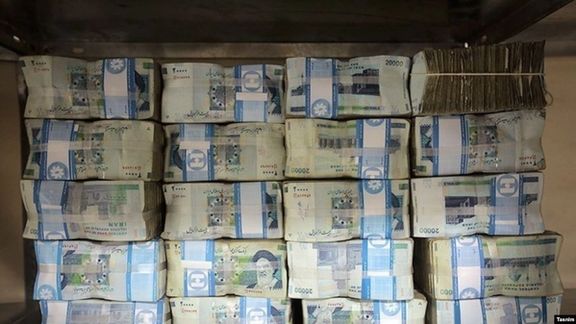
Pile of devalued Iranian rials. The currency has lost it value eightfold in four years.

Iranians await the launch of a digital rial after Supreme Leader Ali Khamenei ruled in December that digital currencies could be allowed if within Iranian laws.

Ali Salehabadi, Central Bank governor, told the Seventh Islamic Financial Conference January 17, that the Money and Credit Council had approved such a currency. Mehran Moharramian, a Central Bank deputy governor said January 18 that a pilot phase would begin soon as the bank considered “several potential impacts of the new technology on the state, citizens and economic indices.”

Khamenei's December fatwa ruled that "buying, selling, and producing digital currencies" should follow Iranian laws and regulations, though he did not use the term halal (‘permitted’). Several Shiite sources of emulation in Iran − including Ayatollahs Hossein Nouri-Hamedani, Naser Makarem-Shirazi and Hossein Vahid-Khorasani − have instructed followers to avoid crypto-currency dealings.

While crypto-currencies are digital, the term “digital currency” is usually reserved for those that are centralized and regulated by an entity such as a bank. ‘Crypto-currencies’ are usually taken to mean those that are decentralized, with their regulations governed by the majority of those using them.

Use of both crypto-currencies and digital money – the terms are often confused – has been useful for Iran in facing United States ‘maximum pressure’ sanctions, introduced in 2018 and threatening punitive action against any third party dealing with Iran’s financial sector.

A study published last May showed around 4.5 percent of all global bitcoin mining, worth then around $1 billion, took place in Iran. Crypto-currencies have played some role globally in the declining use of the dollar, with Russia-China dollarized trade falling from 90 percent in 2015 to below 50 percent in early 2020.

"By recognizing the industry, officials hope that they can use crypto-currencies in foreign trade to circumvent [US] sanctions," Donya-ye Eghtesad economic daily wrote January 22.

But as yet Iran has no laws on digital currencies, despite some media urging parliament to address the matter urgently. Some parliament members in July proposed a bill that would require the government to ban all digital-currency payments in Iran other than those nationally regulated.

To what extent ordinary people would trust a digital rial and use it would be an issue, especially that the currency itself is extremely weak and volatile. It has lost its value eightfold since 2017.

In May, the then central bank governor, Andolnaser Hemmati, announced that a primary version of a digital rial had been developed “in form of a stable crypto-currency… anchored to the existing traditional paper rial.”

Arash Ghanbarzadeh, a crypto-currency market expert, told Donya-ye Eghtesad that the “crypto-rial” would probably be centralized and regulated by the central bank, and would therefore not offer opportunities to miners to create it in the same way that they mine cryptocurrencies such as Bitcoin.

Since cryptocurrencies are exchanged outside the regular banking channels in decentralized manner, they are a good way to evade control by governments. As a result, they have been used for illicit trades and evading sanctions, as well as normal exchanges and online trading for goods.

Digital currencies can be controlled by their creators. For example, the Iranian central bank can have knowledge of transactions in digital rial while outsiders might not be able to trace them. A digital rial can also ease trading across borders with neighboring countries such as Afghanistan, since no banking transactions or paper currency exchanges would be necessary.


Most Viewed

Ghalibaf defends Iran-US talks amid hardline backlash
1
INSIGHT

Ghalibaf defends Iran-US talks amid hardline backlash

2
VOICES FROM IRAN

Bread shortages, soaring prices strain households in Iran, residents say

3
INSIGHT

Iran diplomacy wobbles as factions compete to avoid looking soft on US

4
ANALYSIS

The politics of pink: how Iran uses cuteness to rebrand violence

5
ANALYSIS

From instability to influence: Pakistan’s pivotal role in US-Iran diplomacy

Banner
Banner

Spotlight

  • Is Iran entering its Gorbachev moment?
    INSIGHT

    Is Iran entering its Gorbachev moment?

  • Iran crackdown reaches cemeteries as graves of slain protesters defaced
    EXCLUSIVE

    Iran crackdown reaches cemeteries as graves of slain protesters defaced

  • Iran diplomacy wobbles as factions compete to avoid looking soft on US
    INSIGHT

    Iran diplomacy wobbles as factions compete to avoid looking soft on US

  • The politics of pink: how Iran uses cuteness to rebrand violence
    ANALYSIS

    The politics of pink: how Iran uses cuteness to rebrand violence

  • Bread shortages, soaring prices strain households in Iran, residents say
    VOICES FROM IRAN

    Bread shortages, soaring prices strain households in Iran, residents say

  • Ghalibaf defends Iran-US talks amid hardline backlash
    INSIGHT

    Ghalibaf defends Iran-US talks amid hardline backlash

•
•
•

More Stories

US Charges UK Man, Several Others With Violation Of Iran Sanctions

Jan 28, 2022, 11:25 GMT+0

The United States has indicted a British man along with his co-conspirators on charges related to the illegal export of sensitive military technologies to Iran.

According to a statement released by the Department of Justice on Thursday, Saber Fakih, 46, a UK citizen pleaded guilty Tuesday in a federal court to violations of the Iranian Transactions and Sanctions Regulations while another indictment was unsealed charging four other individuals with related offenses arising from the same scheme.

The UK man worked with Canadian citizen Bader Fakih, a United Arab Emirates citizen Altaf Faquih and Iranian nationals Alireza Taghavi and Jalal Rohollahnejad to ship a counter-drone system and an Industrial Microwave System (IMS) from the United States to the Islamic Republic in 2017 and 2018.

The IMS is a high-powered, microwave-based directed-energy weapon system and technology that can be used to take control of an aerial drone.

The indictments allege that Rohollahnejad and Taghavi presented themselves of Rayan Roshd Afzar Company, which has been linked to the Iranian Revolutionary Guards.

DOJ, the FBI, the Department of Homeland Security, and the Department of Commerce cooperated in this case to prevent US technology with military applications from falling into the hands of the Iranian government.

Assistant Director Alan E. Kohler Jr of the FBI's Counterintelligence Division said, “For over 40 years, Iran has continuously attempted to obtain sanctioned items that could be used against Americans or our allies”.

Iran utilizes complicated procurement networks to acquire sensitive dual use items for potential military purposes, said Special Agent in Charge Nasir Khan of the Department of Commerce.

Rockets Hit Near US Base At Baghdad International Airport

Jan 28, 2022, 10:59 GMT+0

Several rockets hit the Baghdad International Airport compound, near an adjacent US air base on Friday, causing no casualties, Iraqi police sources said.

A police source said an out-of-use Iraqi Airways plane was damaged in the attack.

Iraq's state news agency reported, citing the country's aviation authority, that there was no disruption to travel.

The US air base, known as Camp Victory, is located around the perimeter of Baghdad's civilian airport.

Rocket attacks have regularly struck the complex in recent years and are blamed by US and some Iraqi officials on Iran-aligned Shi'ite militia groups who oppose American military presence in the region.

On January 5, Katyusha rockets hit Iraqi military bases hosting US forces near Baghdad's international airport and west of the Iraqi capital.

A series of attacks this month, some of which the United States blames on Iran-aligned militia groups, have targeted bases or installations hosting US military and diplomatic personnel but have caused no US casualties.

Iranian political and military leaders have repeatedly demanded all US forces to leave Iraq and have vowed that their militia proxies will accomplish the goal. They have also promised revenge for the killing of Iranian general Qasem Soleimani who was killed in a US drone attack at the Baghdad airport in January 2020.

Reporting by Reuters

US, Kuwait Warn Of Iran’s Destabilizing Actions In Region

Jan 28, 2022, 10:20 GMT+0

The United States and Kuwait have warned of threats posed by Iran to the stability of the region, reaffirming a shared commitment to promoting security and peace.

US Secretary of State Antony J. Blinken and Foreign Minister Ahmed Nasser al-Mohammed al-Sabah made the remarks during the fifth US-Kuwait Strategic Dialogue in Washington, D.C. on Wednesday.

The two sides discussed threats in the region, including the interference of the Islamic Republic in the domestic affairs of its neighboring countries, and reviewed ways to strengthen their defense and economic partnership.

Kuwait reportedly stopped issuing visas to Iranians for business trips in December.

“The United States appreciates Kuwait’s support for a mutual return to compliance with the JCPOA, the Iran nuclear agreement, because it’s the most effective way to ensure that Iran cannot develop a nuclear weapon”, Blinken said.

He also expressed appreciation for Kuwait’s close coordination through venues like the GCC Iran Working Group to stop Iran’s destabilizing actions.

Blinken and al-Sabah said in a statement that the US and Kuwait “stand together against Iran’s destabilizing influence” in the region.

They underlined the importance of a stable Iraqi government free from malign foreign influenceand reiterated the need for full implementation of UN Security Council Resolution 2254 (2015) to end the Syrian conflict and bring lasting stability there.

Iran’s FM, UN Secretary-General Discuss Vienna Nuclear Talks

Jan 28, 2022, 09:30 GMT+0

Iran's Foreign Minister Hossein Amir-Abdollahian spoke with UN Secretary-General Antonio Guterres about the Vienna nuclear talks, and the situation in Yemen and Afghanistan.

In the telephone conversation on Friday, Amir-Abdollahian reiterated that Iran is determined to reach a “good nuclear agreement” with the world powers in the shortest time possible.

"The negotiation process is on a positive track and the Islamic Republic has the serious will to reach a good agreement as soon as possible", he said.

He reiterated Tehran’s position that the United States is not trustworthy and Tehran needs verifications and guarantees for sanctions removal in the process of the negotiations to revive the 2015 nuclear deal.

Guterres hailed the progress in the talks and said the UN has always supported the nuclear agreement and international peace.

Amir-Abdollahian stressed the need for global attention to the humanitarian crisis in Afghanistan, saying, "Iran has received about 800,000 new refugees from Afghanistan in the past few months."

He also called for an inclusive government in Afghanistan and added that that Iran is ready to facilitate the delivery of humanitarian and financial aid to the refugees.

On Yemen, Amir-Abdollahian said the Islamic Republic backs a political solution to end the war and called on the UN secretary-general to intervene and stop the bombings in populated civilian areas.

Iranian-backed Houthi rebels have so far rejected UN calls for a ceasefire.

Despite Opposition, Iran Lawmakers Voice Support For Talks With The US

Jan 28, 2022, 08:15 GMT+0
•
Iran International Newsroom

A top official in Iran has backtracked from his earlier support for direct talks with the United States under criticism, but the general mood remained supportive.

Of those who had openly supported the idea since Monday, Foreign Minister Hossein Amir-Abdollahian and national security chief Ali Shamkhani came under fire by hardliner Kayhan newspaper affiliated with the office of Supreme Leader Ali Khamenei.

Although Supreme Leader Ali Khamenei had said on January 9 that he had no objection to direct talks if circumstances so required, he did not back the supporters or opponents of the idea as controversy flared up this week.

This is consistent with his behavior in the past when he quickly distanced himself from some of his statements and refused to publicly take side with any particular argument. Although he allowed nuclear negotiations in 2013, he was quick to distance himself from the policy when Iran encountered problems.

Ali Shamkhani on Thursday phoned Kayhan to say that he has never wanted and would never want direct talks with the United States. Iranian officials habitually backtrack from their problematic statements and usually blame the media for misreporting what they had said.

Amir-Abdollahian has apparently not changed his mind yet and maintains his previous view about "a balanced approach to foreign relations" that means maintaining ties with the United States as well as with Russia and China.

Referring to supportive statements by parliamentarians such as the National Security and Foreign Policy Committee Spokesman Mahmoud Abbaszadeh Meshkini about the need for holding direct talks with America, reformist daily Sharq on Thursday speculated that the Iranian Parliament (Majles) generally supports the idea. The committee's chairman Vahid Jalazadeh also said that the United States is standing at the door of the 4+1 meetings and that now the doors could open and let America in if the situation so required.

According to Sharq, the Islamic Republic's difficult economic situation is the main reason why some of Iran's hardliner lawmakers are now agreeing with direct talks with the United States. Sharq wrote that the Foreign Ministry spokesman's statement on Monday regarding the possibility of quick release of a quick prisoner exchange and the latest statements by the foreign minister and President Ebrahim Raisi have been taken by some MPs as a green light for direct talks with the United States.

Iran Diplomacy, a website close to the Iranian foreign ministry on Wednesday pointed out that calls for making direct contact with the United States started after Raisi's recent visit to Russia. The report implied that the decision is possibly the outcome of consultations with Russian leader Vladimir Putin.

Meanwhile, reporters close to the Iranian Foreign Ministry said that on Monday, Foreign Minister Amir-Abdollahian cancelled a news conference at the ministry and rushed to meet with the state's highest official, meaning Khamenei, to discuss matters relating to the JCPOA. Without naming Khamenei, the media in Tehran speculate that he has probably ordered Amir-Abdollahian to put forward the idea of direct talks with America, which the foreign minister did in a meeting with the press later that day.

Sharq quoted another lawmaker, Gholamreza Marhaba as saying that "Apart from Israel, we have no red line in foreign policy. Now that the Majles and the government both are from the same camp, we are certain that this unity can be fruitful under the supervision of the president and the Supreme Leader. We can now interact with the world including the United States. America has power and technology, and this could be useful for our country, on the condition that the United States enters into negotiations with us with goodwill."