• العربية
  • فارسی
Brand
  • Iran Insight
  • Politics
  • Economy
  • Analysis
  • Special Report
  • Opinion
  • Podcast
  • Iran Insight
  • Politics
  • Economy
  • Analysis
  • Special Report
  • Opinion
  • Podcast
  • Theme
  • Language
    • العربية
    • فارسی
  • Iran Insight
  • Politics
  • Economy
  • Analysis
  • Special Report
  • Opinion
  • Podcast
All rights reserved for Volant Media UK Limited
volant media logo

US Allows Seoul To Pay $63m In Overdue Damages To Iranian Investor

Maryam Sinaiee
Maryam Sinaiee

Iran International

Jan 13, 2022, 11:35 GMT+0Updated: 17:41 GMT+1
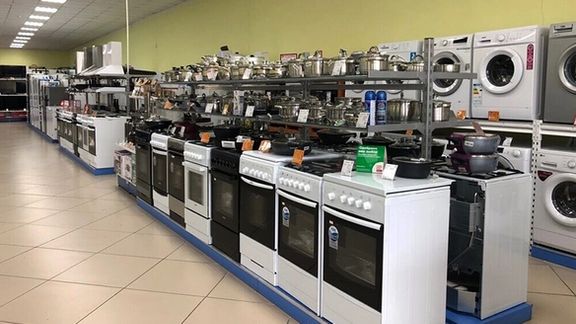
A home appliances showroom in Tehran.

South Korea's said Wednesday that the US has issued a specific license that allows Seoul to send at least $63 million in overdue payment to an Iranian investor.

In its statement Wednesday, Korea's ministry of foreign affairs said the US Special Envoy for Iran Robert Malley and South Korea's First Vice-Foreign Minister Choi Jong-kun had discussed the issue of remittance of arbitral award to the Dayyani family.

The US Treasury Department's Office of Foreign Assets Control (OFAC) issued the "specific license" on January 6 to authorize the Seoul to pay the Iranian investor. The license, the Korean foreign ministry said, approves the use of the US financial system for the execution of the arbitral award.

The US State Department Spokesman Ned Price said last week, ahead of South Korea's First Vice-Foreign Minister's arrival in Vienna, that Washington would waive possible sanctions on South Korea over frozen Iranian assets only with “everything” agreed in Vienna nuclear talks. The talks that started last April continue with no prospect of an early resolution.

It is not clear how and on what conditions the US has agreed to allow the payment by Korea.

A Snowa home appliances building in Iran. Undated
100%
A Snowa home appliances building in Iran.

Since introducing ‘maximum pressure’ sanctions and leaving the JCPOA in 2018, the US has threatened punitive action against any third party buying Iran’s oil or dealing with its financial sector. Two South Korea banks hold $7-9 billion of Iranian money, largely owed for oil imports prior to American sanctions. In 2021 Iran detained a Korean tankerand banned the import of home appliances made by the two leading Korean manufacturers, Samsung and LG.

The payment of the compensation to the Dayyani family appears to be intended to mend trade relations between South Korea and Iran.

Iran's Supreme Leader Ali Khamenei in Septemberbanned imports from South Korea’s LG and Samsung products, which he only referred to as "two South Korean companies." While he said this was meant to boost local manufacturers, state media also saw the move as a diplomatic message.

The Dayyani family who will be receiving the award now initiated an investor-state dispute settlement (ISDS) arbitration against South Korea's government in 2015 over their down-payment for the acquisition of Daewoo Electronics in 2010. The acquisition never took place, but the deposit was confiscated in the process in Korea.

In 2018, an arbitration tribunal ruled in favor of the Dayyanis, but the South Korean government said it could not make a payment due to US banking sanctions.

The Dayyani family is a major shareholder of Entekhab, a private industrial and investment group that owns several home appliance companies including Snowa. The latter is now the largest home appliance producer in Iran. The industrial group previously produced home appliances under the Daewoo brand in Iran.

Mohammadreza Dayyani, the CEO of Entekhab, in October said South Korean companies had abandoned the Iranian market after the US withdrawal from the 2015 nuclear deal and re-imposition of sanctions despite having an 80 percent share in Iran's home appliances market.

Even after the ban, Dayyani said, Korean products which are unofficially imported by individuals from neighboring countries have a considerable share in the Iranian market.

South Korean ambassador Yun Kang-hyeo told the Iranian Labour News Agency (ILNA) in December that his country had suffered more than any – other than Iran itself – from US sanctions.

In the same interview, ambassador Yun alleged that Snowa, the company owned by the Dayyani family, was behind the ban on Korean home appliances because the return of Korean giants would be detrimental to the huge investments they have made to produce their own brand.

"I explained to Snowa that they need to cooperate with Korean companies such as Samsung and LG if they want progress in the production of home appliances in Iran. "The CEO of Snowa accepted my suggestion and we discussed how we could find a good way for cooperation," the Korean ambassador said according to ILNA.

Most Viewed

Iran International says it won’t be silenced after London arson attack
1

Iran International says it won’t be silenced after London arson attack

2
VOICES FROM IRAN

Hope and anger in Iran as fragile ceasefire persists

3

US sanctions oil network tied to Iranian tycoon Shamkhani

4

Iran halts petrochemical exports to supply domestic market

5
INSIGHT

How Tehran bends its own red lines to boost state rallies

Banner
Banner

Spotlight

  • Hardliners push Hormuz ‘red line’ as US blockade tests Iran’s leverage
    INSIGHT

    Hardliners push Hormuz ‘red line’ as US blockade tests Iran’s leverage

  • Ideology may be fading in Iran, but not in Kashmir's ‘Mini Iran'
    INSIGHT

    Ideology may be fading in Iran, but not in Kashmir's ‘Mini Iran'

  • War damage amounts to $3,000 per Iranian, with blockade set to add to losses
    INSIGHT

    War damage amounts to $3,000 per Iranian, with blockade set to add to losses

  • Why the $100 billion Hormuz toll revenue is a myth
    ANALYSIS

    Why the $100 billion Hormuz toll revenue is a myth

  • US blockade targets Iran oil boom amid regional disruption
    ANALYSIS

    US blockade targets Iran oil boom amid regional disruption

  • Iran's digital economy battered by prolonged blackout
    INSIGHT

    Iran's digital economy battered by prolonged blackout

•
•
•

More Stories

Raisi Says Iran Has Increased Oil Exports By 40 Percent

Jan 13, 2022, 10:46 GMT+0

Iran’s President Ebrahim Raisi said Thursday that Iran’s oil exports have increased by 40 percent and Tehran pursues a dual-track policy of circumventing US sanctions and working for their removal.

Speaking via video link with religious leaders, Raisi said that many believed his government would encounter serious financial problems amid continuing United States sanctions, but oil exports have increased and “we are not worried.”

Raisi who expressed serious concern over Iran’s high inflation rate, reportedly at around 50 percent this year, said the government has no concerns about its foreign currency reserves and the value of the rial.

Iran’s currency has fallen eightfold since the United States withdrew from the 2015 nuclear deal, JCPOA, and imposed ‘maximum pressure’ sanctions including third-party penalties for buying Iranian oil. Poverty is increasing in the country, according to state-controlled media, with government trying to slash subsidies because of financial pressures it faces.

Oil exports dropped to around 200,000 barrels per day in 2019, but in late 2020, Tehran increased its sales through illicit channels. China is the biggest buyer, with shipments disguised as exports from other countries.

Negotiation to restore the JCPOA and end US sanctions started last April but so far Iran has pursued a hard bargaining posture and an agreement seems to be far away.

Lawmaker Says 20 Million Iranians Live In Abject Poverty

Jan 12, 2022, 18:23 GMT+0

An Iranian lawmaker says about 20 million people are struggling with extreme poverty, meaning that about one-fourth of the country’s population are destitute.

Behruz Mohebbi-Najmabadi, a member of parliament’s budget committee, said on Wednesday that the high number of people suffering from absolute poverty is due to the Iran’s zero economic growth in the last decade.

He noted that the Gini coefficient that is used to measure wealth or income inequality is so high in the country as some people have become extremely rich. “There are a few million bank cards in Iran whose financial transactions is over $355,000”, he said.

Commenting on the government’s decision to stop providing cheap dollars for food imports, Najmabadi said that in such a case it would become necessary to provide food coupons to poor households so they can meet their minimum needs.

On Sunday, the parliament approved the broad outline of the budget eliminating the cheap dollars for food imports without any fallback plan to help millions in poverty.

Mehdi Asgari, another lawmaker warned, “Ten million families have fallen below the poverty line” and stopping the subsidy will bring about a shock for many who would not be able to afford even “bread and cheese” while Moeineddin Saeedi, another MP, said ordinary people will never be able to eat meet.

'Big Jobs To Small People' Stirs Controversy In Iran

Jan 12, 2022, 14:01 GMT+0
•
Iran International Newsroom

A hardliner Iranian lawmaker has accused the labor minister of treating his ministry's resources as spoils of war and giving top jobs to his friends.

Naser Mousavi Largani said Labor Minister Hojat Abdolmaleki, a former state television showman, approaches his work as if it is a television game. He further accused the minister of employing individuals whose credentials have been rejected by the intelligence organizations.

According to Rouydad24 website, Largani said that as Abdolmaleki knew he could not officially employ those individuals, he appointed them as caretakers of various departments of the labor ministry.

The website wrote that "Surprisingly, instead of supporting their colleague, other lawmakers at tried to persuade Largani to drop the issue against the labor minister.

Meanwhile another scandal broke out on Tuesday as Iranians on social media slammed the appointment of former state TV chief Abdolali Aliasgari as the head of Iran's most important petrochemical plant that reportedly provides some 20 percent of Iran's much needed hard currency. Critics said he is neither an expert in industrial management nor in the petrochemical industry. Others argued: "Who else in Iran is in charge of anything based on education or expertise?"

Regarding the labor minister, activists on social media had disclosed a letter he wrote to the country's Administrative and Employment Office asking it to disregard the standards about employment and approve the hiring of 12 of his friends who would occupy top posts at the ministry. Meanwhile, the IRGC Intelligence Organization reportedly arrested one of those hired by Abdolmaleki on charges of financial corruption, but the minister intervened and promised to fire the man.

In August, when 191 lawmakers endorsed Abdolmaleki's credentials as minister, a few lawmakers, including Largani, warned that those who voted for the showman will regret their decision soon.Largani argued that "70 million people's livelihood depends on this ministry in one way or another as it is in charge of the national Pension Fund as well as being tasked with boosting employment in Iran." He added that the ministry owns several companies including the Isfahan Steel Mill and it cannot be run by a young man who lacks the necessary experience and expertise.

Other lawmakers including Hassan Lotfi, a member of the Social Affairs Committee of the Majles, have also criticized Abdolmaleki for nepotism and "giving big jobs to small people."

In Monday's session of parliament Largani said that not only Abdolmaleki has hired people who have no relevant skills or experience, he has also fired some of the experienced managers at the labor ministry. Meanwhile, Largani criticized Abdolmaleki for saying that as labor minister he is not responsible for creating jobs. "What you are doing is bad for the president's reputation," he said.

Largani said that the Minister was breaking the law and he, as a lawmaker, will oppose him with all that he has in his power.

Nepotism and giving big jobs to friends is also an issue in Tehran Municipality. According to ILNA, on Tuesday, Mehdi Eghrarian, a member of the Tehran City Council criticized Mayor Alireza Zakani for disorderly hirings. He particularly criticized the mayor for appointing individuals from his circle of friends and family as the head of the Municipality's Welfare, Social Services and Partnerships Organization. Eghrarian said that a series of employments have taken place at the Tehran Municipality that do not conform to rules and regulations.

"We cannot constantly talk about the importance of laws and violate the same laws at the same time," he added.

Again, in the same way that hardliner lawmakers stopped the debate about the labor minister, the Chairman of the Tehran City Council, Mehdi Chamran insisted that the discussion about illegal employments at the municipality should stop at once.

Another Wave Of Covid-19 Will Hit Iran In Weeks As Omicron Cases Surge

Jan 12, 2022, 12:42 GMT+0

The coronavirus Omicron variant is fast spreading across Iran, with reports of Covid patient numbers rising from two to five times in some cities.

A health official in the city of Ahvaz said on Wednesday that the number of patients in the east of the city has risen five times compared with previous week and another report put the country’s average increase at 175 percent in the past three days.

Health ministry officials in provinces of Esfahan and Kerman also reported sharp rises in the number of cases, while an official from Qom province said that the number of Covid-19 patients is increasing exponentially because over 30 percent of the people in the province have not even received their first vaccine shot.

As the number of hospitalizations has jumped by 77 percent throughout the country, an official from Iran’s Covid-19 taskforce, Hamidreza Jama’ati, said the next peak will hit in the next few weeks, adding that omicron is set to become the dominant type of coronavirus in Iran.

Last week, the World Bank confirmed a $90-million loan for measures to fight the Covid-19 pandemic in Iran, saying it is "the epicenter of Covid-19 infections in the region".

Iran, which confirmed the first Omicron case on December 19, is the worst hit country in the Middle East by at least 132,000 deaths since February 2020.

Iran’s GDP Growth Report - Much Ado About Nothing

Jan 11, 2022, 20:31 GMT+0
•
Dalga Khatinoglu

A new report about the Iran's economic growth prospects for the current fiscal year, forecasts a 6.2% “real” GDP growth in the most optimistic, and 3.4% growth in a pessimistic scenario.

The report is produced by the Iranian Parliament Research Center, which is not one of the official economic reporting organs of the state.

The International Monetary Fund (IMF) has estimated about 2.5% real GDP growth for 2021 and 3.4% growth for 2020, after a 12.8% cumulative economic contraction during 2018 and 2019.

Iran will need years of much faster growth just to return to the point where it was in 2017.

These figures represent the total value in 2010 “constant prices” of final goods and services produced within a year, disregarding current inflationary prices and the fall in the value of the national currency.

Regarding the increase in both oil production and exports in the current Iranian year, the real GDP growth is reasonable, but not to the level that could compensates the 12.8% economic contraction in 2018 and 2019.

The data intelligence company, Kpler, has estimated Iran’s crude oil and gas condensate exports to have reached 620,000 barrels per day in 2021, which indicates almost 100% growth year-on-year. The figure was 2.5 mb/d during pre-sanctions era.

OPEC also estimated that Iran’s crude oil production has increased to 2.4 mb/d in 2021, about 400,000 b/d more than in 2020. The figure was 3.8 mb/d during the pre-sanctions era.

Iranian Parliament’s Research Center says the oil sector has experienced 9.9% growth in the first half of current fiscal year and may continue in this pace and possibly climb 18% for the whole year, in an optimistic scenario.

The real face of the economy

The “real” GDP growth is a method to compare GDP in a specific period with a corresponding period in the past, without measuring inflation and fluctuations in the value of a country’s currency.

But, the average annual inflation rate in Iran during 2018-2021 was about 35%. On the other hand, Iran’s national currency has lost most of its value, plunging from below 50,000 rials/1 US dollar to 250,000 rials/1 USD during this period.

Both IMF and the World Bank updated their estimations in late 2021 about Iran’s nominal GDP, based on the “current prices” (with measuring inflation).

IMF’s calculation says Iran’s nominal GDP, based on the low “official” USD rate (42,000) has almost doubled since 2017 and reached about $835 billion in 2020, but the World Bank says it declined from $445 billion in 2017 to $203 billion in 2020, based on the USD rate at Iran’s open currency market.

Considering the fivefold difference between official and open market currency rates in Iran, the huge gap between the two estimates is quite reasonable.

Iran’s government plans to eliminate the low “official” dollar rate that the IMF has used. This rate was applicable only to controlled imports of essential goods, such as food and medicine. It is not clear why IMF made its calculations based on this rate. Therefore, it is expected that the IMF will adjust its calculation and put the country’s nominal GDP at a level, close to World Bank’s estimated figure.

In this case, Iran’s nominal GDP with 83 million population, equals half of United Arab Emirates’ and one-third of Saudi Arabia’s or Turkey’s GDPs.