• العربية
  • فارسی
Brand
  • Iran Insight
  • Politics
  • Economy
  • Analysis
  • Special Report
  • Opinion
  • Podcast
  • Iran Insight
  • Politics
  • Economy
  • Analysis
  • Special Report
  • Opinion
  • Podcast
  • Theme
  • Language
    • العربية
    • فارسی
  • Iran Insight
  • Politics
  • Economy
  • Analysis
  • Special Report
  • Opinion
  • Podcast
All rights reserved for Volant Media UK Limited
volant media logo

Iran's Negotiators In Vienna Not Up To The Task, Politician Says
Dec 1, 2021, 09:05 GMT+0

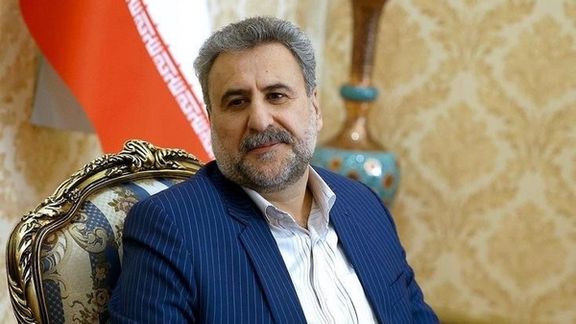
A seasoned Iranian politician and the former head of parliament's Foreign Relations and National Security Committee is pessimistic over nuclear talks in Vienna.

Heshmatollah Falahatpiasheh told Rouydad24 website in Tehran that "there is no bright prospect for the negotiations." The former lawmaker added, "This shuttle diplomacy will bear nothing other than speeches that would be forgotten soon and a high cost for the Iranian nation."

The conservative politician went on to say that politics in the Islamic Republic is not focused on the country’s economic development, which should be the key incentive for reaching a nuclear deal and lift US sanctions.

The remarks were made on the same day when the Iranian government’s spokesman Ali Bahadori Jahromi, who has joined the Raisi administration from Supreme Leader Ali Khamenei's office, said in his first news conference in Tehran that Iran's new diplomacy is result-oriented and is based on pragmatism.

The spokesman said that "Iran's diplomacy is not passive and is not focused on one approach." He also claimed that "Other countries have received Iran's message and have realized the nature of Iran's diplomacy." This comes while in recent months Iran's president and foreign minister have been highlighting a shift toward the East in Iran's diplomacy, maintaining that Tehran attaches special significance to its ties with Moscow and Beijing.

Falahatpisheh, a moderate conservative politician, comes from the Islamic Republic's traditional conservative camp and has been writing commentaries on Iran's foreign policy in Resalat, that was once the flagship media outlet of the conservative camp. A decade ago, the paper lost influence when new conservatives such as former President Mahmoud Ahmadinejad emerged. The political dynamics since then has led to the emergence of hardliners, as distinct from traditional conservatives.

In his interview, Falahapisheh pointed out two problems about the 40-member, large negotiating team Iran has sent to Vienna. The first problem according to Falahatpisheh, is that the team is focused on issuing statements.

"Statements could have been issued in Tehran," said Falahatpisheh, adding that in this case "the team did not need to leave Iran for Vienna in the first place."

The second problem is that "The delegation sent to Vienna is against the 2015 nuclear deal also called the Joint Comprehensive Plan of Action (JCPOA). So, how can it revive an agreement it disagrees with?" asked Falahatpisheh.

Referring to the many tensions between Iran and the international community, Falahatpisheh insisted that Iran should start a détente parallel to the Vienna talks succeed. Otherwise, the benefits of an agreement will be limited for the country. However, he said that Iran's negotiating team lacks the experience and the potential to reduce the tensions.

He added: "I am not optimistic about the quick revival of the JCPOA although an interim agreement can always be forged." He explained that without limiting its nuclear program, Iran can immediately facilitate IAEA inspections in return for releasing part of Tehran's frozen assets abroad."

He likened the interim agreement to "some kind of cease-fire," that would build confidence on the part of the other side and allow Tehran to benefit from its released assets.

He also criticized Iran's opposition to the United States' direct involvement in the talks and said others might take advantage of the situation. Furthermore, he warned against the advantages Russia might gain in the process of the negotiations. Falahatpisheh pointed out that Russia is one of the countries that has benefitted most from sanctions on Iran's oil exports, as it has grabbed Iran's share of the oil market.


Most Viewed

Iran International says it won’t be silenced after London arson attack
1

Iran International says it won’t be silenced after London arson attack

2
VOICES FROM IRAN

Hope and anger in Iran as fragile ceasefire persists

3
INSIGHT

How Tehran bends its own red lines to boost state rallies

4

Iran halts petrochemical exports to supply domestic market

5

US arrests Iranian national over alleged Basij-linked visa fraud

Banner
Banner

Spotlight

  • Too early to tell who is winning Iran war, experts say
    PODCAST

    Too early to tell who is winning Iran war, experts say

  • How Tehran bends its own red lines to boost state rallies
    INSIGHT

    How Tehran bends its own red lines to boost state rallies

  • Iran blackout cripples freelancer, small business incomes
    VOICES FROM IRAN

    Iran blackout cripples freelancer, small business incomes

  • Ideology may be fading in Iran, but not in Kashmir's ‘Mini Iran'
    INSIGHT

    Ideology may be fading in Iran, but not in Kashmir's ‘Mini Iran'

  • US blockade enters murky phase as tankers spoof signals and buyers hesitate
    ANALYSIS

    US blockade enters murky phase as tankers spoof signals and buyers hesitate

  • Why the $100 billion Hormuz toll revenue is a myth
    ANALYSIS

    Why the $100 billion Hormuz toll revenue is a myth

•
•
•

More Stories

Europeans Say Iran Nuclear Talks Approach Nitty-Gritty

Nov 30, 2021, 18:14 GMT+0

European diplomats in Vienna told reporters Tuesday that the Iran nuclear talks have started to discuss details in efforts to revive Tehran’s 2015 nuclear deal.

They also said that there will be a problem if Iran does not show it is serious in nuclear negotiations with world powers this week to restore the Joint Comprehensive Plan of Actions or JCPOA.

Iran's lead negotiator Ali Bagheri Kani said that any understandings reached in earlier talks between April and June were now back on the table. "What was discussed at the six previous rounds of talks in Vienna resulted in a draft and not an agreement,” the Iranian deputy foreign minister told reporters. “And a draft is subject to negotiations …. Nothing is agreed until everything is agreed.”

When the talks were suspended in June, pending Iran’s presidential election, diplomats suggested there had been progress, but that matters remained unresolved both over which United States sanctions violated the agreement, abandoned by previous president Donald Trump in 2018, and over how Iran’s nuclear program might be returned to the limits of the JCPOA from its expansion after 2019.

European diplomats Tuesday flagged up to journalists Iran’s use of more advanced centrifuges, the devices used to enrich uranium. The JCPOA limited Tehran to 5060 IR-1 machines, with a limited number of more advanced ones used for research, but a November report from the International Atomic Energy Agency noted Iran was using IR-4 and IR-6 centrifuges to enrich to 60 percent, far above the 3.67 percent JCPOA cap.

The talks kicked off Monday, with the formal involvement of remaining JCPOA signatories – China, France, Germany, Iran, Russia, and the United Kingdom. The US is taking part only indirectly, which has led to a cascade of attacks on the administration of President Joe Bidenfrom Republicans critical of the JCPOA.

Diplomats from France, Germany and the UK − dubbed the E3 − cautioned reporters against expecting any early breakthrough, suggesting Europe would not impose unproductive deadlines even if the need to revive the JCPOA was becoming more urgent. The senior EU official chairing formal talks, Enrique Mora, said Monday things had started well, although there had been growing European concern both over Tehran’s expanding nuclear program, which brings its closer to the capacity to make a weapon, and Iran’s restricted co-operation with the IAEA.

The Iranian media has been cautious over the talks, while the government of President Ebrahim Raisi (Raeesi) has stressed its commitment to remove US sanctions rather than its willingness to compromise over the nuclear program. Bagheri Kani’s remarks over understandings reached in early talks being open to renegotiation may encourage expectation that talks will last longer but may also be designed to prepare government supporters, many of whom are JCPOA critics, for an eventual agreement.

Iran Media Cautious In Commenting On Nuclear Talks

Nov 30, 2021, 13:17 GMT+0
•
Maryam Sinaiee

Iranian media Tuesday was reserved, or disinterested over prospects for Iran’s resumed nuclear talks in Vienna, anxious not to sound negative or raise hopes.

It appeared that the media have been warned to avoid criticism of the negotiating team and its strategies, as well as raise hopes about the outcome of the talks.

Some outlets steered clear of comment. Khabar Online, a popular conservative news website close to former nuclear negotiator Ali Larijani, a supporter of the 2015 nuclear deal, adorned its four top spots with articles on football advertising rights, shortages of diabetes medicines, an interview with a pop singer, and a report on President Ebrahim Raisi's (Raeesi) provincial visits.

In a note published by Arman daily, reformist journalist Ahmad Zeidabadi suggested the reserved approach resulted from self-censorship due to fears that anyone who discussed the dangers to the country if talks failed would be accused of "playing in the enemy's field.”

Zeidabadi said that the Iranian delegation should not leave the Vienna talks empty-handed under any circumstances "because domestic, regional and international situations will be extremely different from the current situation." He added: "Nothing more can be said for now.”

Zeidabadi did, however, add that the new negotiation team appointed by Raisi had a better and more realistic understanding of the country's economic and other circumstances than their predecessors, even if they had to adapt their previous opposition to the 2015 deal, the JCPOA (Joint Comprehensive Plan of Action.

In the reformist Shargh newspaper, former diplomat Javid Ghorbanoghli wrote of his optimism that the Raisi administration had recognized the “urgent need" to resolve problems arising from United States sanctions that hampered Iran’s international economic and financial relations.

Ghorbanoghli criticized Iranian negotiators and the foreign minister for excluding the US from the talks while insisting on the lifting of US sanctions. The talks, which began in April under the previous administration of President Hassan Rouhani, take place within the structures of the JCPOA, with the US taking part indirectly as it left the JCPOA in 2018.

It is not right, he maintained, to limit the negotiations to European countries which hardliners themselves accuse of failure in saving the nuclear deal when the US abandoned it and not engaging in economic relations with Iran despite their commitments under the deal.

Ghorbanoghli argued that Iran’s insistence on acquiring guarantees that the US would not again leave the JCPOA was logical but not good strategy and not feasible. He also suggested that Iran should not see advancing its nuclear program – through stockpiling highly-enriched uranium and using modern centrifuges – as a winning card for the talks.

He pointed out that expanding the nuclear program could leave Iran in a more difficult position should the talks fail as it would alienate Russia and China: "Those who have devised this plan must offer a clear picture to the country's decisionmakers of what steps they will take next if their plan fails."

Iran Says Sanctions Moved To Top Of Agenda In Vienna Talks

Nov 29, 2021, 21:36 GMT+0
•
Iran International Newsroom

Iran’s nuclear talks resumed Monday with formal discussions between remaining members of the 2015 deal, the JCPOA, with Washington due to take part indirectly.

In Washington, White House press secretary Jen Psaki said that the US remained committed to securing Tehran’s “full compliance” with the JCPOA (Joint Comprehensive Plan of Action).

The Wall Street Journal is among US media uneasy over President Joe Biden’s handling of Iran. “For months the US has been all but begging Iran to return to the table, though the US won’t literally even be at the table in Vienna,” a Journal editorial noted Monday, “so American negotiators must work through European intermediaries. The US seems undeterred by this intentional humiliation.”

The Vienna talks Monday involved China, France, Germany, Iran, Russia, and the United Kingdom. Afterwards, Ali Bagheri Kani, Iran’s lead negotiator, claimed they had focused on lifting US sanctions, with a working group starting work immediately. He portrayed this as a significant victory for Iran.

“It is a major achievement that all parties in the meeting accepted Iran’s demand that first the situation of illegal and unjust US sanctions...should be cleared and then (we) discuss other issues,” Bagheri Kani told reporters.

Palais Coburg hotel where the Iran nuclear talks are held.
100%
Palais Coburg hotel where the Iran nuclear talks are held.

Enrique Mora, the European Union official chairing the talks, gave a welcome to proceedings, which began amid growing pessimism over prospects.

"I feel extremely positive about what I have seen today," Mora said, suggesting the Iranians had not rejected outright the results of the previous six rounds of talks held April-June under the previous Iranian administration of President Hassan Rouhani. "They have accepted that the work done over the first six rounds is a good basis to build our work ahead.”

The earlier talks had struggled to agree which US sanctions levied since previous US president Donald Trump left the JCPOA in 2018 were incompatible with the deal, as well as how exactly Iran would curb the nuclear program it has expanded since 2019, including by enriching uranium to 60 percent, far above the 3.67 percent allowed under the JCPOA.

“We will be of course incorporating the new political sensibilities of the new Iranian administration," Mora said.

Testing

This was the first round of talks since the Vienna process lapsed in June, as Iran suspended its participation after its presidential election. With many members of the new administration of President Ebrahim Raisi (Raeesi) known to be critics of the JCPOA, today was the first chance to test Tehran’s new negotiators.

Bagheri Kani had specifically said Iran required guarantees that the US will not again leave an agreement and impose fresh sanctions.

But while all remaining JCPOA signatories argue formally that both the US and Iran should return to the terms of the deal, there have been growing differences in approach between, on one side, the three European signatories (the E3) and, on the other, Russia and China.

Russia recently played down International Atomic Energy Agency (IAEA) concerns over Iran, while Wang Qun, China’s IAEA envoy last week linked the Vienna talks to the Aukus atomic submarine deal between the US, UK and Australia.

Comments from US officials reflect that the EU-US relationship has warmed since Trump left office, and as European concerns grow over the expanding Iranian nuclear program and Tehran’s restriction on its cooperation with the IAEA.

Leverage

"If Iran thinks it can use this time to build more leverage and then come back and say they want something better, it simply won't work. We and our partners won't go for it," Rob Malley, the US special envoy for Iran, told the BBC Saturday.

Biden officials have stressed their consultation not just with the E3 but with Israel, which has opposed the JCPOA. Israel’s foreign minister Yair Lapid warned in London Monday that Iran would "play for time, earn billions from the removal of sanctions, continue to deceive the world and covertly advance the nuclear program."

Iran has been increasingly wary of the Europeans, especially in their criticizing Iran through IAEA country-level meetings. But Europe still hopes to bring all parties together and revive the JCPOA. French President Macron held a 90-minute phone call Monday afternoon with Raisi, the official Iranian news agency reported.

Iran Nuclear Talks: Positive Early Noises In Vienna

Nov 29, 2021, 17:33 GMT+0
•
Iran International Newsroom

An early round of Iran’s resumed Vienna talks with world powers took place Monday with a positive reaction from the European Union official chairing the meeting.

Enrique Mora, a deputy general-secretary in the European Union, told reporters he was positive after the first round with Iran’s new negotiation team led by deputy foreign minister Ali Bagheri Kani.

Mora said Iran was engaging seriously while sticking to a position emphasizing the importance of lifting United States sanctions.

Bagheri Kani told reporters he was optimistic, and that parties to the talks had agreed they should focus on lifting sanctions.

"The meeting of the Joint Commission on #JCPOA is over,” Mikhail Ulyanov, Russian ambassador to United Nations organizations in Vienna tweeted. “The participants agreed on further immediate steps during the seventh round of negotiations which started quite successfully.”

The Vienna talks are formally between remaining signatories to the 2015 nuclear deal, the JCPOA (Joint Comprehensive Plan of Action): China, France, Germany, Iran, Russia, and the United Kingdom. The United States, which left the deal under previous president Donald Trump in 2018, takes part indirectly.

The talks have been in abeyance since June. Rounds between April and June failed to reach agreement on how to revive the JCPOA, both by removing US ‘maximum pressure’ sanctions introduced by Trump and by scaling back Iran’s expansion of its nuclear program beyond JCPOA limits since 2019.

While the remaining JCPOA signatories have all argued they expect both the US and Iran to return to the terms of the agreement, there has been a growing difference of emphasis between the European trio (the ‘E3’), who have moved closer to the Biden administration in expressing disquiet over Iran’s expanding nuclear program and restricted cooperation with the International Atomic Energy Agency (IAEA), and Russia and China.

The will of the West

In editorial piece published in the Financial Times on the eve of the talks Bagheri Kani referred not just to the US but wrote that Iran waited to see whether “the west has the will to enter real negotiations.”

Russia recently played down concerns over Iran expressed by IAEA chief Rafael Mariano Grossi. Moscow’s IAEA ambassador Mikhail Ulyanov said these were a “constant irritant” but had “little practical meaning in terms of proliferation risks” and the real challenge was restoring the JCPOA.

Wang Qun, China’s envoy at the International Atomic Energy Agency, last week linked the Vienna talks to the issue of Aukus atomic submarine deal between the US, UK and Australia.

“Why do the U.S. and U.K. say Iran can’t enrich uranium above 3.7 percent, while on the other hand they plan to transfer tons of highly enriched 90 percent material to Aukus?” Wang said Friday. “This is an example of a double standard.”

Under the JCPOA Iran is restricted in uranium enrichment to 3.67 percent, but is now enriching small quantities as high as 60 percent.

Ministry Sets Red Lines For Iranian Press About Covering Vienna Talks

Nov 29, 2021, 16:30 GMT+0
•
Iran International Newsroom

Iranian reporters have revealed that they were told by the government to avoid raising public expectations about the outcome of the nuclear talks in Vienna.

Iran International television reported that in a 4-page directive, the ministry of culture and Islamic guidance also reportedly ordered the press not to publish Persian translations of foreign media reports about the negotiations.

In the directive, the ministry said that it does not expect quick progress in the talks. Similar directives were issued to the press during the presidency of Mahmoud Ahmadinejad when hardliners were put in charge of nuclear negotiations.

Commenting on the red lines set by the culture ministry some social media users said, "A lot of foreign reporters and foreign news agencies also cover the negotiations. Will they also obey such directives?" Meanwhile, an Iranian reporter working abroad characterized the directive as Iranian officials' " childish understanding of the way media work."

Meanwhile, as several reports said that the Iranian delegation consisted of 40 members, Akram Sharifi an Iranian reporter well familiar with the Foreign Ministry pointed out in a tweet on Sunday that "Most of the team of 40 are translators and interpreters." She explained that most of the members of the Iranian nuclear negotiation team in Vienna do not speak English."

There were more debates on social media about the number of Iranian team members. Prominent hardline lawmaker Nezamoddin Mousavi quoted a member of the former negotiating teamas "Braging about having negotiated with a delegation of four individuals while the new negotiating team consists of 40 people!"

The lawmaker added, "I wish they went for negotiations with 400 rather than four people and instead, did not "bluff about lifting all the sanctions," and did not say later that they did not know that the JCPOA called for suspending rather than lifting the sanctions."

In comments under the post, one social media user said, "Calm down brother! The number is not important. What is important is the result," while another one suggested: "You go with 4,000 people and try to return with the same 'suspension' if you can."

In another development, while Foreign Minister Amir-Abdollahian was adamant that an agreement was "feasible and within reach," Foreign Policy Commentator Diako Hosseini wrote in a tweet that "When Iran's declared positions in the talks are about effectively lifting the sanctions and the United States declared objective is controlling Iran's nuclear program and preventing the development of nuclear weapons, threatening Iran with leaving the talks is neither an effective leverage, nor a deterring tactic" for Washington.

At the same time in another tweet Hosseini said: "Although the United States has other options in case the talks fail, Iran has no way other than reaching an agreement in order to accomplish its declared target."

In another reference to the size of the Iranian negotiating team, some Iranian reporters abroad said that even if they have booked 20 rooms at the Palais Cuborg hotel where the talks take place, that would cost Iran 20,000 euros per night. Iranian reporters working in Iran who were probably prompted by the Foreign Ministry to respond, quickly replied that the cost of accommodation for the Iranian team is far less as they stay at a cheaper hotel in Vienna.

In the meantime, one of the interesting comments about the "indirect talks" between Iran and the United States was made by former reformist lawmaker Mahmoud Sadeghi who wrote in a tweet that regardless of their claims, Iranian hardliners know that the United States is the world's leader, and they lack the self-confidence to sit face to face with it."