• العربية
  • فارسی
Brand
  • Iran Insight
  • Politics
  • Economy
  • Analysis
  • Special Report
  • Opinion
  • Podcast
  • Iran Insight
  • Politics
  • Economy
  • Analysis
  • Special Report
  • Opinion
  • Podcast
  • Theme
  • Language
    • العربية
    • فارسی
  • Iran Insight
  • Politics
  • Economy
  • Analysis
  • Special Report
  • Opinion
  • Podcast
All rights reserved for Volant Media UK Limited
volant media logo

Rents Jump 50 Percent In Iran Amid Persistent High Inflation
Nov 29, 2021, 13:33 GMT+0
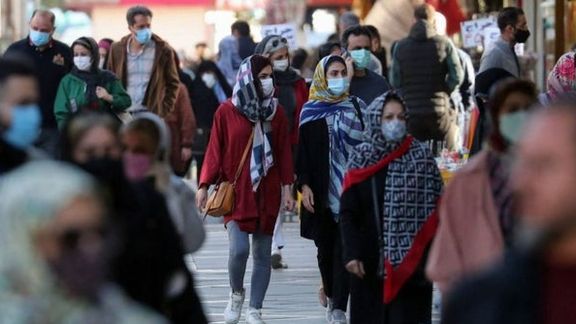
Pedestrians in a Tehran Street. FILE PHOTO

Rents in Iran have jumped 47 percent this year in line with general inflation amid sanctions, putting tremendous pressure on millions of people in large cities.

The Central Bank of Iran says people who had to renew leases in the past six months had to accept huge rent increase demands by landlords or move outside big cities, where they could find comparably cheaper housing.

The huge in crease in rents is coupled with more than 60 percent jump in food prices that impacts low-income and salaried workers most. As high double-digit inflation has dogged Iranians since 2018 when the United States imposed sanctions, salaries have not kept pace with the cost of living. In three years, salaries have barely doubled while each year compound inflation has weakened purchasing power.

As an example, if in 2018 an item jumped from 10-15 dollars, in 2019, 50-percent inflation meant that it jumped to $22.5 and in 2020 it rose to $34. Cumulatively persistent annual inflation made the item more than three times more expensive, while salaries rose much slower.

The highest rent increase was in the capital Tehran where it shot up by 50-55 percent this year. Residential prices also rose to about 320,000 million rials for each square meter or about $120 per square foot.

Interestingly while this has also tripled in about three years in local currency, it has remained the same calculated in US dollars, because the local currency keeps losing value. On Monday, the dollar was trading at more than 290,000 rials on the open market, when three years ago it was one-third of that.

Tenants started two signature collection campaigns in August and September asking the government to intervene and control rents, but except lifting of US sanctions and fundamental economic reforms, there is little the government can do.

While Islamic Republic officials claim that Iran has withstood pressure from the United States’ sanctions, in fact it is the people who have endured the brunt of the economic crisis. By some estimates, about 50 percent of Iranians are now considered poor. Many of them were part of the middle class just three years ago.

Consumption of nutritious food such as meat, dairy products and fruits has declined, with wage earners making around 100-150 dollars a month. For foreigners, prices in Iran might seem low, with beef at around $2 a pound, but for a family of three on a $100 monthly income, meat is out of reach, except maybe a limited quantity once every two weeks.

Some former politicians and public figures have warned of serious discontent and possible unrest, cautiously pleading with the country’s leaders to reach agreement with the United States to remove the crippling sanctions, but the ruling hardliners keep promising things will get better and boasting of military and nuclear advances.


Most Viewed

Ghalibaf defends Iran-US talks amid hardline backlash
1
INSIGHT

Ghalibaf defends Iran-US talks amid hardline backlash

2
INSIGHT

100 days after carnage: Iran economy reels from war, inflation, unemployment

3
INSIGHT

A nation in limbo: 100 days after the massacre, has the world moved on?

4
ANALYSIS

From instability to influence: Pakistan’s pivotal role in US-Iran diplomacy

5
ANALYSIS

100 days on: why Iran’s January protests spread across social classes

Banner
Banner

Spotlight

  • War-hit homeowners feel abandoned as Iran’s reconstruction aid fades

    War-hit homeowners feel abandoned as Iran’s reconstruction aid fades

  • 100 days on: the anatomy of Iran’s January crackdown
    INSIGHT

    100 days on: the anatomy of Iran’s January crackdown

  • Ghalibaf defends Iran-US talks amid hardline backlash
    INSIGHT

    Ghalibaf defends Iran-US talks amid hardline backlash

  • 100 days on: why Iran’s January protests spread across social classes
    ANALYSIS

    100 days on: why Iran’s January protests spread across social classes

  • From instability to influence: Pakistan’s pivotal role in US-Iran diplomacy
    ANALYSIS

    From instability to influence: Pakistan’s pivotal role in US-Iran diplomacy

  • A nation in limbo: 100 days after the massacre, has the world moved on?
    INSIGHT

    A nation in limbo: 100 days after the massacre, has the world moved on?

•
•
•

More Stories

Prosecutor In Iran Says 128 People Indicted For Soleimani Killing

Nov 29, 2021, 08:52 GMT+0

An Iranian prosecutor says 124 people have been indicted in absentia for the killing of Iran’s general Qasem Soleimani by US drones in Baghdad, in January 2020.

Saeed Farhadinia, special prosecutor in the international crimes division of Iran’s judiciary told local media on Monday that Soleimani’s case file remains open and is based on several legal principles, including international conventions against terrorism.

He also cited a friendship treaty between Iran and the United States from the 1950s, when Tehran was Washington’s ally. The Trump administration abrogated the agreement in 2018.

Former president Donald Trump ordered Soleimani’s killing citing threat of terror attacks against US forces and interests in the Middle East. Soleimani was Iran’s top military and intelligence operator in the region.

Iran’s Supreme Leader Ali Khamenei and other officials have repeatedly called for revenge for the assassination and Trump has been mentioned as target number one.

Farhadinia said that Iran has no way of bringing the suspects it has identified to trial. Although he did not mention any names, the indicted individuals are assumed to be mostly US and Israeli officials.

Iran, Azerbaijan And Turkmenistan Announce Gas Swap Deal

Nov 28, 2021, 17:18 GMT+0

Iran, Turkmenistan and Azerbaijan have signed a gas swap deal for up to 2 billion cubic meters per year, Iranian state news agency IRNA reported on Sunday.

Under the swap deal, Iran will receive gas from Turkmenistan and deliver an equivalent amount to Azerbaijan at the Astara border, Iranian Oil Minister Javad Owji told state TV.

"Turkmenistan will sell 5-6 million cubic meters of gas per day to Azerbaijan under the trilateral agreement signed ...in Turkmenistan," IRNA said.

Owji also said Iran was moving to resolve a lingering gas debt dispute with Central Asia's Turkmenistan, which said in late 2017 that it was owed $1.8 billion in payments for gas delivered to Tehran.

"We will soon pay the first instalment to clear the gas debt that we owe to the Turkmen side, after talks that were held earlier," Owji said, without giving the amount of the debt.

Iran has major natural gas fields in the south but has imported gas from Turkmenistan since 1997 for distribution in its northern provinces, especially during the winter.

Iran’s gas production is gradually declining due to lack of new investments and technology needed. There have been serious gas shortages in the past two years, leading to power cuts.

Reporting by Reuters

Politicians In Iran See New Cash Subsidies To The Poor Inevitable

Nov 28, 2021, 13:51 GMT+0

Both far-right and far-left politicians in Iran are proposing new cash handouts to poverty-stricken citizens amid skyrocketing food prices many cannot afford.

Hardline politician Saeed Jalili who once led Iran's nuclear negotiators under former president Mahmoud Ahmadinejad is a far-right politician entertaining the idea. He was the ultraconservative Paydari Party's candidate for Presidency in 2013, set up workgroups within the frameworks of a shadow government when he lost the presidential election to former President Hassan Rouhani.

Although Rouhani never paid any attention to what Jalili and his hardline faction were up to, Jalili continued his work throughout the eight years of Rouhani's presidency and some Iranian media maintain that what President Ebrahim Raisi presented as his plans were the research papers compiled by Jalili's shadow government.

According to lawmaker Ali Khezrian, a member of the parliament presidium, Jalili has been recently holding meetings with members of the Iranian parliament discussing issues including policymaking and combating financial corruption.

Meanwhile, IRGC-linked news agency Tasnim also reported that at one of those meetings, Jalili suggested that with lack of financial resources, the Raisi administration should reclaim foreign currencies put at the disposal of businesses at the preferential rate of 42,000 rials per dollar if those businesses have violated regulations. He also suggested that the foreign currency taken back in this way should be divided among the people.

The cheap dollars for businesses importing food and medicine amid US sanctions is meant to be a subsidy, but it has not helped to keep prices low. There are serious allegations that some individuals and companies have received the cheap currency and imported luxury goods.

One of the ideas put forward by Jalili is "the ideal food basket for Iranians," which is another name for subsidizing foodstuff for low-income Iranians. The idea includes using cell phones and smart cards and linking them with a cash subsidy outlet that would channel funds directly to low-income individuals to buy food.

Food prices have soared by more than 60 percent compared to last year and have left at least one-third of the population struggling to have enough basic food. Meat, fruit and dairy consumption has declined as millions of people cannot afford the high prices.

Jalili's idea of helping the financially hard-hit low-income Iranians is very similar to the ideas of Behzad Nabavi, a far-left politician who heads the umbrella organization of Iran's reform parties.

When Nabavi first introduced the idea, he said he is not shy about returning to the coupon system he had introduced for essential commodities during the eight-year-long war with Iraq in the 1980s. He believes it is essential to provide the key commodities at low cost for the less privileged people. When he first introduced the coupons in the 1980s, Iran's conservatives accused him of being a communist. He says, he does not mind if the same label is used to characterize him once again.

Iran Hardliners Say US Instigated Protests As Pressure Before Nuclear Talks

Nov 28, 2021, 11:59 GMT+0
•
Maryam Sinaiee

Hardline media in Iran claim that the United States instigated protests in Esfahan to put pressure on Tehran ahead of nuclear talks set to resume on Monday.

Ultra-hardliner Kayhan daily, financed by Supreme Leader Ali Khamenei Sunday claimed, "America's foot soldiers" perverted farmers’ water protest in Esfahan on Friday to "sow unrest and reap sanctions" ahead of Vienna nuclear Talks.

The newspaper claimed in a commentary that Western powers always incite unrest in Iran to "impair the resilience" of the regime and the people against US sanctions to force the regime to return to negotiate over its nuclear program.”

Farmers had been protesting in Esfahan city center for two weeks demanding their traditional water rights from the Zayabdeh Roud river, which has been mostly dry in the past decade. The call to protest on Friday came after security forces stormed the farmers' makeshift camp in the dry riverbed in the early hours of Thursday and burned their tents. Social media reports said they were given fifteen minutes by security forces to leave their tents before they went up in flames.

As people gathered on Friday to continue the protest, Security forces used tear gas, batons and pellet shots to disperse protesters whose slogans grew more and more anti-governmentlater in the day with many chanting slogans against Supreme Leader Ali Khamenei, clerical rule, and security forces.

Kayhan claimed that farmers were not involved in the Friday protests, which it said were hijacked by "paid thugs". Farmers had ended their protest on Wednesday and stayed away from the Friday protests, Kayhan claimed.

The newspaper is ardently opposed to negotiations with the West over Iran's nuclear program. In another commentary Sunday, the newspaper's chief editor, Hossein Shariatmadari, opposed any direct talks with US representatives in Vienna on Monday and said to avenge the blood of Iran's assassinated nuclear scientists including Mohsen Fakhrizadeh a year ago, Iran's envoys in the talks should continue to 'humiliate the US" by refusing direct talks.

The Revolutionary Guards (IRGC)-affiliated Fars news agency also claimed that farmers were not involved in the Friday protests. "It appears that ahead of the new round of talks for lifting sanctions, [US] democrats have once again resorted to their usual policy of "riot inside [Iran] and sanctions from outside to weaken Iran's position," Fars wrote.

The conservative Jomhouri Eslami newspaper in a commentary Sunday criticized the hardline media and called their claims a "distortion of truths". "Cracking down on people and then resorting to propaganda to distort the truth will not only fail to convince the public. It will damage people's trust in authorities and in the propaganda apparatus," it wrote.

"Deeply concerned about the violent crackdown against peaceful protestors in Isfahan. The people of Iran have a right to voice their frustrations and hold their government accountable," US State Department Spokesman Ned Price tweeted Saturday.

Videos posted on social media Friday showed thousands of protesters in the city's dry riverbed and its adjacent boulevards chanting slogans peacefully and refusing to leave despite heavy use of tear gas, firing guns in the air and paramilitary and plainclothes motorcyclists driving into crowds. As the day grew, however, reports said security forces heavy-handedly suppressed the demonstrations that had spread to nearby boulevards. Some protesters threw stones at anti-riot forces.

Iranian authorities invariably blame "thugs and hooligans" for any antigovernment protest. "It was the police who did this, don't go and claim later that they were thugs and hooligans," a wounded old man, apparently one of the farmers said in one of the videos from Esfahan protests.

Iran Minister Says New Coronavirus Strain, Omicron Could Spread

Nov 28, 2021, 10:58 GMT+0

Iran’s health minister has warned about the possibility of the new coronavirus variant, Omicron, spreading in the country but did not announce any travel bans.

Bahram Einollahi told local media that “despite all precautions” the spread of the new strain is a possibility, and the government will closely monitor the situation. He visited Tehran’s international airport on Saturday to review screening procedures.

Iran was the second country after China in early 2020 where the coronavirus spread and became an epidemic. There have been more than 6 million cases and 130,000 deaths according to official figures, disputed by critics who say the death toll could be twice higher than what the government says.

A slow start to vaccination led to tens of thousands of more deaths from June to September in Iran but the fifth wave of the pandemic, as it was called, has slowed down in recent weeks.

Iran’s embassy in South Africa has warned citizens living in six African countries to be vigilant about protecting themselves against the coronavirus. These countries are South Africa, Zimbabwe, Namibia, Botswana, Lesotho and Eswatini. A health official in Iran also warned citizens from travelling to these countries.