• العربية
  • فارسی
Brand
  • Iran Insight
  • Politics
  • Economy
  • Analysis
  • Special Report
  • Opinion
  • Podcast
  • Iran Insight
  • Politics
  • Economy
  • Analysis
  • Special Report
  • Opinion
  • Podcast
  • Theme
  • Language
    • العربية
    • فارسی
  • Iran Insight
  • Politics
  • Economy
  • Analysis
  • Special Report
  • Opinion
  • Podcast
All rights reserved for Volant Media UK Limited
volant media logo

Iran Dams May Be The Latest Cyberattack Target
Iran International Newsroom
Nov 24, 2021, 15:07 GMT+0Updated: 17:24 GMT+1
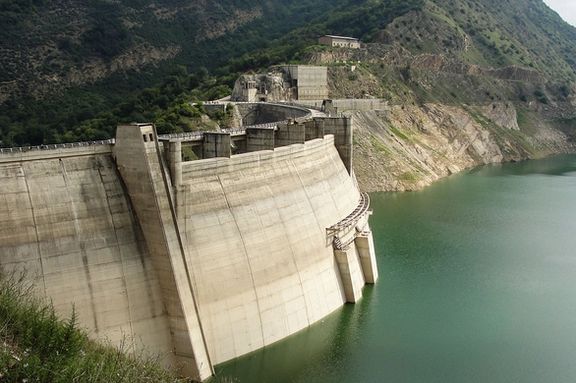
Shahid Rajaei Dam, Iran. File Photo

Recent days have seen several reports of cyberattacks in Iran, including possible hacking of the computer network for the country’s dams.

The newspaper of the state broadcaster quoted “an informed source” saying a cyber intrusion had disrupted the monitoring of water levels and general conditions in dams over the past two weeks.

The source said that employees exchanging data about dams had lost Internet-based communication, including applications like WhatsApp. The source dismissed denials issued by information network officials.

A security official at Iran’s ministry of energy also denied the claim, telling the Iranian Students News Agency (ISNA) that authorities had restricted certain employees’ access to the information system.

Iran has been the target of many cyberattacks and other sabotage since mid-2020, frequently attributed to Israel. Nuclear, military and industrial targets have all been hit with disruption, including explosions and fires.

In October motorists faced disruption at gas stations across the country when the payment system for cheaper, rationed gasoline broke down. It took nearly a week to fully restore the service. Iran’s railroad network was hacked in July, apparently as part of a wider strategy to target infrastructure.

Some cyberattacks have been claimed by unknown dissident groups, including the hacking and release in July of troves of security-camera footage and documents from Tehran’s Evin prison, including guards beating prisoners and confidential letters from and to the prison. The chief of Iran’s prisons was replaced in November, in a decision at least partly related to the hacking.

On Wednesday, the website of Ayatollah Ahmad Alamolhoda, Friday prayer leader in Mashhad and father-in-law of President Ebrahim Raisi (Raeesi), was hacked, according to the cleric’s communications chief. Alamolhoda is Supreme Leader Ali Khamenei’s representative in Khorasan-Razavi, one of Iran’s largest and most important provinces.

Shargh newspaper in Tehran reported that the websites of the Assembly of Experts, a constitutional body tasked with choosing the Supreme Leader, was disrupted Wednesday by a cyberattack. The reformist newspaper also reported that the website of Tehran province courts had been disrupted, although it was not clear this was due to a cyberattack.

Most Viewed

Ghalibaf defends Iran-US talks amid hardline backlash
1
INSIGHT

Ghalibaf defends Iran-US talks amid hardline backlash

2
VOICES FROM IRAN

Bread shortages, soaring prices strain households in Iran, residents say

3
ANALYSIS

From instability to influence: Pakistan’s pivotal role in US-Iran diplomacy

4
ANALYSIS

100 days on: why Iran’s January protests spread across social classes

5

War-hit homeowners feel abandoned as Iran’s reconstruction aid fades

Banner
Banner

Spotlight

  • Iran crackdown reaches cemeteries as graves of slain protesters defaced
    EXCLUSIVE

    Iran crackdown reaches cemeteries as graves of slain protesters defaced

  • Iran diplomacy wobbles as factions compete to avoid looking soft on US
    INSIGHT

    Iran diplomacy wobbles as factions compete to avoid looking soft on US

  • The politics of pink: how Iran uses cuteness to rebrand violence
    ANALYSIS

    The politics of pink: how Iran uses cuteness to rebrand violence

  • Bread shortages, soaring prices strain households in Iran, residents say
    VOICES FROM IRAN

    Bread shortages, soaring prices strain households in Iran, residents say

  • 100 days on: the anatomy of Iran’s January crackdown
    INSIGHT

    100 days on: the anatomy of Iran’s January crackdown

  • Ghalibaf defends Iran-US talks amid hardline backlash
    INSIGHT

    Ghalibaf defends Iran-US talks amid hardline backlash

•
•
•

More Stories

Iran's Top Nuclear Negotiator Holds Talks In The UAE

Nov 24, 2021, 14:26 GMT+0

Iran's top nuclear negotiator Ali Bagheri Kani met with senior Emirati officials on Wednesday during a visit to the United Arab Emirates, state news agency WAM reported.

The rare visit comes as Abu Dhabi moves to reduce tensions with rival Tehran.

WAM said Bagheri Kani met with the diplomatic adviser to the UAE president, Anwar Gargash, and Emirati minister of state for foreign affairs Khalifa Shaheen Almarar.

The discussions stressed the importance of strengthening relations "on the basis of good neighborliness and mutual respect", working for greater regional stability and prosperity and developing bilateral economic and commercial ties, WAM said.

The visit comes ahead of the expected resumption of talks between global powers and Iran in Vienna on Monday to try to revive a 2015 nuclear pact, which Gulf states have criticized for not addressing Tehran's ballistic missile program and regional proxies.

Gargash earlier this month said that the UAE was taking steps to de-escalate tensions with Iran.

Senior Iranian and Gulf officials told Reuters last week that a top UAE delegation would visit Tehran soon.

Gulf states, uncertain of the Biden administration's role in the region and seeking to avoid a return to heightened tensions of 2019 that saw attacks on tankers in Gulf waters and Saudi energy infrastructure, have moved to engage with Iran.

Sunni Muslim power Saudi Arabia also launched direct talks with Iran in April. Riyadh has described the talks as "cordial" but said they remained largely exploratory.

Report by Reuters

Large Anti-Government Water Protest Continues In Central Iran

Nov 24, 2021, 11:20 GMT+0

Protests against water scarcity and government distribution policies continued for a fourth successive day in Shahr-e Kord, 100km west of Esfahan.

Shahr-e Kord is provincial capital of Chaharmahal-Bakhtiari, a traditionally water-rich region in the Zagros mountains, has seen its water resources decline in recent years due to both drought and projects that shift water to arid regions.

Protests began November 20, following demonstrations against lack of water in the city of Esfahan, where thousands of residents demanded water be supplied to the Zayandeh Roud river, which has been dry for most of the last ten years.

As the government promised solutions to people in Esfahan, residents in neighboring Chaharmahal-Bakhtiari took to the streets in fear their water would be diverted. Drought across the Middle East in recent years has encouraged conflict and tension between nations and between communities over access to water.

The Iranian government has encouraged water-intensive industries to be built in Yazd, east of Esfahan, diverting Zayandeh-Roud water, leaving tens of thousands of farmers with inadequate irrigation.

Days ago, the government appointed a Revolutionary Guards general as governor of Chaharmahal-Bakhtiari, following similar appointments in recent weeks elsewhere. Some protesters Wednesday attacked the new provincial governor as a servant of central authorities.

Iran's Currency Drops To Lowest Point In A Year As Nuclear Talks Approach

Nov 24, 2021, 10:19 GMT+0

Iran’s currency Wednesday fell to its lowest point in a year as US sanctions continued and prospects for reaching a deal in nuclear talks with the West deemed.

The currency, rial, dropped to 290,000 against the US dollar in Tehran’s exchange market, raising fears of more inflation in the near future. Iran already suffers from more than 60 percent rise in food prices in the past one year, as a cash-strapped government prints money, inflating liquidity.

The rial has dropped more than ninefold since early 2018, when former US president Donald Trump signaled his intention to withdraw from the 2015 nuclear agreement with Iran, known as JCPOA. Trump carried out his threat in May 2018 and imposed crippling sanctions on Tehran’s oil exports and international banking.

Indirect nuclear talks with the United States are scheduled to resume next week in Vienna, but a tougher position adopted by the new hardline government in Tehran has led to pessimism over chances of a successful outcome.

In the past four years, the deepening economic crisis has led to large protests in which security forces killed hundreds of protesters. With a parallel water shortage and pollution, rising prices pose a serious risk of renewed unrest against the government.

Leaked Pay Slips Reveal Huge Salaries For Government Managers In Iran

Nov 24, 2021, 09:21 GMT+0

Revelations about "astronomical" salaries for some state company managers amid high inflation and rising poverty in Iran have led to calls for transparency.

Investigative reports in the media and posts on social media have shown what Iranian’s call “astronomical salaries” that politically appointed managers earn in loss-making state industries.

It is still not known if these are genuine investigative reports or if journalists and social media influencers have been tipped by rival factions and clans within the Iranian government.

On November 23, the IRGC-linked daily newspaper Javan ran a front-page report that said monthly salaries higher than 2.15 billion rials paid to some government managers is an outcome of lack of transparency in government operations. The amount mentioned would equal roughly to $51,000 based on the government’s preferential exchange rate and $9,000 based on the free market rate. But even at the lower dollar equivalency, it is an astronomical amount by Iran’s standards.

Ordinary wage earners make about $100 a month and office workers and teachers less than $200.

Meanwhile in a separate story, Javan quoted Majles Speaker Mohammad Bagher Ghalibaf as saying that "first the parliament and then the rest of government institutions in Iran are going to make their operations transparent." The Iranian Parliament (Majles) has been under immense pressure from the media and the public to reveal the voting record of lawmakers. However, hardline clerics at the Majles have so far strongly resisted transparency and argue that "enemies" might benefit from the information.

Scores of social media accounts on Telegram and Twitter have revealed high salaries are being paid to some government managers. The proreform Telegram channel @Maktubat, which has over 24,000 subscribers, on November 22 posted the payslip of one of the managers of the government-owned Amir Kabir Petrochemical Plant, showing that was receiving 2.15 billion rials per month. The channel said this was equal to an ordinary government workers’ wage for four years.

Meanwhile, hardline commentator Hassan Rahimpour Azqadi posted three payslips from the same company on his Twitter account and showed the company's CEO received 2.15 billion rials, its HR Chief received 1.25 billion and the company's Security Chief received 840 million rials per month.

In another post, hardline journalist Mehdi Khalili published some more documents comparing salaries and cost of living in Iran and addressed President Ebrahim Raisi saying, "Look at the payslips and compare them with what teachers and other workers living under the poverty line earn. Where are you Mr. Raisi. You have been in office as Iran's President for more than 100 days and still, there is such an injustice done your employees."

In an elaborate attempt to distance Supreme Leader Ali Khamenei from government mismanagement and financial corruption, Javan has concluded in its report that after years of complaints by the people and warnings by the Supreme Leader, apparently the only solution for financial corruption appears to be transparency. Meanwhile, the daily warned that false transparency will only make matters worse.

User comments about the matter on social media were interesting particularly on Telegram where they feel safer and at times come up with radical comments. One Telegram user responded to the vast difference between income of government employees, "This is no longer a class difference. This shows a wide gap between classes." Another user said, "Soon we will be seeing a revolt by the poor."

On Twitter, one user who responded to Azqadi's call for an explanation by the President, wrote: "They will not offer any explanations, but you are going to see a lot of justifications." And another user reminded that the company security chief who receives 840 million rials per month will turn a blind eye to whatever corruption that takes place in the company.

Iranian Child Brides At Record Numbers

Nov 23, 2021, 16:10 GMT+0

Child marriage has risen over 30 percent in Iran this year from the same period last year, with 9,750 girls aged 10-14 officially wed in a three-month period.

Figures published by Iran Statistical Center (ISC) relating to the first three months of the Iranian calendar year (March 21-June 20 2021), are the highest for child marriages recorded in a single quarter.

The Iranian Student News Agency (ISNA) in a detailed article Monday said that the numbers published by ISC reflected only registered marriages and not unregistered ones, which are common in rural areas.

Over 54,500 teenage girls above 14 also were officially married. Marriages of boys under 18 − considered ‘underage’ internationally − were far fewer, with only six cases registered for boys under 15 and 6,500 for males between 15-19.

For years the issue of underage marriage has been debated in Iran, with many clerics and religious politicians defending marriages of girls under 15. Proposed legislation to forbid marriage in for girls under 14 has been pursued unsuccessfully even in relatively more reform-minded parliaments.

Fathers are required in law to agree to the marriage of daughters younger than 13, while a religious court must also certify that the girl is ready physically and mentally, and that she agrees to the marriage. ISNA claimed that judges often seek only the father’s consent and disregard the other requirements.

One major reason for the rise in underage marriages is the current economic crisis where poor families struggling to take care of children see early marriage as a better option. There is a government cash grant of around $400 for marrying couples, which acts as an additional incentive.

There are also many reports from officials and in the media of parents receive money for agreeing to wed underage girls, often to far older men. The vice-president responsible for women’s affairs, Ansiyeh Khazali, who does not oppose all underage marriage, recently said that money played a big role.

The wide gender imbalance − with 9,750 under-14 girls marrying as against only six boys under 15 and 6,500 males aged 15-19 − in the SCI figures suggests many child brides went to men in at least their 20s.

Reports in Iranian media have indicated that there are growing cases of “child divorce” and children giving birth. ISC figures from the same three-month period showed 293 babies born to girls under 15, with two ten-year-old and seven 11-year-old mothers. In total, 747 babies were born to mothers aged 10-14 in the first six months of the year.

Although child marriage in Iran is less common than in Africa and some parts of Asia, human rights groups have criticized the practice and highlighted individual cases.