• العربية
  • فارسی
Brand
  • Iran Insight
  • Politics
  • Economy
  • Analysis
  • Special Report
  • Opinion
  • Podcast
  • Iran Insight
  • Politics
  • Economy
  • Analysis
  • Special Report
  • Opinion
  • Podcast
  • Theme
  • Language
    • العربية
    • فارسی
  • Iran Insight
  • Politics
  • Economy
  • Analysis
  • Special Report
  • Opinion
  • Podcast
All rights reserved for Volant Media UK Limited
volant media logo

Iran's Stock Market Decline Shows Unease Over Nuclear Talks

Mardo Soghom
Mardo Soghom

Iran International

Oct 31, 2021, 14:14 GMT+0Updated: 17:23 GMT+1
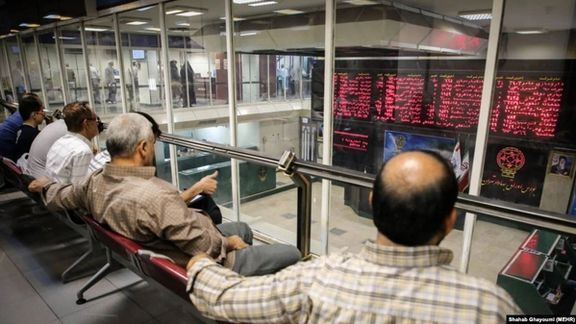
Traders at Tehran stock Exchange in 2019.

Another big decline in Iran’s stock market on Sunday has highlighted the precarious state of the economy amid uncertainty over the future of nuclear talks.

The Tehran stock market index dropped by about 30,000 points, bringing it close to 1.2 million points, down from more than 1.4 million in early August when President Ebrahim Raisi (Raeesi) took office promising to boost capital markets.

Fararu, a leading news website in Iran, said that economic uncertainty resulting from a lack of progress in nuclear talks with the West is the main reason for the continuous decline of the stock market. An expert in capital markets told the website that there is a lack of investment capital and market lethargy.

The government which faces a huge budget deficit issued more bonds in August, which drained the capital markets. One expert said that the government and the central bank are using the stock market as a source of financing.

At the same time, First Vice President Mohsen Rezaei, who is one of Raisi’s top officials in charge of the economy told parliament on Sunday that the government will never print more money without proper backing, which would mean hard currency reserves. Iran has been spending its reserves to make up for lost oil exports, banned by US sanctions.

Iran has accelerated its money printing since 2018 when the United States withdrew from the 2015 nuclear agreement (JCPOA) and imposed sanctions on Iran. Liquidity has quadrupled since 2017, dragging down the value of the national currency ninefold.

The rial is hovering around 275,000 to the dollar, showing no appetite for appreciation.

While Rezaei was promising a cap on liquidity, hardliners were demanding that the Central Bank of Iran (CBI) not to deny money to an ambitious Raisi project of building one million affordable homes in the next 10 months. Most economists in Iran have called the project an impossible plan, given the fact that it would need $10-15 billion dollars the government does not have.

But Rezaei, who has a military background in the Revolutionary Guard with no economic management experience tried to sound upbeat in his meeting with the parliament. He said people can expect good economic news in December. But what he mentioned were old formulas of more government control over prices and compensating ordinary people who have to endure a 50-percent inflation rate.

He even invited expat Iranian to bring their “intellectual and financial capital back to Iran” and invest in the future. This seems to be another optimistic expectation given the fact that up to $100 billion is said to have left the country in the past decade.

President Raisi’s first three months in office is coming to a close next week with no visible improvement in the economy. Critics already began demanding action instead of words in mid-October, while the president appeared to be issuing daily orders to officials to solve deep-rooted problems that cannot be addressed without the lifting of US sanctions.


Most Viewed

Ghalibaf defends Iran-US talks amid hardline backlash
1
INSIGHT

Ghalibaf defends Iran-US talks amid hardline backlash

2
VOICES FROM IRAN

Bread shortages, soaring prices strain households in Iran, residents say

3
ANALYSIS

From instability to influence: Pakistan’s pivotal role in US-Iran diplomacy

4
ANALYSIS

100 days on: why Iran’s January protests spread across social classes

5

War-hit homeowners feel abandoned as Iran’s reconstruction aid fades

Banner
Banner

Spotlight

  • Is Iran entering its Gorbachev moment?
    INSIGHT

    Is Iran entering its Gorbachev moment?

  • Iran crackdown reaches cemeteries as graves of slain protesters defaced
    EXCLUSIVE

    Iran crackdown reaches cemeteries as graves of slain protesters defaced

  • Iran diplomacy wobbles as factions compete to avoid looking soft on US
    INSIGHT

    Iran diplomacy wobbles as factions compete to avoid looking soft on US

  • The politics of pink: how Iran uses cuteness to rebrand violence
    ANALYSIS

    The politics of pink: how Iran uses cuteness to rebrand violence

  • Bread shortages, soaring prices strain households in Iran, residents say
    VOICES FROM IRAN

    Bread shortages, soaring prices strain households in Iran, residents say

  • Ghalibaf defends Iran-US talks amid hardline backlash
    INSIGHT

    Ghalibaf defends Iran-US talks amid hardline backlash

•
•
•

More Stories

Saudi Arabia And Iran Will Continue Contacts But Little Progress Achieved

Oct 31, 2021, 12:56 GMT+0

Iran and Saudi Arabia both say that they are willing to continue talks they started in April but not much progress has been made, with embassies still closed.

Iran’s foreign ministry said Sunday that after four rounds of talks with Saudi Arabia, reopening of embassies “will take some time”, after the Saudi foreign minister said not much progress has been made.

The Iranian foreign ministry spokesman Saeed Khatibzadeh was quoted by local media as saying that the two sides have achieved preliminary agreements, but the two countries are waiting for the finalization of the talks.

Saudi Arabia’s Foreign Minister Faisal bin Farhan Al Saud had told CNBS in Rome on Saturday that talks with Iran are continuing but no “solid progress had been made.” He indicated that another round of talks will follow, saying, “We haven’t really reached any conclusive progress. But they have been, I would say, positive enough to allow for further discussion beyond, but nothing concrete as of yet.”

Iran has embarked on a much-touted policy of improving relations with neighbors as it grapples with Western powers over its nuclear program. The West besides asking Iran for a full return to the 2015 nuclear deal (JCPOA), is also raising the issue Tehran’s aggressive policies in the region.

US Air Force Flies Strategic Bomber Over MidEast As 'Message To Iran'

Oct 31, 2021, 11:09 GMT+0

The US Air Force flew a B-1B strategic bomber over key maritime chokepoints in the Middle East with allies, including Israel, amid ongoing tensions with Iran.

The B-1B Lancer bomber flew Saturday over the Strait of Hormuz, the narrow mouth of the Persian Gulf through which 20% of all oil traded passes.

It also flew over the Red Sea, its narrow Bab el-Mandeb Strait and Egypt's Suez Canal.

The Strait of Hormuz has been the scene of attacks on shipping which have been blamed on Iran over recent years, while the Red Sea has seen similar assaults amid an ongoing shadow war between Tehran and Israel.

The Islamic Republic has denied involvement in the attacks, though it has promised to take revenge on Israel for a series of attacks targeting its nuclear program.

Fighter jets from Bahrain, Egypt, Israel and Saudi Arabia flew alongside the bomber.

The flyover is the first in a pattern of such flights by nuclear-capable B-52 bombers since the Trump administration, as a show of force to Iran.

Biden sending a B1-B bomber into the region allows him to send "a clear message of reassurance" to regional allies, the US Air Force's Central Command said in a Twitter post.

Report by AP

Top Sunni Cleric In Iran Says Taliban Should Be 'Muscle' For Tehran

Oct 31, 2021, 10:02 GMT+0

A leading Sunni cleric in Iran, who was known in the past as a rights defender has said he hopes the Taliban “can become muscle for the Islamic Republic”.

Molavi Abdolhamid is the religious leader of Iran’s largely Sunni Baluch population living in the southeast near Pakistan and Afghanistan. Over the years, he was an outspoken defender of equal rights for all religions and ethnic groups in Iran but since the Taliban victory in August has become a supporter of the extremist group implicated n hundreds of attacks on civilians.

Abdolhamid in an interview with a local website has called on other countries not “to pre-judge the Taliban”, arguing that the group has changed, and its critics are exaggerating their shortcomings.

Iran’s ruling hardliners also welcomed the Taliban victory in Afghanistan, labeling it as a “strategic defeat for the United States”, but officials now are more circumspect, demanding that the Taliban should form an “inclusive government”.

Abdolhamid’s pro-Taliban statements have led to criticism among Iranians. An Iranian rights group which had bestowed an award on the Sunni cleric for defending human rights took it back in August.

The Taliban have continued their restrictive policies against women in Afghanistan and in some provinces have mistreated Shiite minorities.

Iran Official Accuses Israel, US For Disruption At Gas Stations

Oct 31, 2021, 09:32 GMT+0
•
Iran International Newsroom

Iran’s civil defense chief on Saturday accused Israel and the United States of being behind a cyberattack which disrupted gasoline sales across the country.

Gholamreza Jalali, an Islamic Revolution Guard Corps IRGC general said this is not yet proven and a technical investigation was yet to be completed.

"We are still unable to say forensically, but analytically I believe it was carried out by the Zionist Regime, the Americans and their agents," Jalali, head of Passive Defense Organization (PDO) which is in charge of cyber security, told state TV in an interview.

A nationwide disruption of special payment cards on Tuesday led to havoc at gas stations across Iran. The payment system that was hit is a digital network that controls subsidized, cheap fuel each Iranian receives monthly. Once the system was disrupted, people had to pay double in cash to pump gas.

The cheapest, rationed fuel is about 20 US cents a gallon, while the regular price for gasoline is around 40 cents, the second cheapest in the world after Venezuela.

Iran has said in the past few years that it is on high alert for online assaults, which it has blamed on its arch-foes the United States and Israel. The United States and other Western powers meanwhile have accused Iran of trying to disrupt and break into their networks.

Jalali accused the administration of former president Hassan Rouhani of "not taking cyberwarfare seriously and ignoring it" and claimed that his organization has reached an understanding with the ultraconservative administration of President Ebrahim Raisi "to make up for the setbacks during the previous administration. The PDO will inform the judiciary of the identity of those who caused the attack by neglecting or not carrying out the required precautions.

President Ebrahim Raisi said this week that the cyberattack was designed to create "disorder". But experts have said the payment system was not connected with the Internet.

The disruptions on Tuesday came ahead of the second anniversary of bloody protests in Iran over a sharp increase in fuel prices in November 2019 that turned political with protesters demanding the country's top rulers step down. Security forces killed up to 1,500 people during the unrest using military weapons.

Jalali said that, based on completed investigations, Iran was "certain" that the United States and Israel were behind the cyberattacks on Iran's railroads in July and the Shahid Rajaee Port in May 2020.

Iran's train services were delayed in July by apparent cyberattacks, with hackers posting the phone number of Supreme Leader Ayatollah Ali Khamenei's office as the number to call for information.

About half of Iran's 4,300 gas stations were now reconnected and resuming the sale of heavily subsidized fuel, the state news agency IRNA said on Saturday. Hours after the cyberattack, gas stations reopened gradually but could only be operated manually for the sale of more expensive fuel.

Speculation among Iranian on social media was rampant after the incident, with some saying that the disruption was intentional by the government who wants to reduce subsidies amid a deep economic crisis triggered by US sanctions.

The PDO which is affiliated to the Armed Forces General Command (AFGC) is responsible for policymaking, planning, and operating passive and civil defense activities of government agencies including measures against cyber, biological, radioactive, chemical, and economic threats.

The organization's exact budget is not known but it receives 2% of the budget of all government organizations and agencies to implement its measures against threats in addition to the budget that it receives from the AFGC.

Iran Soccer Authorities Deny They Wrote Plan For Women At Games

Oct 30, 2021, 17:28 GMT+1
•
Iran International Newsroom

Iran’s soccer federation has denied reports that it had sent a proposal to parliament that women fans be allowed to enter stadiums to watch men’s games.

Earlier this week, media claimed the federation had suggested draft legislation to allow women to be spectators, after a 40-year ban. But the Iranian Student News Agency (ISNA) reported Saturday that the federation had denied these reports, which had cited the federation’s own officials.

It was not immediately clear whether the federation had back-pedalled due to political pressure from conservatives who oppose women at games.

Former president Mahmoud Ahmadinejad announced in 2006 that a ban on women’s attendance, introduced after the 1979 Revolution, would be lifted, but he backed down after objections from senior Muslim clerics.

FIFA, the international football or soccer federation, has been calling on Iran to relax the rule and allow women into stadiums. A select number of women were allowed to attend World Cup qualifying games in 2018.

But lack of further progress led to FIFA considering banning Iran from international games, which led the government to allow around 3,000 women − a small fraction of the attendance − to watch a game between Iran and Cambodia two years ago, in October 2019, exactly 38 years after women were first banned in October 1981.

Women soccer fans were encouraged that things were moving in the direction they wanted. But in restricting attendance at all sports, the Covid-19 pandemic also stopped the trend toward allowing women in Iran to attend games.

A strict version of Islamic and cultural tradition restricts women’s contact with men, and a sports stadium packed with male spectators and where woman watch men compete, alarms many conservative clerics.

But women know that before the 1979 revolution they were allowed to do many things they are barred from today, including not wearing hijab, riding a bicycle, even a motorcycle and holding high level government jobs.

But FIFA is likely to renew its pressure. Recently, Iran announced that all attendance was banned in an international match against South Korea in Tehran, but the people were allowed to watch the game in cinema theatres.

Ostensibly, the ban on stadium attendance was for the pandemic, but many pointed out that cinemas were just as conducive, if not more so, to spreading coronavirus.