• العربية
  • فارسی
Brand
  • Iran Insight
  • Politics
  • Economy
  • Analysis
  • Special Report
  • Opinion
  • Podcast
  • Iran Insight
  • Politics
  • Economy
  • Analysis
  • Special Report
  • Opinion
  • Podcast
  • Theme
  • Language
    • العربية
    • فارسی
  • Iran Insight
  • Politics
  • Economy
  • Analysis
  • Special Report
  • Opinion
  • Podcast
All rights reserved for Volant Media UK Limited
volant media logo

Iran Says Talks To Resume But Questions Over New Demands Linger

Maryam Sinaiee
Maryam Sinaiee

Iran International

Oct 9, 2021, 21:21 GMT+1Updated: 17:40 GMT+1
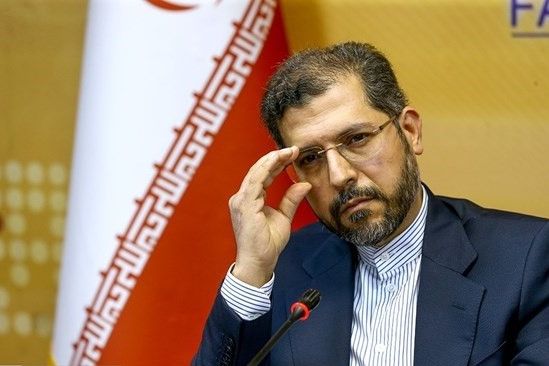
Spokesman of Iran's foreign ministry, Saeed Khatibzadeh. FILE PHOTO

While the Iranian foreign minister has reiterated that his country will soon return to Vienna nuclear talks, it is not clear if Tehran has new preconditions.

Speaking during a visit to Syria, Iran's Foreign Minister Hossein Amir-Abdollahian reiterated that Iran would "soon" return to the nuclear talks with world powers, which include indirect negotiations with the United States. A main concern of Iran in any talks to rescue the 2015 nuclear deal would be around ways to verify the lifting of US sanctions, he said on Saturday.

Questions also linger if Iran is demanding unfreezing of some of its assets held in different counties. The foreign minister hinted last week that the US should release $10 billion to show goodwill.

In an interview with France 24 television cited by the official news agency IRNA Saturday, the foreign ministry spokesman Saeed Khatibzadeh repeated earlier statements that the new administration of President Ebrahim Raisi (Raeesi) has carried out dual reviews: one, now concluded, deciding to continue the talks, and a second reviewing details of talks to date.

According to IRNA, Khatibzadeh stressed that Iran would return to the talks more quickly than the three months it took the United States to open talks in April after President Joe Biden took office in January having pledged to return to the agreement, from which his predecessor Donald Trump withdrew in 2018. But it has been more than three months since the last round of talks in June.

The spokesman criticized the Biden administration for continuing Trump’s ‘maximum pressure’ sanctions despite campaign promises. "The most important issue is lifting all sanctions imposed on Iran," Khatibzadeh said.

European signatories of the deal – the JCPOA, Joint Comprehensive Plan of Action – have expressed concern that Iran is in no hurry to resume talks as it is gaining useful experience in running a nuclear program that has expanded since 2019.

Some pundits in Iran also see no rush. "If Iran was delaying the return to the talks to carry out economic reforms that could lessen the impact of sanctions this would be justified," international affairs analyst Hasan Beheshtipour told the Iranian Labour News Agency (ILNA) Friday.

But Beheshtipour also suggested that unravelling a complex network of sanctions needed negotiations with world powers, and that Iran should not expect all sanctions lifted overnight. Beheshtipour said that the cost of circumventing sanctions − adding $20 to the $5 production cost of each barrel of oil − justified a focus on oil and financial sanctions.

A conservative foreign policy expert, Heshmatollah Falahatpisheh backed Foreign Minister Hossein Amir-Abdollahian's call for the US to ‘unfreeze’ $10 billion of Iran's money as a goodwill gesture.

Falahatpisheh, who headed the parliament's National Security and Foreign Policy Committee 2018-19, said that instead of the fruitless "negotiation for the sake of negotiation" under President Hassan Rouhani, Amir-Abdollahian had suggested "a positive step" towards reviving the JCPOA.

Khatibzadeh has denied that Iran has preconditions for resuming talks, although some pundits have interpreted Amir-Abdollahian's demand for unfreezing Iranian assets as a toughening of Tehran’s approach.

Most Viewed

Ghalibaf defends Iran-US talks amid hardline backlash
1
INSIGHT

Ghalibaf defends Iran-US talks amid hardline backlash

2
INSIGHT

Iran diplomacy wobbles as factions compete to avoid looking soft on US

3
VOICES FROM IRAN

Bread shortages, soaring prices strain households in Iran, residents say

4
ANALYSIS

The politics of pink: how Iran uses cuteness to rebrand violence

5

Scam messages seek crypto for ships’ safe passage through Hormuz, firm warns

Banner
Banner

Spotlight

  • Opposition to US talks grows in Tehran as ceasefire deadline nears
    INSIGHT

    Opposition to US talks grows in Tehran as ceasefire deadline nears

  • Tehran moderates see ‘no deal–no war’ limbo as worst outcome
    INSIGHT

    Tehran moderates see ‘no deal–no war’ limbo as worst outcome

  • The future has been switched off here
    TEHRAN INSIDER

    The future has been switched off here

  • Lights out, then gunfire: Witnesses recount Mashhad protest crackdown
    VOICES FROM IRAN

    Lights out, then gunfire: Witnesses recount Mashhad protest crackdown

  • Family told missing teen was alive, then received his body 60 days later
    EXCLUSIVE

    Family told missing teen was alive, then received his body 60 days later

  • Is Iran entering its Gorbachev moment?
    INSIGHT

    Is Iran entering its Gorbachev moment?

•
•
•

More Stories

Taliban is Diverting Iran’s Aid, Conservative Newspaper Says

Oct 9, 2021, 17:57 GMT+1

A conservative newspaper in Iran has suggested the Taliban is misusing Tehran’s aid, highlighting varying views in Iran on Afghanistan’s new rulers.

"Currently available information indicate that the aid sent by the Islamic Republic of Iran, which the terrorist Taliban group receives, is used as the group wishes and according to its needs and does not reach to those in real need," an editorial opined Saturday.

The Jomhuri Eslami (Islamic Republic) newspaper suggested that humanitarian assistance be sent directly to regions facing the worst crisis, directly by air to Bamiyan in central Afghanistan for instance, to ensure it reached those in need. It would be possible to supervise the distribution only if Iranian supervisors were there alongside local authorities to prevent misuse, the paper wrote.

In referring to the Taliban as ‘terrorists,’ Jomhuri Eslami differs from Kayhan newspaper, which has in recent months suggested the Taliban has changed over the past 20 years. Both Kayhan and Jomhuri Eslami, despite declining circulations, are influential in Iranian conservative and hardliner political circles.

In June a Kayhan commentary noted that the Taliban was no longer committing the same kind of sectarian crimes against Afghan Shiites and had stopped beheadings. But many in Iran, including some influential senior Shiite clerics, are skeptical of the Taliban and its pledges not to harm Afghanistan's Shiite minority.

The Iranian government and Red Crescent have sent several shipments of humanitarian aid to Kabul by air and land since September 15, when the first shipment of food was flown to the country in the same flight taking Iranian diplomats back to the Afghan capital.

The latest shipment, flown to Afghanistan October 5, included 50 tons of food and medicine, blankets and similar items needed for winter. On October 5, 94 tons of food and sanitary items, and 22 tons of oxygen capsules for use in hospitals, arrived by land.

The UN refugee agency said on Saturday the world should urgently provide promised aid to Afghanistan, warning that a lack of resources is hampering efforts to avert an economic crisis that could push fresh flows of refugees to its neighbors and beyond.

"The humanitarian crisis in Afghanistan remains really dire," Babar Baloch, spokesperson for the UN High Commissioner for Refugees, said in an interview in Islamabad.

"The focus has to be inside Afghanistan to avoid and avert another refugee crisis."

An official of the United Nations’ World Food Programme (WFP) said last month that the agency had asked for $200m in emergency aid to deliver food to Afghanistan's vulnerable people before winter.

According to the WFP, one in three Afghans faces severe hunger and 95 percent of families lack sufficient food. Countries prepared to offer humanitarian aid are concerned the Taliban would might seize the aid supplies and should not decide which regions or groups received it.

External funding for Afghanistan has been suspended since the Western military withdrawal from Kabul and the takeover of the central government by the Taliban on August 15. Wracked by corruption and nepotism, the US-backed authorities had relied on the US and other western donors for 80 percent of their budget.

The Taliban have offered the UN assurances on the safe passage and freedom of movement of humanitarian workers. While still considering whether to recognize the Taliban government, the US and other donors have pledged more than $1 billion in interim aid, a sum far short of the $100 billion a year the US spent on its 20-year war effort in the country.

Iran's Raisi Accuses US Of Role In Afghan Suicide Bombing

Oct 9, 2021, 15:42 GMT+1

Iran’s President Ebrahim Raisi has accused the United States of being behind a suicide attack in Afghanistan on Friday that killed 46 people in a mosque.

Issuing a message of condolence, Raisi said the attack was carried out by people whose “anti-human and anti-religion nature is clear to all”. Referring to the possible role of Sunni Muslim extremists linked with the Islamic State group in the bombing, he added that this takes place “with support and plans of America”.

Raisi accused the US of creating and facilitating conditions to support extremists in Afghanistan and has prevented the fight against these groups.

Iran’s hardline president went on to say that his country is willing to help its “Afghan sisters and brother” against “new security plans” by the United States.

Former Afghan officials had frequently accused Tehran of covertly supporting the Taliban before the US withdrawal in August. Iran is also said to have provided safe haven to Al-Qaeda elements in the past 20 years.

Iran's Foreign Minister Tells Assad Western Axis Is Weakening

Oct 9, 2021, 15:16 GMT+1

Hossein Amir-Abdollahian, foreign minister of the Islamic Republic of Iran visited Syria on Saturday and met with president Bashar al-Assad in Damascus.

The Islamic Republic News Agency, IRNA, reported that Amir-Abdollahian praised existing close relations and cooperation between Tehran and Damascus and said, “Conditions have shifted in Syria’s favor.”

Assad’s government has been isolated and sanctioned by Western and other countries since it began using military force against opponents after protests during the 2010 Arab Spring in the region.

Iran provided Assad with full military and substantial financial backing as the conflict turned into a civil war. Estimates say thousands of Iranian servicemen and Afghan and other proxy forces have been killed in Syria. Senior Iranian officials have said Iran has spent more that $30 to support Assad.

IRNA said that the Iranian foreign minister congratulated Assad for his government’s “military and international” successes and added that the diplomatic atmosphere as he witnessed during the United Nations General Assembly has shifted favor of Damascus.

Amir-Abdollahian also spoke about events in Afghanistan and said the US withdrawal shows the weakening of the Western axis.

Before arriving in Syria, Iran’s foreign minister visited Russia and Lebanon. Russia and Hezbollah in Lebanon are two other key allies of Assad.

Banisadr, President Ousted By Iran Clerics, Dies After 40 Years In Exile

Oct 9, 2021, 13:49 GMT+1

The Islamic Republic of Iran's first President, Abolhassan Banisadr who was ousted by clerics passed away at age 88 in a Paris hospital after 40 years in exile.

Banisadr who was the Foreign Minister in Iran's interim government that was set up after the 1979 Islamic revolution, was elected President with 10.8 million votes or 76.5 percent of ballots cast (67% of the electorate) in February 1980 and remained in power until June 1981 when hardliners at the Iranian parliament (Majles) ousted him.

Banisadr during his election campaign in early 1980,
100%
Banisadr during his election campaign in early 1980,

The son of a grand ayatollah in Hamadan, he was a student activist during the tumultuous 1950s and early 1960s when he supported Prime Minister Mohammad Mossadeq, who increasingly opposed Mohammad Reza Shah, and finally left Iran for France in 1963 where he studied economics while continuing his political activism against the monarchy.

In 1979, when Ayatollah Ruhollah Khomeini arrived from his exile in Iraq to Paris, Banisadr and his friends helped him find accommodation and settle in a Paris suburb. Khomeini trusted him as he knew his father very well. Then, Banisadr was seen interpreting for the ayatollah in interviews with international reporters. He came back to Iran with Khomeini in February 1979.

Banisadr kissing ayatollah Khomeini's hand in 1980
100%
Banisadr kissing ayatollah Khomeini's hand in 1980

His presidency was constantly challenged by powerful clerics in Khomeini’s inner circle led by Mohammad Beheshti, Akbar Rafsanjani and Ali Khamenei who first ousted the "liberal' government of Prime Minister Mehdi Bazargan, and then completed their takeover by striping Banisadr of the presidency.

In an interview with Iran International TV, the Secretary of Iran's National Front Hossein Mousavian characterized Banisadr as "A man of principles." Banisadr was a member of the pro-Mossadeq national Front of Iran before the 1979 revolution. While living in Paris as a young man, Banisadr led the Islamic wing of the National Front that was known at the time as the Islamic Association of Students.

Iran analyst Morteza Kazemian said on Iran International TV that Banisadr was "an independent nationalist figure, who believed in Iran's territorial integrity and strived to strengthen social movements in Iran and fight clerical despotism."

Banisadr at the back of a motorbike in the front during the Iran-Iraq war. Undated.
100%
Banisadr at the back of a motorbike in the front during the Iran-Iraq war. Undated.

Kazemian also said that Banisadr adhered to his "principles" and that was probably why the Iranian government attempted to assassinate him in Paris at least twice.

Opposition figure Hassan Shariatmadari said in another interview with Iran International TV on Saturday that "Banisader was a true pro-Mossadeq political figure who supported Iran's independence and fought for justice and freedom."

According to Shariatmadari, Banisadr's testimony at the court investigating the Mikonos case in Germany, where he exposed the regime's state-sponsored terrorism and assassination of opposition figures, caused a major disgrace for the Islamic government."

Shariatmadari said that "Banisadr strongly opposed the Islamic Republic's underlying theory of the Guardianship of Chief Jurisconsult (Velayat Faqih) which led to the totalitarian regime we see as clerical rule in Iran today." He added that Banisadr started a struggle against the clerical rule but had no chance to win, yet he adhered to his principles and left an example of a struggle against dictatorship.

Banisadr's critics say he was mistaken in the early 1980s believing that Khomeini was a democratic leader and failed to realize that the founder of the Islamic Republic was a populist who deceived everyone with his democratic slogans. Critics inside Iran, mainly clerics who always opposed him, including former President Akbar Rafsanjani have said that Banisadr was misled to believe that more than 11 million votes he won in the presidential election made him superior to everyone else, mindless of the fact that this was first of all a vote to the Islamic regime and its leader Ayatollah Khomeini.

US Removes Large Iranian Industrial Group From Sanctions List

Oct 9, 2021, 09:19 GMT+1

The US Department of the Treasury removed a large Iranian industrial group from its list of sanctions on Friday, as nuclear talks with Iran remain suspended.

An announcement by the Treasury said the Mammut Industrial Group, also known as Mammut Industries and its subsidiaries were no longer under United States sanctions.

Mammut Industries and three of its main executives/shareholders were put in the sanctions list in were sanctioned in September 2020 by the Trump administrationpursuant to Executive Order 13382, issued by President George Bush in 2005, targeting “weapons of mass destruction and their proliferators and supporters.” The executive order threatened fines, imprisonment, and freezing assets.

The Mammut Industrial Group and its subsidiaries are private companies with thousands of employees in Iran, were accused by the US to have supplied "military-grade, dual-use goods" to Iran’s Aerospace Industries Organization and specifically, Shahid Hemmat Industrial Group, which makes liquid-propelled missiles.

In early July, the three individuals, Behzad Daniel Ferdows, Mehrzad Manuel Ferdows, and Mohammad-Reza Dezfulian were all excluded from the Specially Designated Nationals and Blocked Persons List of the Treasury’s Office of Foreign Assets Control (OFAC).

At the time, the Treasury in a statement said that "These delistings do not reflect any change in US government sanctions policy towards Iran,” a Treasury spokesman told Reuters anonymously. “They have nothing to do with ongoing JCPOA negotiations in Vienna.”

The Biden Administration, refuting former president Donald Trump’s decision to withdraw from the Joint Comprehensive Plan of Action (JCPOA) in 2018, announced its intention to return to the agreement. A round of talks began in Vienna with the participation of the remaining signatories of the deal, with the US indirectly negotiating with Iran on the sidelines.

After six rounds of talks Iran suspended the meetings in June saying its new president needed time to form a government. But two months after Ebrahim Raisi (Raeesi) came to office, Tehran is still not ready to resume negotiations.

The United States and its European allies have become concerned and have been urging Iran to return to the negotiating table, citing Tehran’s continued enrichment of uranium.

The Treasury’s announcement on Friday did not provide any explanation for the removal of Mammut and its subsidiaries, simply listing the delisted entities with their legal names and addresses.







