• العربية
  • فارسی
Brand
  • Iran Insight
  • Politics
  • Economy
  • Analysis
  • Special Report
  • Opinion
  • Podcast
  • Iran Insight
  • Politics
  • Economy
  • Analysis
  • Special Report
  • Opinion
  • Podcast
  • Theme
  • Language
    • العربية
    • فارسی
  • Iran Insight
  • Politics
  • Economy
  • Analysis
  • Special Report
  • Opinion
  • Podcast
All rights reserved for Volant Media UK Limited
volant media logo

UAE Official Says Time To Manage Rivalry With Iran And Turkey
Oct 3, 2021, 14:00 GMT+1
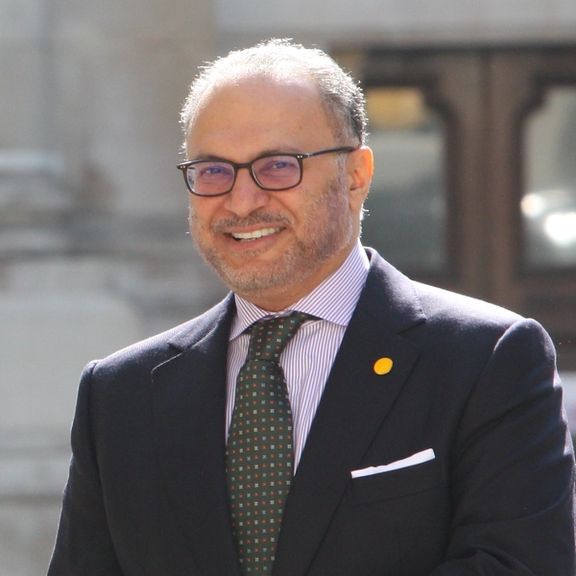
Anwar Gargash, diplomatic adviser to the UAE president. FILE PHOTO

The United Arab Emirates is trying to manage long-running rivalries with Iran and Turkey through dialogue to avoid new confrontations, a senior official said.

Anwar Gargash, diplomatic adviser to the UAE president, told a conference on Saturday there was uncertainty about the United States commitment to the region and concern about a "looming cold war" between Washington and Beijing.

Gulf states, which have strong economic ties with China, are also heavily reliant on the U.S. military umbrella and are closely watching talks between global powers and Iran to revive a 2015 nuclear pact as well as the Taliban's return to power in Afghanistan after the U.S. withdrawal.

"We will see in the coming period really what is going on with regards to America's footprint in the region. I don't think we know yet, but Afghanistan is definitely a test and to be honest it is a very worrying test," Gargash said.

"Part of what we need to do is manage our region better. There is a vacuum and whenever there is a vacuum there is trouble," he told the World Policy Conference.

The UAE has moved to de-escalate tensions by engaging with non-Arab Iran and Turkey, whose influence it had moved to counter in conflicts in Yemen, Libya and elsewhere in the region.

The UAE and Saudi Arabia believe the 2015 nuclear pact was flawed for not addressing Iran's missiles programme and network of regional proxies. The UAE has also moved to combat Islamist groups such as the Muslim Brotherhood which Gulf states see as a threat to their dynastic system of rule.

"Turkey's recent re-examination of its policies towards Egypt, the Brotherhood and towards Saudi Arabia and others is very welcome. And I think for us to come mid-way and reach out is very important," Gargash said.

"The Turks have been very positive about what we are saying to them," he said. "Am I very positive about the reach out to Iran? Yes I am. Am I very positive that Iran will change its regional course? I have to say I am more realistic here, but I am betting Iran is also concerned about vacuum and escalation."

Gargash said the pandemic placed non-political priorities at the forefront and that a main concern now was being caught in between the United States and China.

"We are all worried very much by a looming cold war. That is bad news for all of us, because the idea of choosing is problematic in the international system, and I think this is not going to be an easy ride," he said.

Report by Reuters

Most Viewed

Ghalibaf defends Iran-US talks amid hardline backlash
1
INSIGHT

Ghalibaf defends Iran-US talks amid hardline backlash

2
ANALYSIS

From instability to influence: Pakistan’s pivotal role in US-Iran diplomacy

3
ANALYSIS

100 days on: why Iran’s January protests spread across social classes

4

War-hit homeowners feel abandoned as Iran’s reconstruction aid fades

5
INSIGHT

100 days on: the anatomy of Iran’s January crackdown

Banner
Banner

Spotlight

  • Bread shortages, soaring prices strain households in Iran, residents say
    VOICES FROM IRAN

    Bread shortages, soaring prices strain households in Iran, residents say

  • War-hit homeowners feel abandoned as Iran’s reconstruction aid fades

    War-hit homeowners feel abandoned as Iran’s reconstruction aid fades

  • 100 days on: the anatomy of Iran’s January crackdown
    INSIGHT

    100 days on: the anatomy of Iran’s January crackdown

  • Ghalibaf defends Iran-US talks amid hardline backlash
    INSIGHT

    Ghalibaf defends Iran-US talks amid hardline backlash

  • 100 days on: why Iran’s January protests spread across social classes
    ANALYSIS

    100 days on: why Iran’s January protests spread across social classes

  • From instability to influence: Pakistan’s pivotal role in US-Iran diplomacy
    ANALYSIS

    From instability to influence: Pakistan’s pivotal role in US-Iran diplomacy

•
•
•

More Stories

Iran Leader Warns About 'Military Presence' Of Israel In Azerbaijan

Oct 3, 2021, 11:16 GMT+1
•
Maryam Sinaiee

Iran's Supreme on Sunday warned about Israel's interference or military presence in the Republic of Azerbaijan, amid tensions between the two neighbors.

"The military forces of the region are able to ensure the security of the region and should not allow foreign armies to interfere or have a military presence there to secure their own interests. What is happening in northwestern Iran, in some neighboring countries, should be resolved with the logic of avoiding foreigners' presence," he said.

Khamenei also appeared to be referring to Turkey's alleged role in the current standoff between Iran and Azerbaijan when he warned that "the person who digs a well [to trap] for his brothers is the first one to fall into it". Iranian officials have so far avoided directly referring to Turkey and have mainly focused their attacks on the threat from Israel's involvement.

Last year when the war over Nagorno Karabakh took place between Azerbaijan and Armenia, Iranian officials and military commanders said that there were Israeli elements in the region and that Azerbaijan and Turkey had positioned Syrian jihadist militia in an area close to Iranian borders.

Foreign Minister Hossein Amir-Abdollahian also said in an interview with the state-run broadcaster (IRIB) Saturday evening that Iran will never tolerate the presence and activities of Israel near its borders and threatened to "take due measures accordingly".

Iranian military drills near Azerbaijan's border. October 1, 2021
100%
Iranian military drills near Azerbaijan's border. October 1, 2021

"The Islamic Republic of Iran monitors this situation with sensitivity and determination while having a friendly attitude towards its neighbors, including the Republic of Azerbaijan," he said while accusing Baku of allowing "terrorists" and Israel to find a foothold and be active in Azerbaijan.

Amir-Abdollahian also stressed that Iran will not tolerate "geopolitical change" in the region and at the borders. Iranian authorities have said that a secret alliance is forming between the US, Turkey, Azerbaijan, Armenia and Israel which aims to alter the geopolitics in the region with strategic consequences against Iran and Russia. The concern has resulted from suspicions that Armenia and its premier, Nicol Pashinyan, are willing to accept the US and Turkish promises to allow Yerevan control of northern Karabakh in return for ceding Syunik province to Azerbaijan. This would entail undesirable consequences for both Iran and Russia.

Iran also appears worried about Israel's access to Azerbaijan's military basesand airspace from where it can target Iran's nuclear facilities. Tel Aviv has reportedly been in negotiation with Baku recently to finalize an arms deal worth $2b.

In a tweet in Hebrew Saturday, Secretary of Iran’s Supreme National Security Council Ali Shamkhani urged Azerbaijan to be "vigilant" regarding "foreign influence" in the region. Nour News − a well-placed website close to Shamkhani – on Sunday threatened military action if faced with an Israel threat from Azerbaijan's territory. "Iran considers it a right to act against terrorism and security threats, particularly the activities of the Zionist regime and will never tolerate any such threats," Nour News wrote, adding: "Just in the same way as the joint activities of anti-revolutionary [Kurdish] groups and Mossad in Erbil, Iraq, was responded to with missile and artillery attacks while unequivocally warning that such attacks would continue if anti-revolutionary and terrorist groups continued their mischief."

The Azerbaijani President Ilham Aliyev who angered Iranian military commanders and authorities with his recent criticism of Iran's military drills, on Saturday made some remarks which could be considered as conciliatory. In an interview with EFE, a Spanish news agency, Aliyev said his country supported a 3+3 regional cooperation format consisting of Russia, Iran, Turkey, Armenia, Georgia and Azerbaijan. "If we are able to manage to create this format of cooperation between six countries of the region, that will be the main guarantee against any kind of new hostility," he said.

Iran has held extensive military drills in the past three days involving armored and artillery units, drones and helicopters in its northwestern border area, which was criticized by Azerbaijan. Tehran insists that it has the right to hold military exercises within its borders and the drills were planned and were no threat to its neighbors. Mohammad Pakpour, commander of IRGC ground forces, said Wednesday "neighboring governments "know the reason for the drills better than anyone" and that Iran will not tolerate its neighbors "coming under the influence of third-party countries".

Lawmaker Says Iranians Bought $7 Billion Of Property In Turkey

Oct 3, 2021, 09:54 GMT+1

A senior member of Iran’s parliament has said Sunday that Iranians bought $7 billion of real estate in Turkey in three years, saving it from bankruptcy.

Mojtaba Yousefi member of the parliament’s presidium said that between 2018-2020 Iranians took $7 billion out of the country to buy property, while Turkey has become aggressive toward Iran. In recent days, there has been tensions between Iran and the Republic of Azerbaijan, supported by Turkey.

As US sanctions were imposed in 2018, many well-to-do Iranians tried to protect their capital by taking money out of the country and investing abroad. There is no clear overall figure but numbers between $40-60 billion have been mentioned.

By buying property in Turkey, Iranians hope to gain Turkish citizenship and be able to do business without being restricted by US sanctions that makes it hard for Iranians to even open bank accounts in other countries.

In the past three years, Turkish official figures show Iranians buying more than 3,000 residential unites every year, but purchases of other properties by registered companies is not available.

Hunger-Striking Political Prisoner Passes Out In Iranian Women’s Jail

Oct 2, 2021, 20:50 GMT+1
•
Maryam Sinaiee

The health of political prisoner Soheila Hejab who has been on hunger strike at the notorious Qarchak Prison for women since September 19 has worsened.

A pro-monarchy and anti-hijab activist, Sohelia Hejab passed out twice as she staged a sit-in in a corridor at Qarchak women’s prison, former hunger striker Arash Sadeghi tweeted Saturday evening.

Sadeghi wrote that Hejab, a 30-year-old law graduate who has been on hunger strike since September 19, was wearing a shroud to symbolize her readiness to die.

A member of the royalist group, Constitutional Party of Iran banned by the Islamic Republic, Hejab is protesting against the treatment of political prisoners. Hejab was sentenced to 18 years in July 2020 for "propaganda against the regime", "forming a women's rights group" and "calling for a referendum to change the Constitution", by notorious judge Mohammad Moghiseh. In May 2020 she was arrested again by Revolutionary Guards' Intelligence Organization and was taken to Qarchak Prison for women in the south of the capital to serve her sentence.

On Friday the United States-based Human Rights Activists News Agency (HRANA) reported that Hejab's blood pressure had dropped, and that her stomach “would not even hold water.”

"Her family are seriously worried due to [her hunger strike] and her kidney problems," HRANA wrote. HRANA said prison authorities had on the orders of a judge refused to allow her to receive treatment in a hospital outside the prison.

In a voice message from prison in May 2020 Hejab accused Revolutionary Guard (IRGC) intelligence officers who arrested her of brutality. She said that she had been held by her hair, dragged along the ground, and kicked.

She also said her interrogators from IRGC intelligence at Qarchak threatened to have her killed by dangerous criminals in the jail. She has written a number of letters from prison in which she has defended her political beliefs and criticized the Iranian authorities including Supreme Leader Ali Khamenei.

Hejab was first arrested in Shiraz in January 2018 on charges of assembly, collusion and propaganda against the regime. After five months at Adel-Abad Prison of Shiraz, Hejab who hails from a Kurdish family from Kermanshah was pardoned and freed.She was violently arrested again in June 2019 by IRGC intelligence, taken to Evin prison, and later released on a large bail.

Qarchak prison, also called Shahr-e Rey prison, is a prison for women located in Varamin 30 km south east of Tehran. Other prisoners such as Sepideh Gholian (Qolian), who recently gave a detailed account of mistreatment of women in Bushehr jail in southern Iran, rights activist Nasrin Sotoudeh, and Australian-British academic Kylie-Moore-Gilbert have described conditions at Qarchak as worse than Evin prison where political prisoners are often held.

Security Chief Says Iran Not A Threat To Neighbors Amid Tensions With Baku

Oct 2, 2021, 18:29 GMT+1

As tensions continued between Tehran and the Baku, the secretary of Iran’s security council tweeted that his country has never been a threat to its neighbors.

Ali Shamkhani wrote on Saturday, “Iran in its power and greatness has always been the well-wisher of its neighbors and has never posed a threat to them.”

In recent days tensions have spiked between the two largely Shiite countries as Azerbaijan held military drills with Turkey and Pakistan and detained Iranian truck drivers crossing into Armenian territories near Nagorno Karabakh.

Iran’s military launched its own drills on Friday, massing large numbers of troops and military hardware at its northwestern border. Iranian politicians have been making anti-Baku statements and warning President Ilham Aliyev “not to play with the lion’s tail”.

Shamkhani further said, “Problems will be solved with cooperation and sympathy among regional countries. Any influence by outsiders will bear no fruit except mischief and discord. We call on neighbors to be prudent and keep their distance from them.”

Iran has been accusing Azerbaijan of allowing Israel to establish a presence on its territory.

Tropical Cyclone Hitting Iran At Sea Of Oman

Oct 2, 2021, 15:17 GMT+1

The tropical storm Shaheen in northern Indian Ocean has moved closer to the Sea of Oman, impacting Iran’s southeast region and the coast of Oman on Saturday.

Iranian emergency services ordered many villages to be evacuated in the Sistan-Baluchistan province where two fishing boats anchored near the coast sank as high winds and turbulent seas battered the region.

Oman’s Meteorology service announced that the tropical storm is developing into a tropical cyclone as it nears the region.

Iran’s Chabahar port, a major transit point for good, as well offices and schools were closed on Saturday, the first weekday in the country. Dust storms raised by the storm have blanketed Sistan-Baluchistan and dozens of people visited hospitals to seek medical care.

Iranian meteorologists have forecast winds of more than 110 kilometers and rains dumping 300 millimeters (12 inch) of water in the region.