• العربية
  • فارسی
Brand
  • Iran Insight
  • Politics
  • Economy
  • Analysis
  • Special Report
  • Opinion
  • Podcast
  • Iran Insight
  • Politics
  • Economy
  • Analysis
  • Special Report
  • Opinion
  • Podcast
  • Theme
  • Language
    • العربية
    • فارسی
  • Iran Insight
  • Politics
  • Economy
  • Analysis
  • Special Report
  • Opinion
  • Podcast
All rights reserved for Volant Media UK Limited
volant media logo

What Kind Of A Nuclear Deal Hardliners In Iran Seek?
Oct 2, 2021, 09:16 GMT+1Updated: 14:38 GMT+1
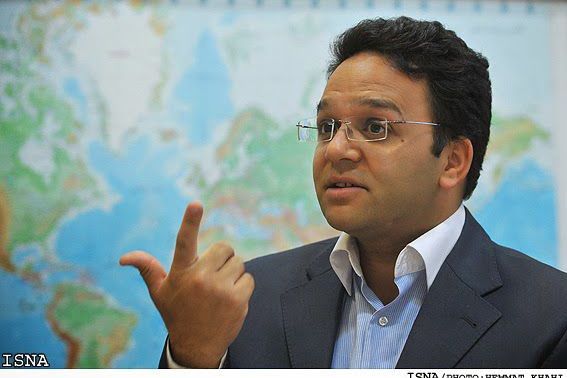
Rahman Ghahremapour, international relations expert in Iran. FILE PHOTO

Iran’s hardliners keep silence about the nuclear talks because they are engaged in discussions among themselves, a top political expert in Iran has said.

Rahman Ghahremanpour, an analyst of Middle East politics told ISNA news website on Saturday that the ruling hardliners are deliberating what to do about the talks and if they have to make concessions, how to present it to the public.

President Ebrahim Raisi (Raeesi) during his campaign avoided negative statements on the Joint Comprehensive Plan of Action (JCPOA, because his team knew that public opinion was in favor of a deal that would lift the sanctions, the expert argued. They also believed that a deal was imminent, and they stopped the Vienna talks in June until they would form a government and with consensus already existing among hardliners, they would finalize a deal with the West.

Ghahremanpour also argued that foreign minister Hossein Amir-Abdollahian’s tough positions during his trip to New York in September was meant for the local political environment to show toughness to Iranian hardliners. That did not mean a change of position by Raisi and his government to turn their backs to talks.

This expert’s views could be one aspect of the dynamics taking place in Iran, but he did not mention Supreme Leader Ali Khamenei’s commanding role in the nuclear issue, and the fact that if the Leader decided to return to the talks, most certainly hardliners would fall behind the decision. It could also be the case that Khamenei is the one who cannot decide how to make concessions after bashing the West for years as untrustworthy and deceptive.

Ghahremanpour insisted that “the regime’s policy is still to reach an agreement, but it should be a defensible agreement,” in terms of public opinion. Hardliners should be able to defend any agreement they make.

Given the fact that public opinion in Iran is in favor of a deal, it is not clear why the hardliners are hesitating. Ghahremanpour does not explain this, but he could be referring to the public questioning concessions in the sense that if the regime had to retreat on many issues why it did not reach an agreement earlier and avoid the economic pain that has impoverished more than half of the population.

Ghahremanpour mentions a possible quandary hardliners faced. He says that for eight years they attacked every move former president Hassan Rouhani made. Now, Raisi needs an agreement because the economic situation is untenable but how the hardliners can explain concessions they were criticizing during Rouhani’s two terms.

Ghahremanpour also confirms a suspicion many observers had in the spring during the presidential campaign that hardliners were preventing an agreement in Vienna because they did not want Rouhani to take the credit.

“An agreement that is in the interest of the regime is not necessarily defensible for hardliners,” he said, adding that it is now very clear that if Raisi’s team had allowed Rouhani to reach an agreement before the June elections, it would have made life easier for the new government.

He went on to say that finalizing and executing an agreement is much harder than hardliners could imagine. “The JCPOA seems to be like picking a fruit that has ripened on the tree. All you need to do is reach out and grab it,” Gharemanpour said, but that is exactly what eluded former foreign minister Mohammad Javad Zarif.

Now, hardliners are stuck between the outcomes that former presidents Ahmadinejad and Rouhani experienced in the nuclear issue, he said, but Raisi has to make up his mind. “They cannot delay an agreement for long. They either have to abandon the idea of an agreement, which would be a costly decision, or they should come up with a roadmap for negotiation,” Ghahremanpour said.


Most Viewed

Ideology may be fading in Iran, but not in Kashmir's ‘Mini Iran'
1
INSIGHT

Ideology may be fading in Iran, but not in Kashmir's ‘Mini Iran'

2
INSIGHT

Hardliners push Hormuz ‘red line’ as US blockade tests Iran’s leverage

3
VOICES FROM IRAN

Hope and anger in Iran as fragile ceasefire persists

4

US sanctions oil network tied to Iranian tycoon Shamkhani

5

Iran halts petrochemical exports to supply domestic market

Banner
Banner

Spotlight

  • Hardliners push Hormuz ‘red line’ as US blockade tests Iran’s leverage
    INSIGHT

    Hardliners push Hormuz ‘red line’ as US blockade tests Iran’s leverage

  • Ideology may be fading in Iran, but not in Kashmir's ‘Mini Iran'
    INSIGHT

    Ideology may be fading in Iran, but not in Kashmir's ‘Mini Iran'

  • War damage amounts to $3,000 per Iranian, with blockade set to add to losses
    INSIGHT

    War damage amounts to $3,000 per Iranian, with blockade set to add to losses

  • Why the $100 billion Hormuz toll revenue is a myth
    ANALYSIS

    Why the $100 billion Hormuz toll revenue is a myth

  • US blockade targets Iran oil boom amid regional disruption
    ANALYSIS

    US blockade targets Iran oil boom amid regional disruption

  • Iran's digital economy battered by prolonged blackout
    INSIGHT

    Iran's digital economy battered by prolonged blackout

•
•
•

More Stories

Blinken Repeats Warning, 'Time Is Running Out On Talks With Iran'

Oct 1, 2021, 09:28 GMT+1

US Secretary of State Antony Blinken reiterated on Thursday that “the ball remains” in Iran’s court regarding an agreement to revive the 2015 nuclear deal, JCPOA.

Speaking to reporters in Pittsburgh, Pennsylvania, Blinken repeated that time is running out for resuming productive negotiations, as Iran builds up its stockpile of enriched uranium.

“Because of the work that Iran is doing on its nuclear program in violation of the JCPOA – spinning more sophisticated centrifuges, building up stockpiles of uranium enriched to 20 percent or even 60 percent – simply getting back to the terms of the JCPOA at some point will not be sufficient to recapture the benefits of the agreement because of the progress Iran has made,” Blinken said.

Iran began violating enrichment levels in 2019, set by the JCPOA, as retaliation against sanctions imposed by the former US administration that withdrew from the agreement in 2018.

President Joe Biden announced his intention to return to the nuclear agreement during last year’s presidential campaign, which would entail lifting tough sanction the Trump administration had imposed.

In April, talks began in Vienna between Iran and world powers who have remained in the agreement. The US participated in the talks indirectly, as Tehran refused to negotiate directly with Washington. But the talks were suspended in June after a new president was chosen in Iran. So far, more than a month after the formation of a government, Iran has still not returned to the talks, saying that it is studying the issue.

In response to a question about reports that Washington has appealed to Beijing to reduce its oil purchases from Iran to pressure it to return to the talks, Blinken spoke generally of the role other world powers need to play in to “prevail upon Iran to quickly return and see if we can still get back to the JCPOA.”

“So, there is a limited runway on that and the runway is getting shorter,” Blinken said.

Iran Nuclear Talks To Resume In Acceptable Period Of Time, EU Says

Sep 30, 2021, 14:46 GMT+1

Stalled talks between Iran and world powers to reinstate a 2015 nuclear deal will resume "soon", the European Union's foreign policy chief Josep Borrell said on Thursday.

Speaking at a news conference in the Qatari capital Doha, Borrell was referring to indirect talks between Tehran and Washington in Vienna that began in April and were suspended by Iran two days after hardline cleric Ebhraim Raisi (Raeesi) won Iran’s presidential election in June. Iran first said it needed time to form a government but more than a month has passed since a cabinet was formed. Tehran now says it is evaluating the previous rounds of negotiations.

Borrell said he believed the negotiations aimed at bringing back Tehran and Washington into full compliance with the agreement will resume "within an acceptable period of time".

After former US President Donald Trump ditched the deal three years ago and reimposed sanctions on Iran, Tehran has been rebuilding stockpiles of enriched uranium, enriching it to higher levels of fissile purity and installing advanced centrifuges to speed up production.

President Joe Biden aims to restore the deal, but the sides disagree on which steps need to be taken and when, with the key issues being what nuclear limits Tehran will accept and what sanctions Washington will remove.

Western powers have urged Iran to return to negotiations and said time is running out as Tehran's nuclear program is advancing well beyond the limits set by the deal.

Tehran says its nuclear steps are reversible if Washington lifts all sanctions. Iranian and Western officials have said many issues remain to be resolved before the accord can be revived.

Echoing Iran's official stance, Iran's foreign ministry spokesman told Le Monde newspaper that "Iran has reached conclusion that we certainly will return to the nuclear talks" in Vienna.

Saeed Khatibzadeh added that Iran would not "waste an hour before returning to Vienna talks once a re-evaluation of the sixth round of the nuclear talks" is completed by Raisi's government.

Despite Iran's need to bolster its economy by negotiating an end to US sanctions, insiders expect Raisi to adopt a tougher line when the talks resume.

France said it is counting on China, which has close ties to Tehran, to use its most "convincing arguments" with Iran to get Tehran back to nuclear talks, French Foreign Ministry spokeswoman Anne Claire Legendre said in a response to a Reuters question.

European officials say they are determined to keep unity among the parties to the nuclear deal - China, France, Russia, Britain, Germany and the United States - but have become increasingly concerned about China’s role.

US and European officials have said that the United States has reached out to China about reducing its purchases of Iranian crude oil.

Report by Reuters

Under Pressure From Hardliners Iran Health Ministry Rules Out Pfizer Vaccines

Sep 30, 2021, 08:18 GMT+1
•
Maryam Sinaiee

Iran’s health ministry said Tuesday that use of the China’s Sinopharm Covid-19 vaccine would continue for pregnant women and ruled out the United States-made Pfizer.

A ministry statement said the issue had been discussed at the cross-government National Vaccination Committee. Health minister Bahram Eynollahi had said on September 23 that some US-made vaccines would be imported for vaccinating expectant mothers but would not be generally available.

Data over vaccines in pregnancy has been limited. While a major study earlier in the year deemed the US-made Pfizer and Moderna safe for expectant mothers, the World Health Organization has also recommended they receive Sinopharm.

A few days ago, Fars news agency, which is affiliated to the Revolutionary Guards (IRGC), launched an online campaign against importing Pfizer vaccines. On Tuesday Fars quoted Professor Ali Karami, a controversial biotechnology professor at the IRGC Baqiyatallah University of Medical Sciences, saying the Pfizer vaccine contained a "group of genes" that could affect the recipient’s DNA. "Professor Karami's statement is a warning to take immediate action and not to put pregnant mothers and the future generation at risk," Fars noted.

Karami who has advocated other conspiracy theories in the past and ardently opposes the use of US-made vaccines claims that the US has created a vaccine to reduce religious fundamentalism with which the Pentagon could vaccinate large populations in the Middle East. "The virus in this vaccine purportedly has been tested and shown to reduce fundamentalism and religiosity in all who are infected by damaging what is called the GOD gene," Karami said at a conference in 2016.

Iran has now fully vaccinated 17 percent of the population, according to figures from John Hopkins University. Daily Covid deaths peaked at around 700 in August during a fifth wave of the pandemic but in recent weeks have fallen to under 300.

According to the latest figures released by the health ministry, 37.7 million of 84 million Iranians have received one dose and 16 million both doses of the Covid vaccine, a total of 53.8 million.

Many hardliner political, military and media figures in Iran welcomed Supreme Leader Ali Khamenei’s January 8 order to ban importing the US-made Pfizer and Moderna, and British-made AstraZeneca, vaccines based on conspiracy theories that the West can contaminate the vaccines to harm Iranians.

While many hardliners supported Khamenei’s decision, as they usually do in all matters, Pfizer, Moderna, and AstraZeneca were at the time the only Covid vaccines provided through the World Health Organization’s Covax facility.

On August 16, the head of Iran's Food and Drug Administration (FDA), Mohammad-Reza Shanehsaz, said a permit had been issued to import Pfizer and Moderna vaccines. Shanesaz stressed that Khamenei's concerns were being addressed and that while any source should be reliable "a vaccine's name" was not sufficient reason to stop its import.

UN Nuclear Chief Wants Sit Down With Iran’s President Raisi

Sep 29, 2021, 17:47 GMT+1

Iran took up half of a BBC Hardtalk interview broadcast Tuesday with Rafael Mariano Grossi, head of the International Atomic Energy Agency (IAEA).

Pressed by interviewer Zeinab Badawi, Grossi defended the value of on-going inspections of Iran’s nuclear sites despite criticism from the IAEA, the United States, and Europe of Tehran limiting agency access, particularly to the Karaj workshop where centrifuges – devices for enriching uranium – are made.

Grossi said he would soon return to Tehran for further discussions, where he hoped to “get to know” and “sit down with” either new president Ebrahim Raisi (Raeesi) or new foreign minister Hossein Amir-Abdollahian.

Despite disagreement over Karaj, Grossi said the agency remained an essential international presence both in “regular” monitoring under the Nuclear Non-Proliferation Treaty (NPT) and under a temporary arrangement that Grossi agreed in February after Tehran decided to scale back the agency’s access.

The IAEA, he said, still had “indispensable monitoring and verification capabilities that would allow us to store and to keep very important information in terms of uranium enrichment…[and] the production of centrifuges.”

While Iran has allowed the IAEA to service equipment in other sites, under the February arrangement renewed on September 12, it barred this in Karaj on September 16, due Tehran says to continuing security investigations at the facility after a drone attack in June.

Grossi stressed to Hardtalk the link between continuing agency inspections and efforts in Vienna talks to revive Iran’s 2015 nuclear agreement with world powers, the JCPOA (Joint Comprehensive Plan of Action). “We are the guarantors…of whatever is agreed,” he noted.

IAEA monitoring offered, he said “a full picture as can be obtained under the circumstances” with “no interruption.” With a “vast” inspection effort, Grossi said, “we are present at all the facilities that Iran has, we have inspections every day of the year.”

In 2019, the year after former US president Donald Trump left the JCPOA and imposed ‘maximum pressure’ sanctions, Iran began expanding its nuclear program, including enriching uranium to 60 percent, far above the 3.67 percent allowed under the JCPOA, and this year scaled back IAEA monitoring to that required under the NPT and that agreed in February.

The last detail

“What makes the present moment so important…is that if we were to be limited in the scope, in the access, that we have to Iran, then we would start losing ground and start losing the capability to know exactly what is happening to the last detail,” Grossi told Hardtalk. “[We now know] by the gram how much uranium enrichment is taking place.”

Asked why he apparently failed to convince some regional leaders over his efforts – the BBC’s Badawi cited Israeli prime minister Naftali Bennett saying Iran was crossing ‘red lines’ – Grossi said there was a “political” view that “Iran having capabilities in the nuclear area is a danger in itself.”

This was not however the basis of the JCPOA, Grossi noted, under which signatories agreed to Iran conducting a nuclear program within prescribed limits.

Grossi insisted he would continue to call on Iran to abide by the September 12 agreement, including servicing equipment at Karaj. He said Iran had agreed that he would return “very soon” to Tehran to continue discussions.

Noting that the new Raisi administration had “firm views” on the nuclear program, Grossi concluded: “We need to get to know each other. I need to sit down with them. I want to listen to them, and I hope they would also listen to me.”





