• العربية
  • فارسی
Brand
  • Iran Insight
  • Politics
  • Economy
  • Analysis
  • Special Report
  • Opinion
  • Podcast
  • Iran Insight
  • Politics
  • Economy
  • Analysis
  • Special Report
  • Opinion
  • Podcast
  • Theme
  • Language
    • العربية
    • فارسی
  • Iran Insight
  • Politics
  • Economy
  • Analysis
  • Special Report
  • Opinion
  • Podcast
All rights reserved for Volant Media UK Limited
volant media logo

US And Qatar Target Hezbollah With New Sanctions
Sep 29, 2021, 21:30 GMT+1Updated: 15:18 GMT+1

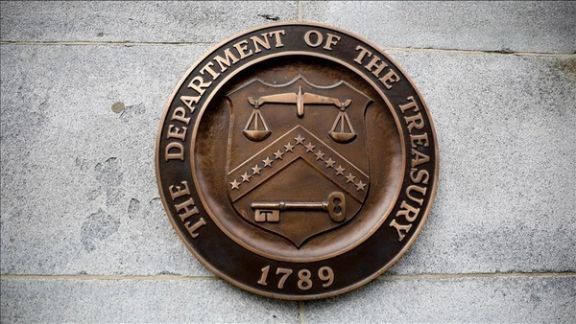
The US Treasury Department Wednesday announced sanctions on a Hezbollah financial network based in the Arabian Peninsula, with support from Qatar.

In the release, the US government noted that it designated these individuals and entities in “coordinated actions” with Qatar.

Among the designations were Ali Reda Hassan al-Banai (Ali al-Banai), Ali Reda al-Qassabi Lari, and Abd al-Muayyid al-Bani. They were all sanctioned as Specially Designated Global Terrorists under Executive Order 13224 for having materially assisted, sponsored, or provided financial, material, or technological support for, or goods or services to or in support of, Hezbollah. The US government sanctioned the Iran-backed Party of God as a Foreign Terrorist Organization in 1997 and as a Specially Designated Global Terrorist in 2001.

The US Treasury Department revealed that Ali al-Banai and Lari “have secretly sent tens of millions of dollars” to Hezbollah “through the formal financial system and cash couriers.” It documented how both men met with Hezbollah officials during their trips to Lebanon and Iran. One particularly noteworthy finding by the US Treasury Department was that Ali al-Banai started contributing to Hezbollah through a Kuwait-based branch of the Martyrs Foundation, which is an Iranian parastatal organization that Tehran uses to finance its proxies and partners throughout the Middle East.

Additional targets included Abd al-Rahman Abd al-Nabi Shams, Yahya Muhammad al-Abd-al-Muhsin, Majidi Fa’iz al-Ustadz, and Sulaiman al-Banai, who were also sanctioned under Executive Order 13224 for providing services to Ali al-Banai. Likewise, Qatar-based AlDar Properties was sanctioned for being owned, controlled, or directed by, directly or indirectly, Sulaiman al-Banai.

Today’s sanctions designations are significant for two reasons. The first concerns the recent Iranian shipments of fuel, arranged by Hezbollah, to Lebanon. The fuel has been allowed to transit through Syria without incident, despite likely sanctions violations. Thus, the US government is signaling its readiness to crack down on Hezbollah’s broader financial networks even while appearing to turn a blind eye to the Iranian fuel being trucked across Syria into Lebanon. Indeed, this is the second time in September alone the US government has levied sanctions targeting Hezbollah. Such timing is not a coincidence given the broader fuel exchange underway with Tehran.

Second, Qatar’s role here is important, given charges that it is a permissive environment for terrorist financing. In recent months, the Israeli government reportedly provided intelligence to Washington that Doha was funding Iran’s Islamic Revolutionary Guard Corps (IRGC). Qatar, a longtime partner of the United States, thus may have taken a parallel action against this Hezbollah network to buy goodwill in the United States in thwarting this illicit activity.


Most Viewed

Hardliners push Hormuz ‘red line’ as US blockade tests Iran’s leverage
1
INSIGHT

Hardliners push Hormuz ‘red line’ as US blockade tests Iran’s leverage

2

Iran International says it won’t be silenced after London arson attack

3
VOICES FROM IRAN

Hope and anger in Iran as fragile ceasefire persists

4

US sanctions oil network tied to Iranian tycoon Shamkhani

5

Iran halts petrochemical exports to supply domestic market

Banner
Banner

Spotlight

  • Hardliners push Hormuz ‘red line’ as US blockade tests Iran’s leverage
    INSIGHT

    Hardliners push Hormuz ‘red line’ as US blockade tests Iran’s leverage

  • Ideology may be fading in Iran, but not in Kashmir's ‘Mini Iran'
    INSIGHT

    Ideology may be fading in Iran, but not in Kashmir's ‘Mini Iran'

  • War damage amounts to $3,000 per Iranian, with blockade set to add to losses
    INSIGHT

    War damage amounts to $3,000 per Iranian, with blockade set to add to losses

  • Why the $100 billion Hormuz toll revenue is a myth
    ANALYSIS

    Why the $100 billion Hormuz toll revenue is a myth

  • US blockade targets Iran oil boom amid regional disruption
    ANALYSIS

    US blockade targets Iran oil boom amid regional disruption

  • Iran's digital economy battered by prolonged blackout
    INSIGHT

    Iran's digital economy battered by prolonged blackout

•
•
•

More Stories

UN Nuclear Chief Wants Sit Down With Iran’s President Raisi

Sep 29, 2021, 17:47 GMT+1

Iran took up half of a BBC Hardtalk interview broadcast Tuesday with Rafael Mariano Grossi, head of the International Atomic Energy Agency (IAEA).

Pressed by interviewer Zeinab Badawi, Grossi defended the value of on-going inspections of Iran’s nuclear sites despite criticism from the IAEA, the United States, and Europe of Tehran limiting agency access, particularly to the Karaj workshop where centrifuges – devices for enriching uranium – are made.

Grossi said he would soon return to Tehran for further discussions, where he hoped to “get to know” and “sit down with” either new president Ebrahim Raisi (Raeesi) or new foreign minister Hossein Amir-Abdollahian.

Despite disagreement over Karaj, Grossi said the agency remained an essential international presence both in “regular” monitoring under the Nuclear Non-Proliferation Treaty (NPT) and under a temporary arrangement that Grossi agreed in February after Tehran decided to scale back the agency’s access.

The IAEA, he said, still had “indispensable monitoring and verification capabilities that would allow us to store and to keep very important information in terms of uranium enrichment…[and] the production of centrifuges.”

While Iran has allowed the IAEA to service equipment in other sites, under the February arrangement renewed on September 12, it barred this in Karaj on September 16, due Tehran says to continuing security investigations at the facility after a drone attack in June.

Grossi stressed to Hardtalk the link between continuing agency inspections and efforts in Vienna talks to revive Iran’s 2015 nuclear agreement with world powers, the JCPOA (Joint Comprehensive Plan of Action). “We are the guarantors…of whatever is agreed,” he noted.

IAEA monitoring offered, he said “a full picture as can be obtained under the circumstances” with “no interruption.” With a “vast” inspection effort, Grossi said, “we are present at all the facilities that Iran has, we have inspections every day of the year.”

In 2019, the year after former US president Donald Trump left the JCPOA and imposed ‘maximum pressure’ sanctions, Iran began expanding its nuclear program, including enriching uranium to 60 percent, far above the 3.67 percent allowed under the JCPOA, and this year scaled back IAEA monitoring to that required under the NPT and that agreed in February.

The last detail

“What makes the present moment so important…is that if we were to be limited in the scope, in the access, that we have to Iran, then we would start losing ground and start losing the capability to know exactly what is happening to the last detail,” Grossi told Hardtalk. “[We now know] by the gram how much uranium enrichment is taking place.”

Asked why he apparently failed to convince some regional leaders over his efforts – the BBC’s Badawi cited Israeli prime minister Naftali Bennett saying Iran was crossing ‘red lines’ – Grossi said there was a “political” view that “Iran having capabilities in the nuclear area is a danger in itself.”

This was not however the basis of the JCPOA, Grossi noted, under which signatories agreed to Iran conducting a nuclear program within prescribed limits.

Grossi insisted he would continue to call on Iran to abide by the September 12 agreement, including servicing equipment at Karaj. He said Iran had agreed that he would return “very soon” to Tehran to continue discussions.

Noting that the new Raisi administration had “firm views” on the nuclear program, Grossi concluded: “We need to get to know each other. I need to sit down with them. I want to listen to them, and I hope they would also listen to me.”

Iranian News Agency Denies Security Chief Met With Senior Saudi Official

Sep 29, 2021, 16:49 GMT+1

An Iranian news website has denied that national security council secretary Ali Shamkhani has met with a senior Saudi official.

Iran’s Nour News close to the national security council has denied recent reports that Ali Shamkhani, secretary of the council, has met with a top Saudi official.

Quoting “an informed source” at Iran’s Supreme National Security Council, Nour News said, “There have been no meetings or contacts between Ali Shamkhani, Secretary of the Security Council, and Saudi officials.”

The denial issued on Wednesday was apparently a response to reports on social media that said Shamkhani had met with Adel Jubair, advisor to Saudi Arabia’s foreign ministry. Nour News added that there are no plans for a meeting.

Iranian and Saudi officials had a series of meeting in Baghdad in April with Iraqi mediation to reduce their long-running tensions. At the time, it was rumored that Shamkhani was the lead negotiator meeting with Saudis.

In the past two days, reports by news agencies have indicated that a new meeting between Iranian and Saudi ministers has taken place in Baghdad, but did not offer any details.

Saudi Arabia cut diplomatic relations with Iran in early 2016, after mobs attacked and ransacked its diplomatic missions in Iran.

A regional summit convened in Baghdad in September included the foreign ministers of Iran and Saudi Arabia but no bilateral meetings between the sides was reported.

Khamenei Appoints New Iran State TV Chief Amid Decreasing Viewership

Sep 29, 2021, 15:08 GMT+1

Iran's Supreme Leader Ali Khamenei appointed a new chief at the state TV, which suffers from loss of audience due to political and cultural censorship.

The Islamic Republic's Supreme Leader Ali Khamenei appointed Payman Jebelli, as the new chief of Iran's national broadcaster, the Islamic Republic Broadcasting Organization (IRIB) on Wednesday, putting an end to months of speculation about IRIB's top management.

Nearly in all assessment since March, Jebelli was the most likely candidate for the post. News sources including Noor News, affiliated with the Iranian Supreme Council of National Security (SCNS) had named Jebelli, a seasoned news director at the IRIB as the most likely person to replace former director Abdolali Aliaskari whose tenure ended in April.

The announcement about Jebelli's appointment was reportedly delayed because of the presidential election, but it comes at a tough time for the broadcaster that is losing viewership.

Jebelli, born in 1966, a former Iranian Ambassador to Tunisia, has been the director of Iran's rolling news channel in English Press TV and the deputy IRIB Chief for the national broadcaster's external services that are closely linked to the IRGC Qods (Quds) Force. As external services director since 2016 has been overseeing broadcasts in several languages to the Middle East, Europe, North America and Latin America.

His earlier position as news director required close links to Khamenei's office where all decisions including coverage policy and appointment of the organization's top managers are made.

Recently, Iranian conservative journalists revealed that Jebelli, a long-time political analyst on the IRIB was "the informed source" that Press TV got its often controversial news about nuclear negotiations with the P5+1 from. Jebelli, of course, is no stranger to Iran's nuclear issues, as he was the Iranian chief negotiator Saeed Jalili's deputy for news dissemination a decade ago.

This position gave him a reputation as a hardliner, while his decisions at the IRIB have often been made based on organizational needs rather than political affiliation. Otherwise, based on his analysis, he has been an “open-minded conservative who believed in openness and transparency.” This characteristic is most evident in one of the programs he has launched on the state television's Channel 2. The program, Special Interview, is usually broadcast after the evening news and depending on who is conducting the interview, most of the time it challenges Iranian politicians by asking tough questions.

Khamenei praised Jebelli for his religious and revolutionary devotion, as well as his expertise and long experience at the IRIB and his thorough knowledge of the national broadcasters' responsibilities. Part of his mandate, as spelled out by Khamenei, includes: "strengthening Iranians' national identity, promoting the Islamic-Iranian lifestyle, advocating national solidarity and raising the bar for qualitative standards in programming."

This is a mandate difficult to accomplish with the extent of censorship that prevails in IRIB programming. Last week, a set of new censorship rules dictated that in no IRIB program men should pour tea for women, and no two men can be seen together in a home, lest it ignites ideas in people’s heads. Men and women alone is out of question.

Meanwhile, Jebelli is starting his mandate as IRIB chief while an opinion poll conducted by the state-run ISPA polling agency said the viewership of IRIB news has been constantly declining during the past five years, and that even between March and September 2021, its popularity dropped from 57.7 percent to 42.1 percent.

Furthermore, the poll revealed that most of those who turn to the IRIB for news and current affairs are less educated Iranians of 50 years of age or older, as disillusioned young Iranians turn to social media for getting the news.

Iran Claims 'Terror' Group Backed By US And Israel Demolished

Sep 29, 2021, 14:09 GMT+1

Iranian intelligence claimed September 28 that a "terror" group was uncovered and showed "confessions" of a few people, linking the plot to the US and Israel.

Iran’s intelligence ministry and the state television have reported about the demolition of “terrorist” group and the killing of its leader, saying they were engaged in plots directed by “enemies”.

The ministry said the group “directed and supported by enemy intelligence services” intended “to engage in sabotage operations” in Iran.

The intelligence ministry did not mention any country, but the state television, controlled by Supreme Leader Ali Khamenei, broadcast a documentary after the news was announced, referring to the meeting last week of US President Joe Biden and Israeli Prime Minister Naftali Bennett. It said that the US and Israel were behind the group.

The documentary also alleged that Bennett told Biden about the strategy of “death by a thousand knife wounds” in regards with Iran.

Iran has been the target of several high-profile sabotage operations since July 2020 attributed to Israel.

The documentary also showed self-incriminatory “confessions” of a few men and women who said they intended “to engage in acts of sabotage”.

Iranian intelligence services and the state television periodically claim “terror” plots were uncovered and underground groups arrested, but rarely they produce any evidence or follow up with news about investigations or trials.

Saudi Nuclear Program Should Face Full UN Inspection: Iran Official

Sep 29, 2021, 11:58 GMT+1
•
Maryam Sinaiee

As top US officials variously meet leading Saudis, Iran’s deputy foreign minister calls for Riyadh to open its atomic sites to full inspection and for Israel to sign NPT.

Iran's Deputy Foreign Minister Reza Najafi Tuesday urged Saudi Arabia to be transparent over its nuclear activities and open up the access of the United Nations’ International Atomic Energy Agency (IAEA).

Najafi rejected remarks by Saudi Foreign Minister Prince Faisal bin Farhan earlier Tuesday to the UN General Assembly criticising “Iran's continued breaches and violations of international agreements and treaties related to the nuclear agreement, and its escalation of its nuclear activities in addition to research and development activities.”

Addressing the UN General Assembly’s high-level meeting held to commemorate and promote International Day for the Total Elimination of Nuclear Weapons (September 26), Najafi said Iran rejected the retention, stockpiling, development, use, and proliferation of nuclear arms.

Iran is in a dispute with the International Atomic Energy Agency (IAEA) over traces of previously undeclared radioactive material that it has failed to fully explain and over monitoring access to the UN nuclear watchdog.

Reza Najafi, Iran's Deputy Foreign Minister for legal affairs
100%
Reza Najafi, Iran's Deputy Foreign Minister for legal affairs. FILE PHOTO

It has also been enriching uranium to 60 percent and stockpiling it in violation of the 2015 nuclear agreement with world powers.

Najafi condemned the modernization and strengthening of nuclear arsenals by the United States and other nuclear-weapon states in violation of their arms-reduction commitments under the Nuclear Non-Proliferation Treaty (NPT). Najafi said Israel continued to "threaten peace and security in the Middle East and beyond through its clandestine nuclear program," and urged the world to invite Israel to join the NPT and place its nuclear facilities under IAEA monitoring.

Unlike Israel, which is believed to hold around 180 nuclear bombs, both Iran and Saudi Arabia are NPT signatories. Saudi Arabia – which has no nuclear reactor but reportedly past nuclear links with both Iraq and Pakistani scientist AQ Khan – has limited the Safeguards access of the IAEA under a ‘small quantities protocol.’

Referring to a 2018 interview with the US CBC's 60 Minutes program in which Saudi Crown Prince Mohammed bin Salman suggested Riyadh might adopt nuclear weapons if Iran developed one, Iran's state-run English channel Press TVand Tasnim news agency both claimed Wednesday that there is “international concern” over Saudi Arabia’s nuclear ambitions.

Saudi Arabia backed former United States president Donald Trump’s 2018 withdrawal from Iran’s 2015 deal with world powers limiting its nuclear program – the JCPOA, Joint Comprehensive Plan of Action. The new administration of President Joe Biden has continued Trump’s ‘maximum pressure’ sanctions as Iran has continued to expand its atomic program with steps that began in 2019.

Prince Faisal this week met with US special envoy for Iran Robert Malley on the sidelines of the UN General Assembly to discuss recent developments in Iran's nuclear case. US National Security Advisor Jake Sullivan met with Saudi Arabia’s Crown Prince Mohammed bin Salman in Saudi Arabia Tuesday to discuss Yemen and Iran - the White House kept Sullivan’s visit low-profile and no photos were issued.

In his speech to the annual UN General Assembly last week, Saudi Arabia's King Salman bin Abdulaziz expressed hope that continuing talks with Iran, brokered by Baghdad, to restore relations would build confidence. The kingdom cut diplomatic ties in 2016 when protestors attacked its Tehran embassy after Riyadh executed 47 dissidents including leading Shi'ite cleric Sheikh Nimr al-Nimr.






