Iran judge says asset seizures will weaken diaspora’s anti-regime protests
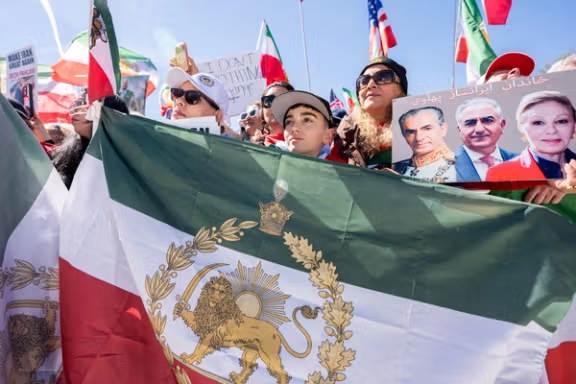
Confiscations of assets belonging to exiled Iranians will weaken their protests in front of the Islamic Republic’s embassies overseas, a judge said on Tuesday.
Confiscations of assets belonging to exiled Iranians will weaken their protests in front of the Islamic Republic’s embassies overseas, a judge said on Tuesday.
“When an expatriate sees that a home, shop or any other asset they owned in Tehran, Isfahan or any other Iranian city has been seized, anti-Iran gatherings outside embassies of European and American countries clearly become emptier, weaker and more hopeless,” said the head of Isfahan province’s judiciary, according to judiciary-linked Mizan News.
Asadollah Jafari described the seizures as a judicial tool to counter what he called “the enemy’s economic and media war.”
Iranian judicial authorities have been ordering the seizure of assets belonging to dozens of people, many living abroad, over allegations of cooperation with Israel and actions against national security.
Since the January protests, Iranians abroad have held regular demonstrations outside Iran’s embassies and consulates in Europe, North America and elsewhere, often in support of protesters inside Iran and against the Islamic Republic’s crackdown.
Jafari said the confiscation of assets belonging to expatriates are aimed at having a “deterrent effect.”





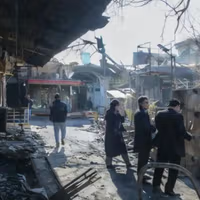

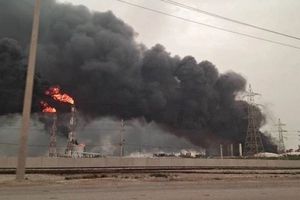
Officials in Khuzestan province said the facility was hit during Israeli attacks, with reports indicating damage to chlorine-related units and storage facilities. Any prolonged disruption could affect both domestic supply chains and exports from one of Iran's most important petrochemical hubs.
Karoon is located in Mahshahr, home to a concentration of petrochemical facilities that form a major pillar of Iran's non-oil economy.
Links to the IRGC
Karoon is owned by Persian Gulf Petrochemical Industries Company (PGPIC), Iran's largest petrochemical holding group.
The United States sanctioned PGPIC and dozens of affiliated companies in 2019, saying the group generated billions of dollars that helped finance the Islamic Revolutionary Guards Corps and its construction arm, Khatam al-Anbiya.
According to the US Treasury, PGPIC subsidiaries worked with Khatam al-Anbiya through engineering, construction and financing contracts worth hundreds of millions of dollars. Washington said revenue from the petrochemical sector provided an important source of funding for the IRGC's military activities.
The Guards have long maintained a significant presence in Iran's energy and industrial sectors through a network of companies, contractors and affiliated organizations that oversee major infrastructure projects and benefit from export revenues.
Role in missile-related industries
Petrochemical facilities are primarily civilian enterprises, but some of their products can have military applications.
Chemical compounds produced in Mahshahr and other petrochemical centers such as Assaluyeh can be used as precursor materials in the production of propellants and other components associated with missile programs.
During previous operations targeting industrial facilities in the Mahshahr area, Israel said sites in the region were involved in producing materials used by Iran's missile program.
Israeli military officials said on Monday that one of their objectives was to destroy infrastructure used to manufacture raw materials essential for ballistic missile production.
The dual-use nature of petrochemical production means facilities can simultaneously support civilian industries while supplying materials that may have military applications.
Critical supplier for domestic industry
Despite scrutiny over military links, Karoon remains one of the most important suppliers to Iran's civilian manufacturing sector.
The company is the region's only producer of isocyanates, advanced chemical compounds used in the production of polyurethane materials.
These products serve as the foundation for a wide range of industrial and consumer goods, including insulation, adhesives, coatings, automotive components, footwear, furniture and household appliances.
Karoon receives feedstock such as benzene and toluene from neighboring petrochemical plants and combines them with chlorine, carbon monoxide and hydrogen to produce isocyanates and related products.
The facility's strategic importance increased after the implementation of the HYCO (Hydrogen and Carbon Monoxide) project, which enabled domestic production of carbon monoxide and hydrogen and reduced dependence on imported supplies.
Impact on supply chains and exports
Industry experts say damage to chlorine production units could have consequences beyond the immediate facility.
Chlorine is essential for the production of phosgene, a key intermediate chemical used in manufacturing isocyanates. Any interruption to chlorine supplies can halt downstream production, affecting multiple industries dependent on polyurethane products.
The effects could extend throughout the Mahshahr industrial zone, disrupting manufacturers that rely on Karoon's output.
Karoon also serves export markets. The company ships products including aniline to India and sells other chemical products to customers in Turkey, Russia and neighboring countries.
Those exports have helped Iran maintain a regional presence in specialty chemical markets while generating valuable foreign currency earnings.
A strategic target
The strike illustrates how Iran's petrochemical sector occupies a position at the intersection of economic and security concerns.
For Tehran, facilities such as Karoon support industrial self-sufficiency, exports and employment. For Israel and Western governments, parts of the sector are viewed as supporting broader military and missile-related capabilities through financial links to the IRGC and the production of dual-use materials.
As a result, major petrochemical complexes have become increasingly significant targets in a confrontation that extends well beyond the battlefield and into the infrastructure underpinning Iran's economy and defense industries.
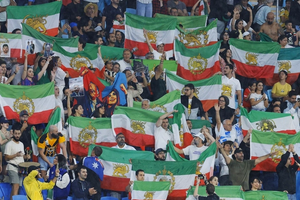
The platform, called IranSync, synchronizes the screens of mobile phones held by spectators to create large coordinated images and messages across sections of a stadium, Salar Gholami told Iran International.
“We created a system that allows people to display unified images and messages without bringing physical banners or flags into the stadium,” Gholami said.
According to Gholami, users do not need to install an application and can access the service through the IranSync website. After participants register, the system generates a design based on the number of people taking part, allowing neighboring phone screens to form a larger image.
Gholami said the platform can be used to display the Lion and Sun flag as well as slogans including “Free Iran,” “Reza Pahlavi,” and “Regime Change for Iran.”
Alternatives after FIFA restrictions
The launch follows efforts by some members of the Iranian diaspora, particularly in the United States, to challenge FIFA’s decision to bar the Lion and Sun flag from World Cup venues and to find alternative ways of displaying the symbol during matches.
Gholami said the project aims to attract international media attention to developments in Iran and prevent the issue from being overshadowed by coverage of the World Cup.
“The presence of international media at the World Cup creates an opportunity to amplify the demands of protesters and bring the voice of the Iranian people to a global audience,” he said.
The 2026 World Cup will be hosted by the United States, Canada and Mexico, with Iran’s matches scheduled to take place in the United States.
Gholami argued that supporters of the Islamic Republic could seek to use the tournament to improve the regime’s international image, adding that Iranian communities abroad should organize their own visibility campaigns.
During the 2022 World Cup in Qatar, the Islamic Republic sought to prevent the voices of protesters in the Woman, Life, Freedom uprising from being heard in stadiums by sending large numbers of its supporters to the country.
The United States has issued visas to Iran's national football team players and coaching staff, but some members of the delegation have not been granted entry permits.
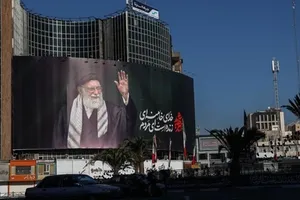
The delay has become one of the most unusual and politically sensitive aspects of Iran's post-war transition. While senior military commanders and officials killed in the same conflict have already been buried, repeated promises of a massive funeral for Khamenei have so far gone unfulfilled.
Tehran municipal officials spoke of plans for a multi-day funeral procession later this month. Ceremonies, they said, are expected to span several cities before Khamenei's final burial in the religious city of Mashhad.
The prolonged delay sits awkwardly alongside Shi'ite religious tradition, which generally favors the prompt burial of the dead. Classical jurisprudence encourages hastening burial except in exceptional circumstances, such as uncertainty over death or concerns about preserving life. Several contemporary clerics have similarly argued that unnecessary delays should be avoided if they risk disrespecting the deceased.
The absence of a funeral has fueled speculation about the condition of Khamenei's remains following the strike that killed him. Iranian media reports about other officials who died in the same attack described bodies recovered weeks later and identified only through DNA testing after suffering extensive damage.
Officials have released no information about the condition or location of Khamenei's remains.
Security concerns and a missing successor
The unanswered questions surrounding the burial have merged with another mystery: the continued absence of Khamenei's successor.
Mojtaba Khamenei, who assumed leadership following his father's death, has not appeared publicly since the attack. Officials insist he survived and suffered only minor injuries, but reports and rumors about more serious wounds have persisted.
If alive and active, Mojtaba Khamenei would rank among Israel's most prominent targets. Any large public appearance could present significant security risks.
That reality complicates what would ordinarily be a defining moment for a new leader. A funeral for a supreme leader is not merely a religious ceremony; it is also a display of political continuity. The absence of the successor from such an event would be difficult to explain, while his appearance could expose him to risks the authorities may be unwilling to accept.
The politics of a funeral
There is also a political dimension to the delay. The Islamic Republic has a long history of using such ceremonies for political messaging. An example was the funeral of Qassem Soleimani, the former commander of the Revolutionary Guards' Quds Force.
The funeral procession, held for several days, passed through Kadhimiya, Baghdad, Najaf, Karbala, Ahvaz, Mashhad, Tehran and Qom before Soleimani was ultimately buried in Kerman.
State media and Iranian officials said millions of people attended the ceremonies and repeatedly used images from the events in official messaging.
The publicity surrounding the funeral largely overlooked the deaths of 56 mourners, who were killed in a stampede during the burial ceremony in Kerman.
Officials have shown they hope for a similarly turnout for Khamenei. Yet organizing a funeral on that scale in the aftermath of war presents obvious logistical and security challenges.
For now, the result is an unusual limbo. One hundred days after Khamenei's death, Iran has formally selected a successor but has yet to publicly introduce him. It has promised a historic farewell for its former leader but has yet to hold one. And it continues to confront questions that neither official statements nor public ceremonies have managed to answer.